Researchers Testing Non-Drug Treatment for Fibromyalgia

CINCINNATIResearchers at the University of Cincinnati (UC) are testing a non-drug treatment for fibromyalgia, a condition characterized by chronic and widespread pain.
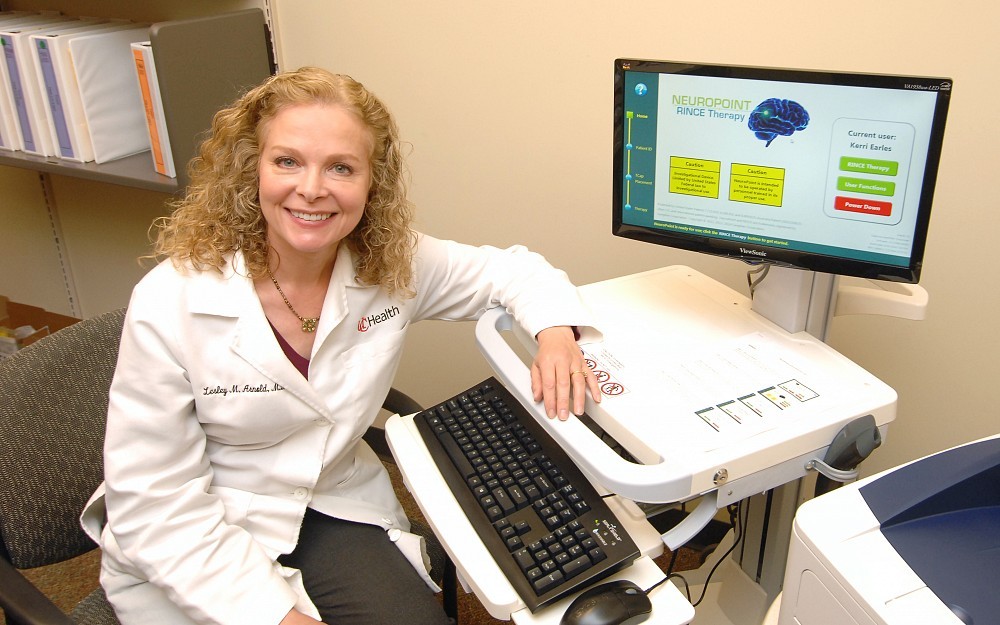
UC is one of 16 centers participating in the trial, testing a therapy known as "Reduced Impedance Noninvasive Cortical Electrostimulation (RINCE) in the treatment of pain associated with fibromyalgia. Lesley Arnold, MD, a professor in the UC Department of Psychiatry and Behavioral Neuroscience and UC Health physician, is the principal investigator at UC, the only center in Ohio, Indiana and Kentucky participating in the trial.
"This is a phase-3 clinical trial, designed to test the safety and efficacy of a device for possible approval by the Food and Drug Administration, says Arnold, adding that its one of the first trials of a non-drug treatment for fibromyalgia.
In addition to pain, fibromyalgia is characterized by other symptoms including fatigue, sleep disturbance and cognitive symptoms such as forgetfulness or decreased concentration. It has a prevalence of about 2 percent of the U.S. population, according to the U.S. Centers for Disease Control and Prevention, and is about seven times more common in women than in men.
The device under study is called NeuroPoint and is manufactured by Cerephex Corporation, a privately held medical technology company that is sponsoring the trial. (Arnold reports no conflicts.) NeuroPoint delivers gentle electrical stimulation to specific areas in the brain that may be involved in overactive pain perception for fibromyalgia sufferers. The goal is to reduce the overactivity in a way that might help reduce the perception of pain. (While no one knows the exact cause of fibromyalgia, evidence shows that it may be related to overactive brain activity, which causes pain to be processed and felt at higher levels than normal.)
Men and women ages 22 to 65 are eligible for the study, which expects to enroll about 200 volunteers nationally. Volunteers undergo treatment at the Stetson Building, home of the UC Department of Psychiatry and Behavioral Neuroscience and UC Health Psychiatry, near UC Medical Center. Patients are seated during treatment, which is non-invasive (an electrode is used on the scalp, but no skin is pierced).
Treatment sessions, lasting about 20 minutes, are spread out over a 12-week period with two sessions per week. Patients receive study-related care at no cost and will be compensated for time and travel.
Volunteers will be randomized into two groups, with half receiving NeuroPoint treatment and half receiving a sham treatment in which the device is activated but no therapy is delivered. Its a double blind study, meaning neither the volunteer nor the caregiver will know which group the patient is part of.
Tags
Related Stories
UC radiation oncologist speaks with Local 12 news about clinical trial for head and neck cancer treatment
August 10, 2026

Dr. Sara Medek, a UC radiation oncology professor, speaks with Local 12 news about a new clinical trial aimed at reducing radiation in certain areas while still treating cancer effectively but with fewer painful side effects.
Cancer Center director charts future based on collaboration, AI
August 10, 2026

David Gius, MD, PhD, was featured in a Cincinnati Business Courier article and The Cancer Letter’s “The Directors" podcast discussing his priorities and goals as he recently took the helm as director of the University of Cincinnati Cancer Center.
Bidirectional link between oral, kidney health calls for patient education, access
August 4, 2026

Despite growing awareness of the connection between oral health and chronic health conditions, patient awareness and access to dental care remain limited, according to University of Cincinnati experts who recently spoke with Healio | Nephrology News & Issues.