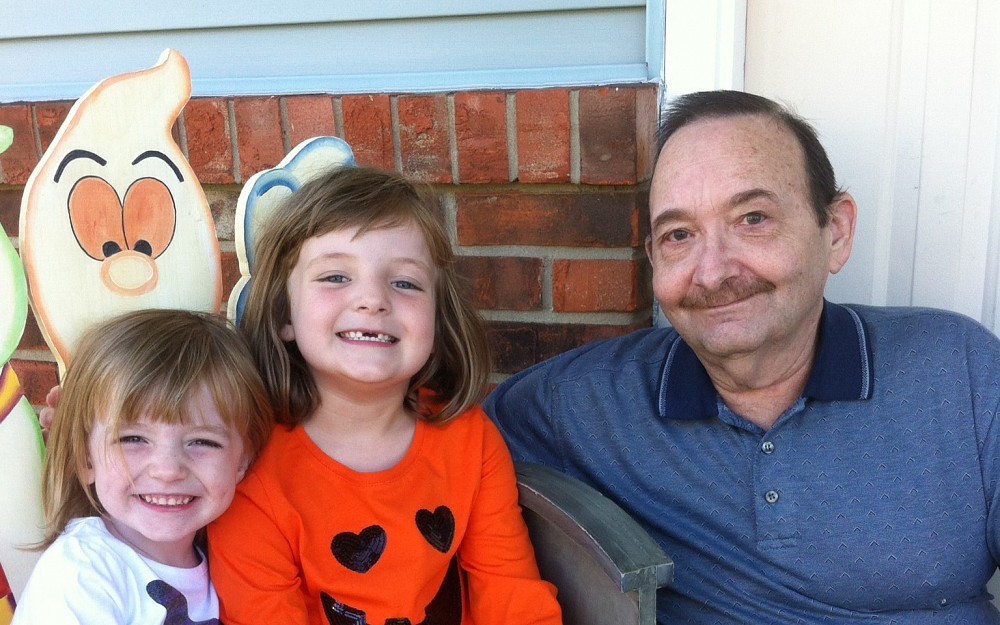
#MCM: Man's Breast Cancer Diagnosis Led to Family Members' Genetic Testing

Help us put a new spin on #ManCrushMonday! In observance of Breast Cancer Awareness Month, UC Cancer Institute has chosen to honor some of our very own "man crushesmen fighting against this horrible disease. They could be treating it in the clinic, studying it in the lab, or fighting it themselves as patients. Check out our social media pages each Monday in October to see our #ManCrushMonday posts and help us to applaud these men who are making a difference.
And dont forget to join in the fun. Wed love to know about the heroic men in your lives fighting the fight against breast cancer. Be sure to tag @uchealthnews with your #ManCrushMonday posts.
In November 2012, Bruce Hayes, 62, said he began to notice a pain in his right nipple that he ignored at first.
"The pain would come and go, he says. "One day, I noticed a change in the nippleit was starting to draw inso I decided to get it checked.
Hayes says his primary care doctor suggested that he get a mammogram.
"Radiologists saw a mass which led to an ultrasound and biopsy, Hayes says. "It was breast cancer. I was surprised because no one in my family had breast cancer.
He underwent a mastectomy, where the cancer and many of the lymph nodes around the mass were removed.
Now, Hayes is cancer-free and is seen for follow-up care by Elyse Lower, MD, director of the UC Cancer Institutes Comprehensive Breast Cancer Center.
Besides essentially being "cured of cancer, there were two additional benefits to his experience.
"I tested positive for the BRCA2 gene mutation, he says. "As a result, my brother and my children were tested, and my brother and my middle daughter tested positive for the genetic mutation, as well. In knowing their risk, they can actively watch for cancerboth of them receive regular mammograms. They dont know for sure if cancer will ever develop, but its good that they know their risks.
Mostly, Hayes just wants people to know that men can get breast cancer, too.
"We were in line at the grocery store the other day, and there were breast cancer awareness reusable bags for purchase with the tagline Mothers, Daughters and Sisters, he says. "I told the cashier that I thought they should have some that say, Dads, Brothers and Sons, as well. There was a lady in line with me who said she didnt know men could even get breast cancer, and I told her that I knew firsthand that they do.
"Its important for people to know that this doesnt just happen to women.
The UC Cancer Institutes multidisciplinary breast cancer team offers patients the combined benefit of advanced, science-driven medicine with a personalized approach to treatment and follow up care. The board-certified multidisciplinary teammade up of breast imagers, medical oncologists, dedicated breast pathologists, radiation oncologists, plastic and reconstructive surgeons, fellowship-trained surgical oncologists and a highly experienced oncology nursing staffmeets weekly as a team to discuss and determine the best treatment plan for individuals of any gender affected by breast cancer. Visit uchealth.com/cancer for more information.
Tags
Related Stories
UC study shows lack of awareness for lung cancer screenings across country
August 21, 2026
University of Cincinnati Cancer Center researchers have published a study in the American Journal of Surgery that found only 15% of eligible American adults have discussed lung cancer screening with their doctors.This research emphasizes the need to spread awareness and better educate the public about screening through low-dose computed tomography.
UC radiation oncologist speaks with Local 12 news about clinical trial for head and neck cancer treatment
August 10, 2026

Dr. Sara Medek, a UC radiation oncology professor, speaks with Local 12 news about a new clinical trial aimed at reducing radiation in certain areas while still treating cancer effectively but with fewer painful side effects.
Cancer Center director charts future based on collaboration, AI
August 10, 2026

David Gius, MD, PhD, was featured in a Cincinnati Business Courier article and The Cancer Letter’s “The Directors" podcast discussing his priorities and goals as he recently took the helm as director of the University of Cincinnati Cancer Center.