Environmental Health's Clark Part of International Lead Paint Study

A UC Department of Environmental Health researcher is continuing his international efforts against paints with high levels of lead.
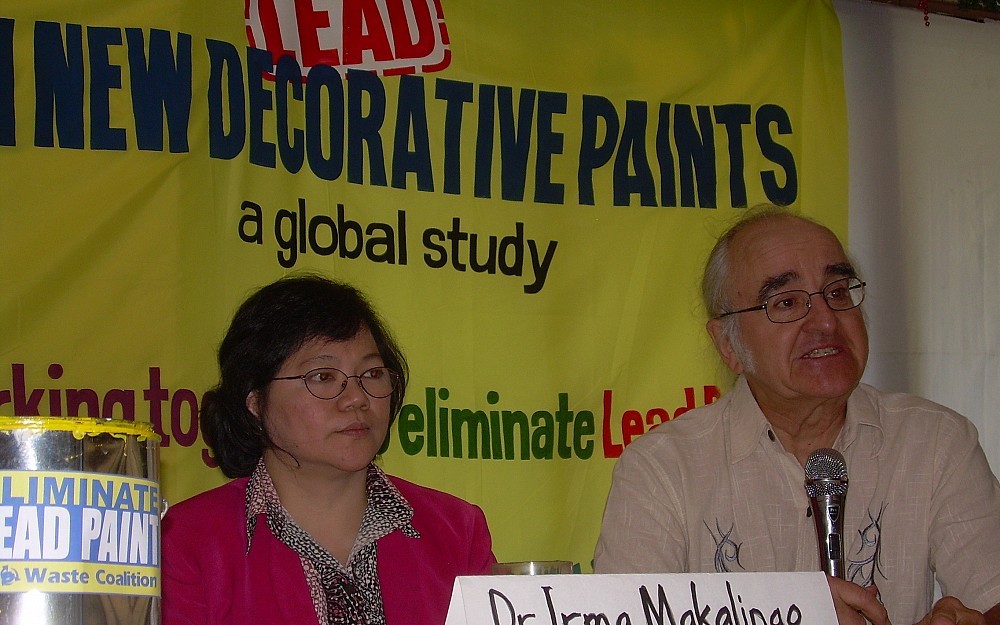
Scott Clark, PhD, professor emeritus in the departments division of environmental and occupational hygiene, is working with partners in a four-country lead paint study that was completed under a U.S. Environmental Protection Agency contract and published in Environmental Research, a multidisciplinary journal of environmental sciences, ecology and public health.
The study found that paints with dangerously high concentrations of lead were still being sold in Armenia, Brazil, India and Kazakhstan, despite the fact that lead paint has been known to be a poison for more than 100 years. (Lead content in paint has been restricted in the United States since 1978.)
"Paints with high lead concentrations continue to be sold around the world in many developing countries and those with economies in transition, representing a major preventable environmental health hazard, says Clark. "This hazard is being increased as the economies expand and paint consumption is increasing.
Organizations belonging to IPEN, an international network of non-governmental organizations working to establish and implement safe chemicals policies, from each of the four countries participated in the study. Clark is IPEN's public health advisor for lead.
The release of findings of the study in each of these countries is being timed to coincide with the second International Lead Poisoning Prevention Week of Action this week, Oct. 19-25.
Clark and Jack Weinberg, IPENs senior policy advisor, also oversaw and prepared a report on a 2013 United Nations Environment Programme (UNEP) study analyzing enamel decorative paints from nine countries: Argentina, Azerbaijan, Chile, Ivory Coast, Ethiopia, Ghana, Kyrgyzstan, Tunisia and Uruguay. Announcement of findings from that study in those countries was timed to coincide with the first International Lead Poisoning Prevention Week of Action in 2013.
Lead in paint is a problem because painted surfaces deteriorate with time and disturbance, releasing the lead into household dust and soil outside. Very high exposures to lead-contaminated dust can occur when surfaces previously painted with lead paints are prepared for repainting without taking the precautions needed to control the lead dust. Children ingest lead from dusts and soils during normal hand to mouth behavior.
Damage to childrens intelligence and mental development occurs, Clark says, even when there are no obvious or clinical signs of lead poisoning, decreasing their performance in school and lifelong productivity at work. These effects have been documented by long-term studies in Cincinnati conducted by another investigator in the UC Department of Environmental Health, Kim Dietrich, PhD, and his co-investigator Kim Cecil, PhD, a UC professor of radiology, pediatrics and environmental health based at Cincinnati Childrens Hospital Medical Center.
An estimated 143,000 deaths a year result from lead poisoning with the highest burden in developing regions, according to WHO data; lead paint is a major contributor to this death toll.
Tags
Related Stories
UC radiation oncologist speaks with Local 12 news about clinical trial for head and neck cancer treatment
August 10, 2026

Dr. Sara Medek, a UC radiation oncology professor, speaks with Local 12 news about a new clinical trial aimed at reducing radiation in certain areas while still treating cancer effectively but with fewer painful side effects.
Cancer Center director charts future based on collaboration, AI
August 10, 2026

David Gius, MD, PhD, was featured in a Cincinnati Business Courier article and The Cancer Letter’s “The Directors" podcast discussing his priorities and goals as he recently took the helm as director of the University of Cincinnati Cancer Center.
Bidirectional link between oral, kidney health calls for patient education, access
August 4, 2026

Despite growing awareness of the connection between oral health and chronic health conditions, patient awareness and access to dental care remain limited, according to University of Cincinnati experts who recently spoke with Healio | Nephrology News & Issues.