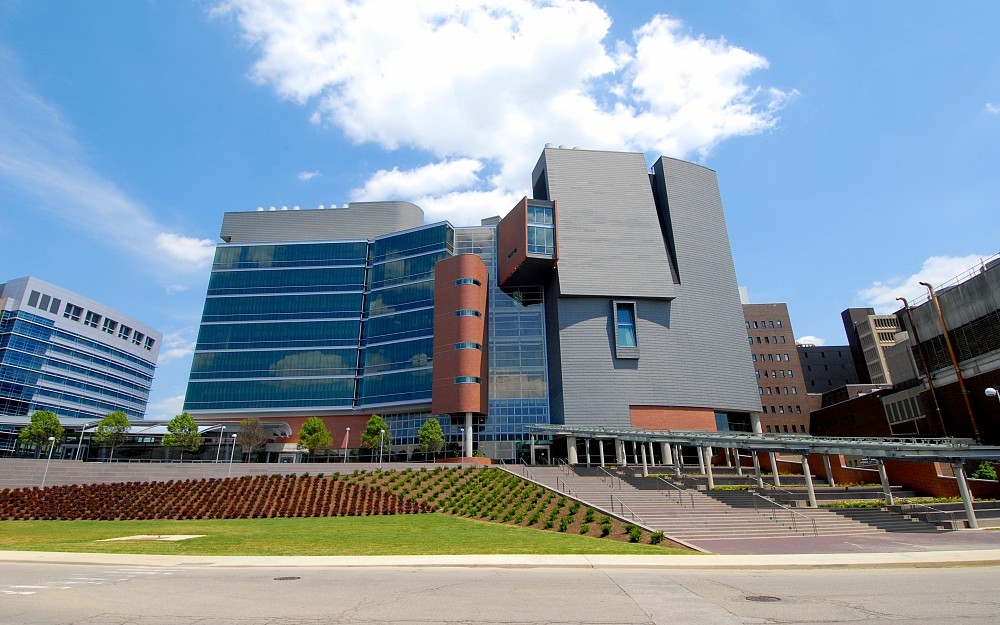
CARE/Crawley Work Will Affect Temperature Control, General Exhaust

Work scheduled to begin this weekend (Friday, Nov. 14, through Sunday, Nov. 16) and scheduled to continue on at least one additional upcoming weekend will affect temperature control and general exhaust in portions of the CARE/Crawley Building.
The project involves replacing the heat wheel in an air handler that supplies air to the labs on Levels 5, 6 and 7 of the buildings south half (starting from the elevators). The work will require shutting down the air handler and also a general exhaust fan that supplies all the general exhaust for all levels of the south half (R through 7).
As a result, Levels 5, 6 and 7 in the south half will lose temperature control while the work is underway and all levels in the south half will lose general exhaust. The fume exhaust system will still be operative. Special temporary exhaust is being arranged for the Level R gross anatomy labs.
Work will be done on weekends only and will occur in two or three phases, depending on whether a third phase is needed:
The first phase will begin at 4 p.m. Friday, Nov. 14, and conclude by 6 p.m. Sunday, Nov. 16.
The second phase will begin at 4 p.m. Friday, Dec. 5, and conclude by 6 p.m. Sunday, Dec. 7.
A third phase, if needed, will begin at 4 p.m. Friday, Dec. 12, and conclude by 6 p.m. Sunday, Dec. 14.
Work shifts are expected to last 10 to 12 hours. When workers complete a shift, systems will be restored until the next shift begins.
If you have questions, please contact Andrew Bleuel, staff engineer with the Office of Planning, Design and Construction, at 513-558-1139 or andrew.bleuel@uc.edu.
Tags
Related Stories
UC radiation oncologist speaks with Local 12 news about clinical trial for head and neck cancer treatment
August 10, 2026

Dr. Sara Medek, a UC radiation oncology professor, speaks with Local 12 news about a new clinical trial aimed at reducing radiation in certain areas while still treating cancer effectively but with fewer painful side effects.
Cancer Center director charts future based on collaboration, AI
August 10, 2026

David Gius, MD, PhD, was featured in a Cincinnati Business Courier article and The Cancer Letter’s “The Directors" podcast discussing his priorities and goals as he recently took the helm as director of the University of Cincinnati Cancer Center.
Bidirectional link between oral, kidney health calls for patient education, access
August 4, 2026

Despite growing awareness of the connection between oral health and chronic health conditions, patient awareness and access to dental care remain limited, according to University of Cincinnati experts who recently spoke with Healio | Nephrology News & Issues.