UC Researchers Studying Investigational Drug for Alzheimer's Patients

CINCINNATIUp to 5.3 million Americans currently have Alzheimers disease, according to the U.S. Centers for Disease Control and Prevention, a number that is expected to triple by 2050 due to the aging of the population.
Researchers at the University of Cincinnati (UC) are among those who have accepted the challenge of easing the burden of Alzheimers disease. They are conducting a research study to assess the effect of a new investigational drug on memory and activities of daily living in people with mild to moderate Alzheimers.
"Currently there is no cure for Alzheimers dementia, says Muhammad Aslam, MD, an associate professor in the UC Department of Psychiatry and Behavioral Neuroscience and principal investigator of the study at the UC site, "but medications exist that have been shown to improve quality of life for Alzheimers patients or help control its behavioral symptoms, and studies are continuing to develop new therapies and medications.
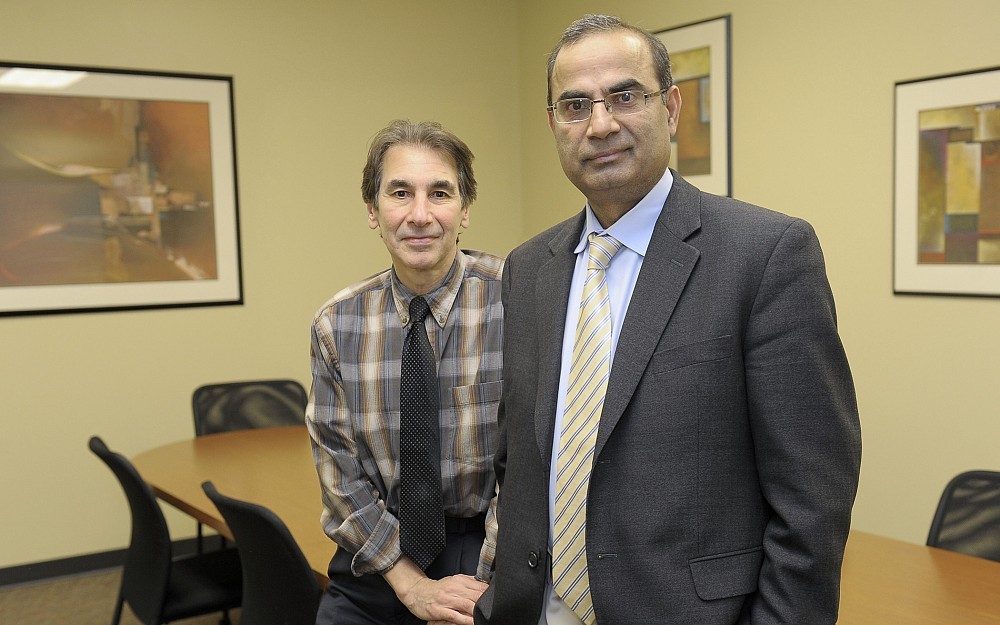
Aslam and his co-investigator, Robert Krikorian, PhD, are accepting volunteers for the study, which is sponsored by Merck Sharp & Dohme Corp. (Neither investigator reports a conflict of interest.) Men and women 55- to 85-years old with mild to moderate Alzheimers may be eligible to participate. A study partner, such as a spouse, close friend or adult child, will also be involved.
"In addition to administering the investigational drug, we will be doing MRI brain scans and memory testing, says Krikorian, who specializes in cognitive disorders and is affiliated with the Memory Disorders Center at the UC Neuroscience Institute. Krikorian notes that supplements and many other medications for Alzheimers disease are allowed for those participating in the study.
UC is one of 78 national and international centers for the study, which consists of two parts. Part I is to assess the efficacy and safety of the investigational drug compared with a placebo administered for 78 weeks. Participants who complete Part I may choose to participate in Part II, which is a long-term extension designed to assess the safety and efficacy of the investigational drug administered for up to an additional 260 weeks. (No placebo is involved in Part II.)
Participants will be paid for time and travel related to the study visits. Study medication, study-related procedures and testing and study care visits will be provided at no cost.
Tags
Related Stories
UC radiation oncologist speaks with Local 12 news about clinical trial for head and neck cancer treatment
August 10, 2026

Dr. Sara Medek, a UC radiation oncology professor, speaks with Local 12 news about a new clinical trial aimed at reducing radiation in certain areas while still treating cancer effectively but with fewer painful side effects.
Cancer Center director charts future based on collaboration, AI
August 10, 2026

David Gius, MD, PhD, was featured in a Cincinnati Business Courier article and The Cancer Letter’s “The Directors" podcast discussing his priorities and goals as he recently took the helm as director of the University of Cincinnati Cancer Center.
Bidirectional link between oral, kidney health calls for patient education, access
August 4, 2026

Despite growing awareness of the connection between oral health and chronic health conditions, patient awareness and access to dental care remain limited, according to University of Cincinnati experts who recently spoke with Healio | Nephrology News & Issues.