Researcher Wins Grant to Study Targets for Next-Generation TB Vaccine

A Department of Environmental Health researcher has received a two-year, $275,000 National Institutes of Health (NIH) grant to study potential targets for a next-generation tuberculosis vaccine.
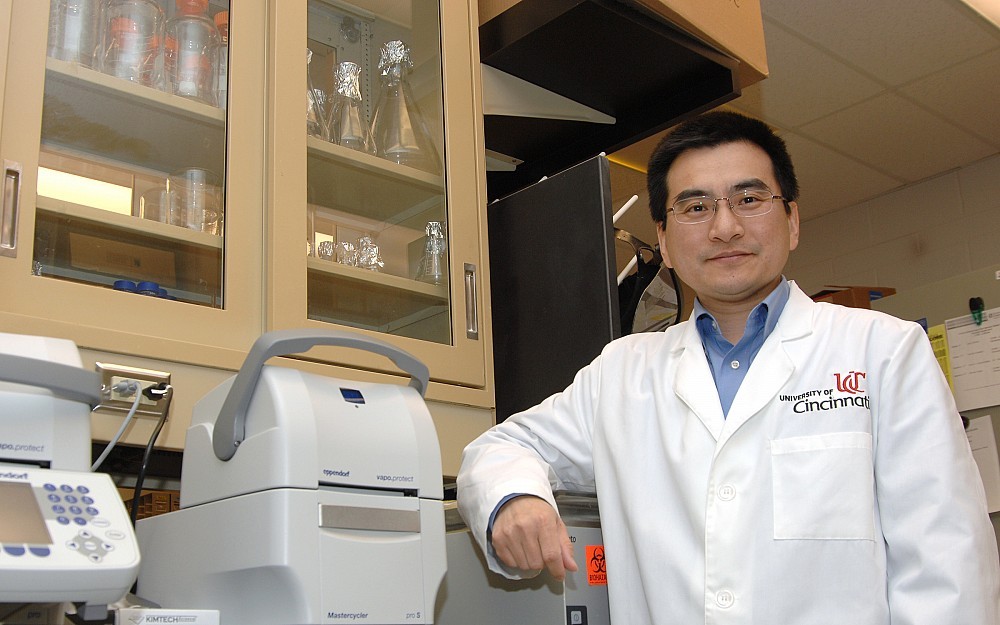
Shouxiong Huang, PhD, an assistant professor in the departments Division of Environmental Genetics and Molecular Toxicology, received the grant from the NIHs National Institute of Allergy and Infectious Diseases (NIAID).
Tuberculosis is a disease caused by a bacterium called Mycobacterium tuberculosis. The bacteria usually attack the lungs, but tuberculosis bacteria can attack any part of the body such as the kidney, spine and brain.
The most widely used vaccine is Bacillus Calmette-Guérin (BCG), but its efficacy varies depending on geography and it has been shown to be insufficient in protecting against lung tuberculosis in adults.
"Our lab is interested in understanding the T cell activation mechanisms in inflammations and infections with a focus on the interplay of innate-like T cells, bacteria and environmental factors, Huang says. "Innate-like T cells play intriguing roles in the host defenses against mycobacterial infections.
Huang and colleagues will use a mass spectrometer (an instrument which can measure the masses and relative concentrations of molecules) to comprehensively profile and structurally determine the mycobacterial antigens (i.e., substances that produce a specific immune response in the body) for activating the innate-like T cell population called mucosal-associated invariant T (MAIT) cells.
"Recent animal studies and clinical observations have suggested that MAIT cell population is attractive to be considered as a target for developing anti-mycobacterial vaccine or therapy, Huang says. "Thus, identifying the antigens that activate MAIT cells becomes a central question.
Adds Huang: "If mycobacterial antigens are discovered and able to strongly activate MAIT cells against M. tuberculosis infections, these antigens can be provided as vaccination or therapeutic candidates for future studies.
Huangs grant is from the NIHs R21 program, designed to encourage exploratory and developmental research by providing support for the early and conceptual stages of project development. Huang joined the College of Medicine faculty in 2013 and says he has benefited from mentoring support he has received as a junior faculty member.
"This progress wouldnt have been possible without the great mentorship from my career development committee headed by Professor Shuk-mei Ho and the state-of-the-art research setting at the Department of Environmental Health, Huang says, adding that his mentor team also included Divakar Choubey, PhD, Jagjit Yadav, PhD, and David Hildeman, PhD.
Ho, Jacob G. Schmidlapp Professor and Chair of Environmental Health, says the department stresses the importance of mentoring for junior faculty, particularly early intensive mentoring by a mentor committee. The department puts together a mentor team for junior faculty early in their careers, she says, and the Division of Environmental Genetics and Molecular Toxicology also typically has junior faculty present their grant ideas in front of seasoned senior faculty.
Related Stories
UC radiation oncologist speaks with Local 12 news about clinical trial for head and neck cancer treatment
August 10, 2026

Dr. Sara Medek, a UC radiation oncology professor, speaks with Local 12 news about a new clinical trial aimed at reducing radiation in certain areas while still treating cancer effectively but with fewer painful side effects.
Cancer Center director charts future based on collaboration, AI
August 10, 2026

David Gius, MD, PhD, was featured in a Cincinnati Business Courier article and The Cancer Letter’s “The Directors" podcast discussing his priorities and goals as he recently took the helm as director of the University of Cincinnati Cancer Center.
UC graduates cross finish line at commencement
August 7, 2026
The University of Cincinnati recognized 2,125 graduates in two ceremonies at summer commencement Friday on campus at Fifth Third Arena.