UC Researchers Find Alternate Drug Therapy Lowers Antibodies

Findings of a three-year clinical trial led by University of Cincinnati (UC) transplant researchers suggest that a novel pre-operative drug therapy reduces antibodies in kidney patients with greater success than with traditional methods, with the potential to increase the patients candidacy for kidney transplantation and decrease the likelihood of organ rejection.
The study, titled "Prospective Iterative Trail of Proteasome Inhibitor-Based Desensitization, appears in the January 2015 edition of the American Journal of Transplantation.
Antibodies are something that all people have that are made by the immune system to protect against infections. Antibodies are Y-shaped proteins that in most instances are good because they help fight infection, but people can also make antibodies that work against other humans, which is often a major barrier to transplantation.
In an accompanying editorial, Klemens Budde, MD, head of the clinical transplant program at Charité Universitätsmedizin, Berlin, Germany, states, "The study provides first proof for a new desensitization strategy in immunized waitlisted patients.
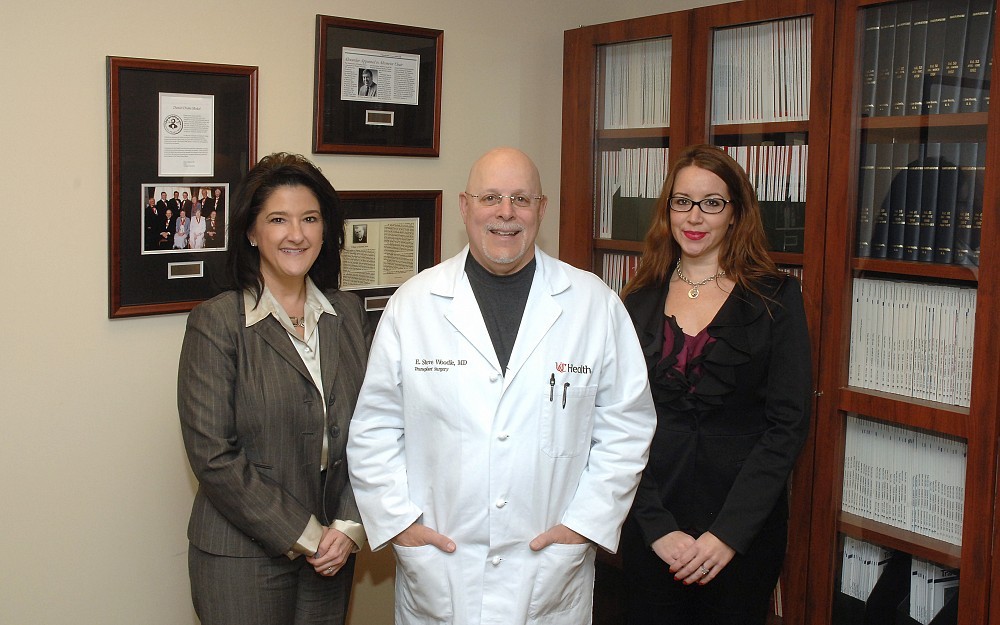
"This study is important because it has the potential to change the way we approach kidney transplantation, says the studys principal investigator, E. Steve Woodle, MD, UC Health transplant surgeon and director of the division of transplantation at the UC College of Medicine, who adds: "This also may benefit 10 to 20 percent of heart and pancreas transplant candidates who often have such high levels of antibodies that transplantation is nearly impossible.
Since 2008, the UC research team has been on forefront of developing therapies that target plasma cellsthe cells that make antibodies. These new therapies have used bortezomib, a proteasome inhibitor that is already approved by the FDA for treatment of multiple myeloma. The traditional method for reducing antibody levels, Woodle says, uses a blood product termed intravenous immuneglobulin (IVIG).
Woodle adds that the data from studies with IVIG is inconsistent with most patients being unresponsive.
In this first-of-its-kind trial, however, 50 kidney transplant candidates with high antibody levels were treated with the new regimen.
"The rejection rates were low and the chances of the patient developing a new antibody against their kidney were very low. In addition, in some patients, antibodies remained suppressed for several monthssomething that has not previously been described with other approaches, says Woodle.
Four new regimensdescribed by Woodle as "second-generation plasma cell-targeted therapies will be evaluated by the UC Transplant Clinical Research team in 2015. These future studies will also be complemented by mechanistic studies in collaboration with James Driscoll, MD, PhD, assistant professor in UCs division of hematology oncology and a member of the UC Cancer Institute.
Additional UC researchers on the study include: Adele Shields, PharmD; Alin Girnita MD; Rita Alloway, PharmD; Bassam Abu Jawdeh, MD; Prabir Roy-Chaudhury, MD, PhD; Amit Govil, MD; Gautham Mogilishetty, MD; and Paul Brailey, PhD, Hoxworth Blood Center.
Funding for this study came from Millennium Pharmaceuticals. Woodle, Shields and Alloway have received past grant funding and honoraria from Millennium.
Related Stories
UC radiation oncologist speaks with Local 12 news about clinical trial for head and neck cancer treatment
August 10, 2026

Dr. Sara Medek, a UC radiation oncology professor, speaks with Local 12 news about a new clinical trial aimed at reducing radiation in certain areas while still treating cancer effectively but with fewer painful side effects.
Cancer Center director charts future based on collaboration, AI
August 10, 2026

David Gius, MD, PhD, was featured in a Cincinnati Business Courier article and The Cancer Letter’s “The Directors" podcast discussing his priorities and goals as he recently took the helm as director of the University of Cincinnati Cancer Center.
UC graduates cross finish line at commencement
August 7, 2026
The University of Cincinnati recognized 2,125 graduates in two ceremonies at summer commencement Friday on campus at Fifth Third Arena.