Consortium-Backed Study Focuses on How Chronic Pain Develops

CINCINNATIIn the first study sponsored by the newly formed Midwest Pain Consortium, researchers at the University of Cincinnati (UC) are collaborating with colleagues at the University of Michigan to study how chronic pain develops in women with osteoarthritis of the knee.
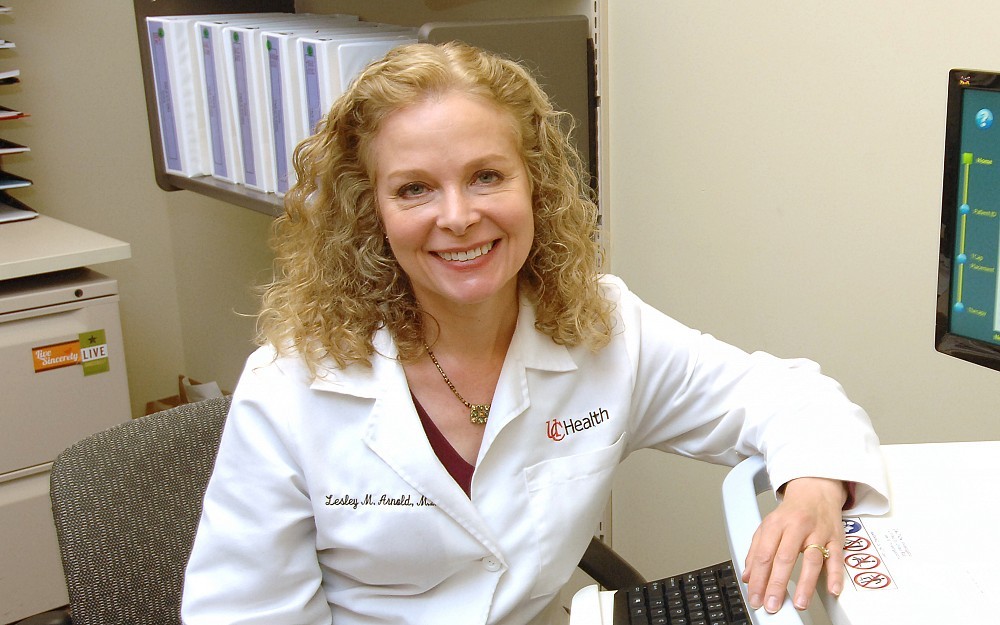
The study, co-led by Lesley Arnold, MD, professor of psychiatry and behavioral neuroscience at UC, and Dan Clauw, MD, professor of anesthesiology, medicine and psychiatry at the University of Michigan, will use neuroimaging techniques to evaluate the brain and spinal mechanisms that may be underlying the development of chronic pain (defined as pain most days over a period of at least three months).
"There is a pressing need to develop more effective and safe treatments for the millions of people who suffer from chronic pain, says Arnold, who is also a UC Health clinician with specialization in chronic pain and fibromyalgia. "While there has been tremendous progress in our understanding of the brain and spinal mechanisms that are involved in human pain transmission, many gaps still exist in our understanding of chronic pain disorders and current treatment of chronic pain remains only modestly effective in most individuals.
The Midwest Pain Consortium, launched in June 2014, is a public-private partnership of UC, the University of Michigan and Eli Lilly and Company, developed to address common challenges to the medical and pharmaceutical communities, in support of improving health care. The chronic osteoarthritis pain study is being launched as the initial project within the consortium.
According to Arnold, researchers anticipate that the neuroimaging data could provide insight into how different peoples brains respond to pain. The identification of such differences could be a first step in helping to design future clinical studies, with the ultimate goal being the development of personalized approaches to chronic pain conditions.
For information on the study, please call Kerri Earles at 513-558-7104 or email Kerri.Earles@uc.edu.
Tags
Related Stories
UC radiation oncologist speaks with Local 12 news about clinical trial for head and neck cancer treatment
August 10, 2026

Dr. Sara Medek, a UC radiation oncology professor, speaks with Local 12 news about a new clinical trial aimed at reducing radiation in certain areas while still treating cancer effectively but with fewer painful side effects.
Cancer Center director charts future based on collaboration, AI
August 10, 2026

David Gius, MD, PhD, was featured in a Cincinnati Business Courier article and The Cancer Letter’s “The Directors" podcast discussing his priorities and goals as he recently took the helm as director of the University of Cincinnati Cancer Center.
Bidirectional link between oral, kidney health calls for patient education, access
August 4, 2026

Despite growing awareness of the connection between oral health and chronic health conditions, patient awareness and access to dental care remain limited, according to University of Cincinnati experts who recently spoke with Healio | Nephrology News & Issues.