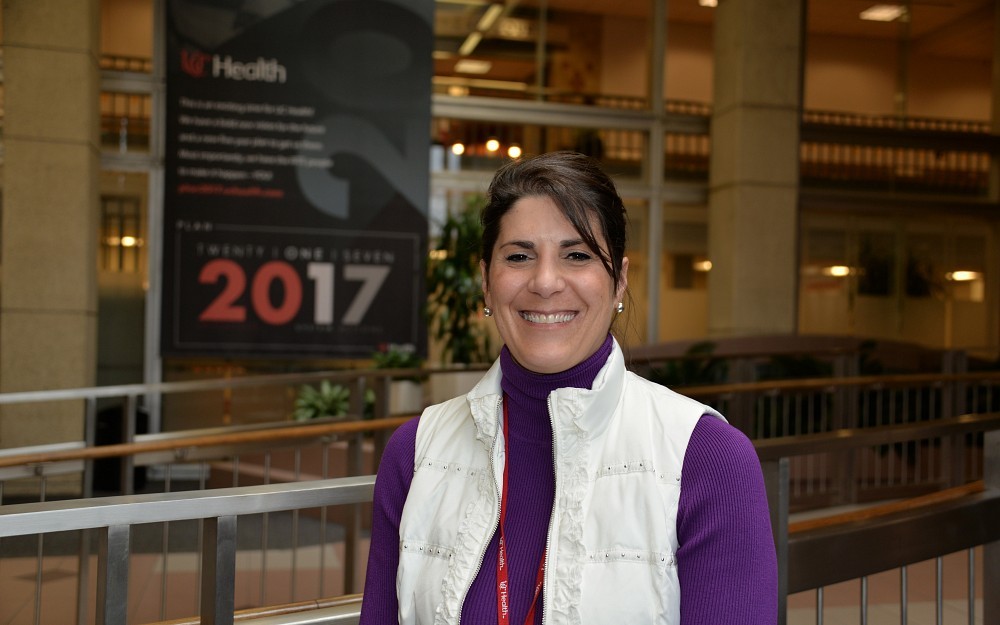
Helping patients recover function and quality of life after stroke, traumatic brain injury, or musculoskeletal or spinal cord injury is the prime objective of Angela Stillwagon, DO, a new member of the UC Neuroscience Institutes Physical Medicine & Rehabilitation team. Stillwagon, an assistant professor in the UC Department of Neurology and Rehabilitation Medicine, answers questions about her specialty and how she and her colleagues can help people whose injuries or chronic musculoskeletal conditions cannot be surgically healed.
Q: Tell us about physical medicine and rehabilitation, which is often referred to as PM&R.
A: PM&R is often called the "quality of life profession because we focus on enhancing patient performance. Our goal is to reduce pain and restore functional ability and quality of life with a comprehensive program that is medical, social, emotional and vocational.
Q: What types of patients do you see?
A: We see a wide range of individuals who have conditions related to the brain, muscles, tendons, joints or bone. Some have suffered an injury or multiple injuries. We help patients who have experienced brain injury, spinal cord injury, low-back injury, stroke, amputation, arthritis, carpal tunnel or tarsal tunnel syndrome, and bladder or bowel dysfunction. Essentially, we treat any orthopedic problem that is not surgical.
Many of these conditions are a result of car accidents, work-related accidents and accidents that occur during sports and recreational activities. We see many stroke survivors. And we also provide what we call "after care to people who are being treated for cancer, multiple sclerosis, spina bifida, cerebral palsy and osteoporosis. The UC Cancer Institute and Waddell Center for Multiple Sclerosis regularly send us patients who experience musculoskeletal issues related to their illness.
Q: What diagnostic services to you provide?
A: When a patient comes to us, we do a thorough medical history and physical exam. We may order labs or scans. We may do an ultrasound evaluation of a joint or area of concern. We may conduct an EMG (electromyography exam) to evaluate a pinched nerve in the back or neck. We also evaluate people who have amputations.
Q: What treatment options to you offer?
A: All of our treatments are provided on an outpatient basis. We use some medications, and we work closely with physical therapists and occupational therapists. We order bracing and at-home equipment. We can provide botulinum toxin injections to patients who experience spasticity from spinal cord injury. We perform wheelchair evaluations and prosthesis evaluations. For some of our patients with chronic pain, we offer ultrasound-guided steroid injections.
Q: Which specialists to you work with most frequently?
A: We work with neurologists, neurosurgeons, urologists, rheumatologists, podiatrists and psychologists. We also work with therapists (speech, occupational and physical) and social workers.
Q: How important is PM&R in a patients overall continuum of care?
A: After suffering an injury, our patients typically go to inpatient rehabilitation at Daniel Drake Center for Post-Acute Care. During that time, they recover, they feel safe, and they have significant support. But its a whole new world when they return home. As much as we try to prepare people for the transition, it can still be very challenging. Were here to help the family as well as the patient learn about the progression of the disease or their recovery, or to help keep them at their baseline and maintain their quality of life. They have definitely had a diagnosis that changed their lives, and we want to help them live with their new changes and maximize their independence.
Q: Do you provide education to families and caregivers?
A: Absolutely. When people get home, they dont always realize how much harder it will be. Sometimes there are cognitive issues after brain injury or stroke, and patients can be irritable. Caregivers can get tired. We try to educate families about the normal process of recovery.
Q: Is the Ekso bionic exoskeleton part of the PM&R program at UC Health?
A: Yes, at any given time, between one and five patients use the device at Drake Center. The wearable robot, or exoskeleton, enables people with lower-extremity paralysis or weakness to stand and walk during specially arranged sessions.
Q: Are there other specialty clinics that you would like to mention?
A: We offer our musculoskeletal clinic at Drake Center, and this spring we will be starting a multidisciplinary spinal cord injury clinic at Drake. For the first time, patients living with spinal cord injury will be able to have a complete annual exam in one visit. They will be able to see a doctor, urologist, physical therapist and case manager, one after the other on the same day in the same location.
Q: How did you decide to become a PM&R physician?
A: I had never heard of PM&R before I went to medical school. But when I learned about all the things they do, I was definitely attracted to this specialty. It is rewarding to help patients and their families adjust to impairments that are life-altering. It is very rewarding to help someone who is bedridden get up and start doing simple things that most of us take for granted.