UC Pharmacy Grads Who Pursue Residency Have High Rate of Success

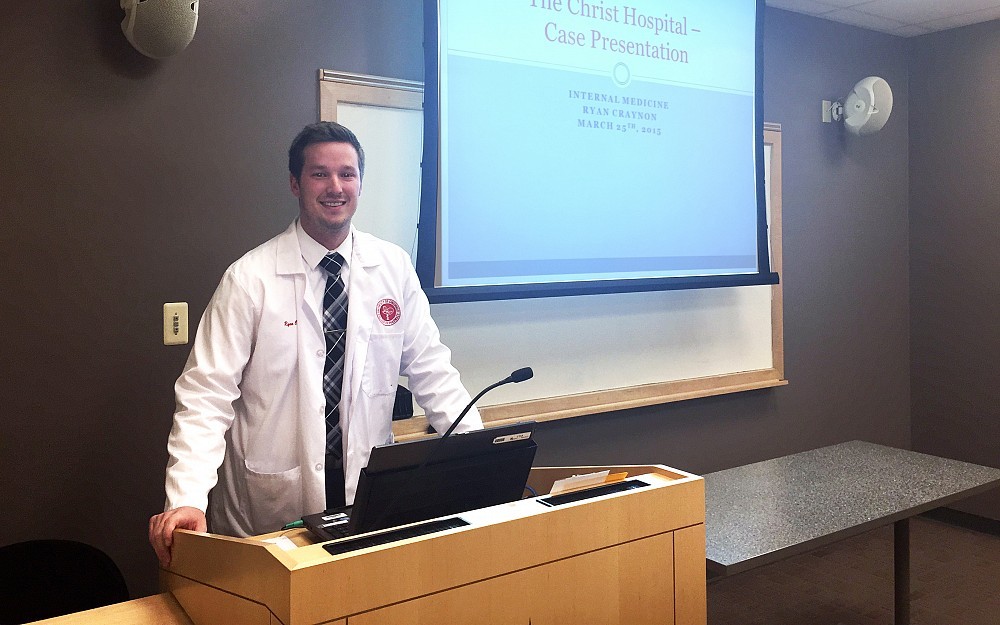
Its good to have options. Consider Ryan Craynon, fourth-year PharmD candidate at the University of Cincinnatis James L. Winkle College of Pharmacy.
Craynon, who just completed the rigors of pharmacy school and is scheduled to graduate in May, could have easily stepped right into a well-paying career as a pharmacist. However, Craynon, and 25 percent of his 2015 class at UC, chose to apply for pharmacy residencies (typically hospital-based) and add one to two more years of academic and practical training to their resumes.
"Residency training is where the profession is moving, Craynon says of throwing his doctor of pharmacy graduation cap into the air May 1 and then throwing his bags in the car this fall to start a prestigious residency and masters degree in pharmacy administration at the University of Wisconsin Hospitals and Clinics.
Once there, Craynon will be immersed in a hybrid program where he will be mentored in both the clinical and administrative aspects of managing a hospital pharmacy. He will also come out of the program with a masters degree in health-system administration.
"It definitely was my first choice, and it was an easy choice, he says of the highly competitive residency and also of participating in the match process, overseen by the American Society of Health-System Pharmacists (ASHP).
The process, whereby pharmacy graduates across the country rank the residencies theyd like to attend and residency programs rank the graduates theyd like to have attend, culminates just prior to graduation, on a day called "Match Day.
The specialty of pharmacy administration is just one of more than a dozen different types of hospital residencies, which include areas such as pediatric oncology and ambulatory care.
While not all students complete a residency after graduation, there is an increase in interest in residency programs nationally. According to the ASHPs residency results, more than 3,600 pharmacy students and new practitioners matched with a residency position in 2015, and that number was closer to 3,300 in 2014.
"I completed a residency as part of my education and I am a firm believer in the value of residency programs. My experience as a resident shaped my philosophy of the profession of pharmacy and it strengthened the value I place on interprofessional education and practice, says Neil MacKinnon, PhD, UCs college of pharmacy dean.
Of the 26 UC students who applied for residencies, 22 (or 85 percent) matched, exceeding last years national match rate of 65 percent, says MacKinnon.
Crayons advice to first-year pharmacy students: "Prepare for a residency through pharmacy school to keep all your options open. If you decide to pursue a residency, the application process is much smoother, and if you then decide its not for you then you have a great resume and are more than likely a strong candidate for any position upon graduation.
Tags
Related Stories
UC radiation oncologist speaks with Local 12 news about clinical trial for head and neck cancer treatment
August 10, 2026

Dr. Sara Medek, a UC radiation oncology professor, speaks with Local 12 news about a new clinical trial aimed at reducing radiation in certain areas while still treating cancer effectively but with fewer painful side effects.
Cancer Center director charts future based on collaboration, AI
August 10, 2026

David Gius, MD, PhD, was featured in a Cincinnati Business Courier article and The Cancer Letter’s “The Directors" podcast discussing his priorities and goals as he recently took the helm as director of the University of Cincinnati Cancer Center.
Bidirectional link between oral, kidney health calls for patient education, access
August 4, 2026

Despite growing awareness of the connection between oral health and chronic health conditions, patient awareness and access to dental care remain limited, according to University of Cincinnati experts who recently spoke with Healio | Nephrology News & Issues.