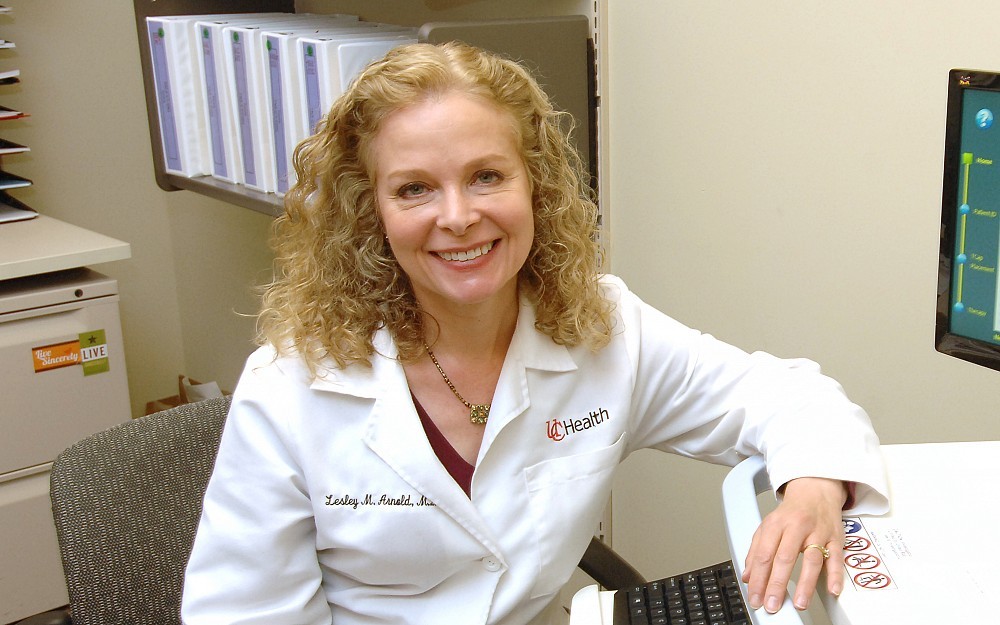
Study Will Evaluate Investigational Medication for PTSD Symptoms

CINCINNATIThe University of Cincinnati (UC) is one of 25 sites nationwide for a clinical research study of an investigational medication for treatment of Posttraumatic Stress Disorder (PTSD) symptoms related to military or police work.
The trial, called the AtEase Study, will evaluate how well the investigational medication, taken at bedtime, works compared with a placebo for trauma-related symptoms, including sleep disturbances. It is a Phase-2 trial, designed to assess efficacy and safety.
"Studies show that there is a strong relationship between work-related trauma and sleep problems such as insomnia and nightmares, says Lesley Arnold, MD, a professor of psychiatry and behavioral neuroscience at the UC College of Medicine, UC Health psychiatrist and principal investigator at the Cincinnati site. "These symptoms and others related to PTSD can impact family life and interfere with work and school.
The study is open to men and women between the ages of 18 and 65 who have served or are currently serving in the Armed Forces, law enforcement or as a military contractor. Border Patrol agents and other members of the U.S. Department of Homeland Security, Secret Service and intelligence agencies are included as well. Study volunteers must have suffered a work-related traumatic event at some time after the year 2000 and have trauma-related lingering effects.
Volunteers will be randomly assigned to one of three groups whose members will receive differing doses of the study drug or a placebo. This is a double-blind study, meaning neither the volunteer nor the study doctor will know which group the volunteer has been assigned to.
The study drug dosing period will last for approximately 12 weeks, during which time volunteers will participate in consultations and visit the study center to undergo a variety of tests to monitor their condition and well-being. Patients who complete the studyno matter which of the three groups they are inare eligible to enroll in an extension study in which they will have the opportunity to try the new medication on an open label basis, with no placebo involved.
The UC study center is the Stetson Building, home to UC Health Psychiatry. All clinical tests, examinations and assigned study drugs are provided at no cost, and volunteers will receive compensation for time and travel expenses.
Arnold reports no conflicts.
Related Stories
UC radiation oncologist speaks with Local 12 news about clinical trial for head and neck cancer treatment
August 10, 2026

Dr. Sara Medek, a UC radiation oncology professor, speaks with Local 12 news about a new clinical trial aimed at reducing radiation in certain areas while still treating cancer effectively but with fewer painful side effects.
Cancer Center director charts future based on collaboration, AI
August 10, 2026

David Gius, MD, PhD, was featured in a Cincinnati Business Courier article and The Cancer Letter’s “The Directors" podcast discussing his priorities and goals as he recently took the helm as director of the University of Cincinnati Cancer Center.
UC graduates cross finish line at commencement
August 7, 2026
The University of Cincinnati recognized 2,125 graduates in two ceremonies at summer commencement Friday on campus at Fifth Third Arena.