Cancer Institute Experts Offer MRI-Guided Brachytherapy for Cervical Cancer

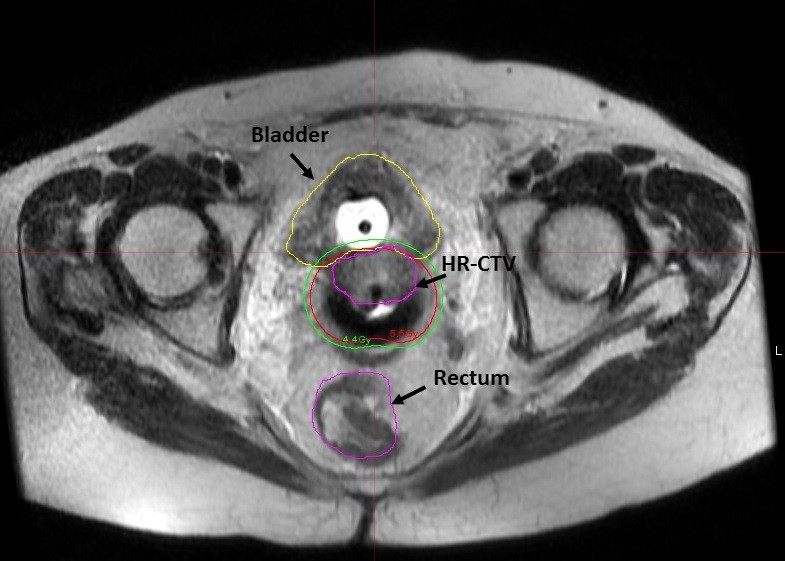
CINCINNATIUniversity of Cincinnati Cancer Institute physicians are now performing MRI-guided brachytherapy for cervical cancer, helping to better image and deliver targeted therapies directly to the tumor while minimizing healthy organs and tissues.
The cervix is the lower, narrow end of the uterus and leads from the uterus to the vagina. The main types of cervical cancer are squamous cell carcinoma and adenocarcinoma. Squamous cell carcinoma begins in the thin, flat cells that line the cervix.
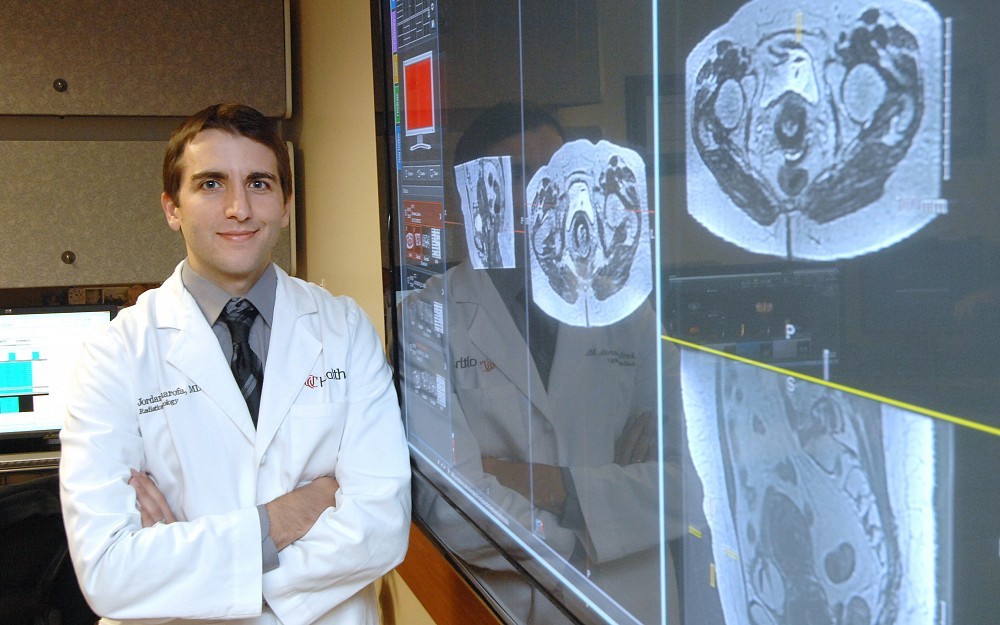
Jordan Kharofa, MD, assistant professor in the Department of Radiation Oncology at the UC College of Medicine, UC Health radiation oncologist and a member of the institute, says brachytherapy is the standard of care for cervical cancer and involves the delivery of radiation in high doses directly to the tumor from the inside out using a special applicator. The applicator also helps to avoid damage of surrounding tissues and organs.
"By coupling this treatment with MRI, physicians gain anatomic information about the tumors volume in 3-D that is unattainable on CT scans alone, he says, adding that it helps clinicians adapt the dose of radiation for each patient, tailoring treatment and accounting for not only the position of organs at risk but also irregular tumor volumes. "Using MRI gives us better visualization of the tumor in comparison to using CT, and it is done quickly and efficiently.
Kharofa, who trained with Beth Erickson from the Medical College of Wisconsin, a national leader in MRI-guided brachytherapy, says the multidisciplinary approach within the institute also enhances the benefits of this technique.
"We have radiation oncologists, physicists, radiologists and gynecologic oncologists all involved and working together in the care of the patient, he says. "Several academic institutions internationally are offering this technique, and were very happy to now offer it to patients in the Tristate and beyond.
Kharofa also reminds women that human papillomavirus infection causes almost all cases of cervical cancer and that vaccines to protect against infection with HPV as well as protected sex can greatly reduce the risk of cervical cancer.
"Its also important to be screened with a pap test to check for abnormal cells in the cervix, he says. "These cells can be treated before cancer forms; cervical cancer can usually be cured if it is found and treated in the early stages.
 By coupling brachytherapy treatment with MRI, physicians gain anatomic information about the tumor s volume in 3-D that is unattainable on CT scans alone, says Jordan Kharofa, MD.
Related Stories
UC radiation oncologist speaks with Local 12 news about clinical trial for head and neck cancer treatment
August 10, 2026

Dr. Sara Medek, a UC radiation oncology professor, speaks with Local 12 news about a new clinical trial aimed at reducing radiation in certain areas while still treating cancer effectively but with fewer painful side effects.
Cancer Center director charts future based on collaboration, AI
August 10, 2026

David Gius, MD, PhD, was featured in a Cincinnati Business Courier article and The Cancer Letter’s “The Directors" podcast discussing his priorities and goals as he recently took the helm as director of the University of Cincinnati Cancer Center.
UC graduates cross finish line at commencement
August 7, 2026
The University of Cincinnati recognized 2,125 graduates in two ceremonies at summer commencement Friday on campus at Fifth Third Arena.