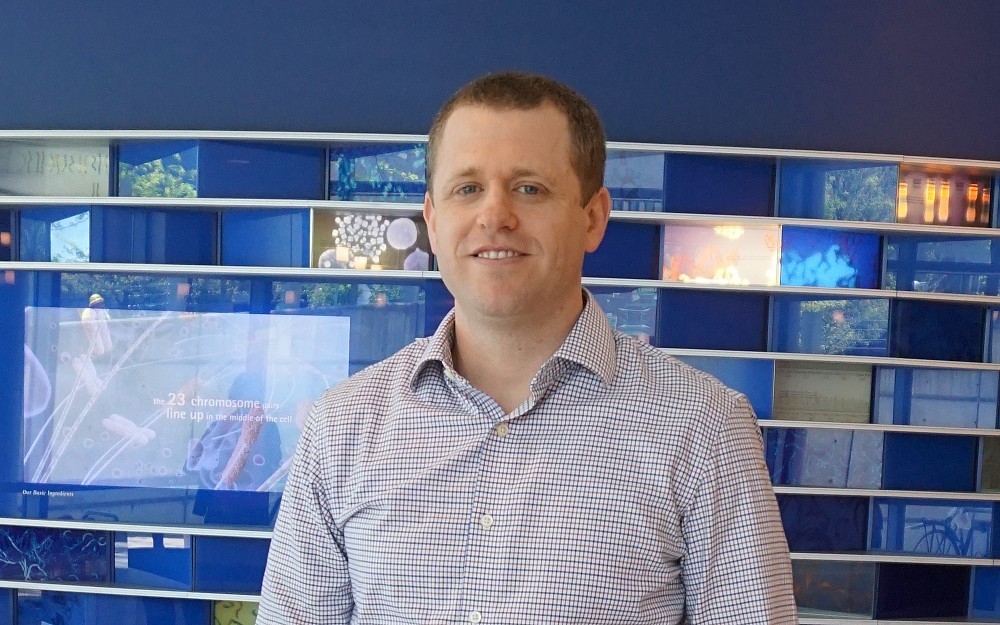
Why Study Biomedical Informatics? First Program Graduate Speaks Out

When Benjamin Landis, MD, came to Cincinnati Childrens Hospital Medical Center in 2012 for a three-year pediatric cardiology fellowship, he knew he wanted to research the development and genetics of pediatric cardiovascular disease. He also knew he needed to acquire stronger skills in biomedical informatics, an interdisciplinary field that combines knowledge of computational and medical sciences to enable better understanding and use of health and biomedical information.
He was able to accomplish this goal by earning the first Graduate Certificate in Biomedical Informatics in May 2015 from the University of Cincinnati (UC) while completing a three-year pediatric cardiology fellowship at Cincinnati Childrens. The certificate is a joint program between UCs College of Medicine and College of Engineering and Applied Sciences, in partnership with Cincinnati Childrens.
In addition to the graduate certificate, the UC Department of Biomedical Informatics is offering a Biomedical Informatics PhD Program beginning with the Fall 2015 semester. Plans call for the addition of masters-level and fellowship programs in subsequent years.
"Familiarity with data analysis techniques is vital both for research and also clinically as genetic information is incorporated into care, Landis says. "Increasingly, the practice of medicine is becoming a data analysis problem. Understanding what tools and techniques are available and how to acquire and interpret data is essential.
Landis discovered the program at Cincinnati Childrens and UC and was able to develop his informatics skills in the context of his clinical and research work. His research focuses on thoracic aortic aneurysm, using genomic sequencing data to analyze the impact of genetic modifiers on the severity of the disease.
"Working and studying at Cincinnati Childrens gave me the opportunity to work with researchers who are doing the most advanced work, he says. "There is a real push for understanding the genetics of disease and incorporating genetic conditions in new ways in advancing care. This type of work will be widely valued in the future.
For Landis, coursework in functional genomics helped him understand the technology behind sequencing. "I have developed a niche skill set that is not widely held. Medical residents are not getting this exposure in their basic curriculum, he says.
"It has been helpful to understand databases that are publicly available and to learn to speak the language of those who design databases, says Landis. "The technology is always changing, but Ive learned the basics that will allow me to be flexible in the research that I do, and also to be a savvy clinician who is better equipped to interpret data.
Contact with experts in BMI and other subspecialties has been another real benefit for him, Landis says. "Ive had many good mentors and I hope to maintain those connections throughout my career. As a clinician, having access to faculty with expertise in informatics is vital. Its an opportunity to advance research beyond whats currently known.
Whats next for Landis? He has begun a pediatric cardiology faculty position at Riley Hospital for Children in Indianapolis where he will continue his translational research in the areas of thoracic aortic aneurysm and congenital heart malformations. He also secured a secondary appointment at Rileys Center for Computational Biology and Bioinformatics.
"I am sure the BMI certificate helped me gain the credentials and skills to secure this kind of position, he says. "And the ability to have an affiliation with a bioinformatics group is invaluableits the ticket to understanding biology and medicine going forward.
For information about graduate programs in biomedical informatics at UC and Cincinnati Childrens, email bmi-education@cchmc.org or call 513-636-6250.
Related Stories
Career Fairs and Resources for every Bearcat
August 11, 2026
UC's fall career fairs connect Bearcats with co-ops, internships, and jobs — plus free resume help, career coaching, and prep resources at the Bearcat Promise Career Studio.
UC radiation oncologist speaks with Local 12 news about clinical trial for head and neck cancer treatment
August 10, 2026

Dr. Sara Medek, a UC radiation oncology professor, speaks with Local 12 news about a new clinical trial aimed at reducing radiation in certain areas while still treating cancer effectively but with fewer painful side effects.
Cancer Center director charts future based on collaboration, AI
August 10, 2026

David Gius, MD, PhD, was featured in a Cincinnati Business Courier article and The Cancer Letter’s “The Directors" podcast discussing his priorities and goals as he recently took the helm as director of the University of Cincinnati Cancer Center.