Survivor Turns Cancer Diagnosis Into Chance to Explore Cincinnati

When Deborah Ambroza, a Fort Jennings, Ohio, resident, realized that the aggressive tumor behind her left eye, known as a hemangiopericytoma, was growing again in the summer of 2015, she was devastated to say the leastespecially since her husband, Barry, was being treated for bladder cancer at the same time.
Her radiation therapy would cause her to be away from home, as she had to receive treatment daily at the UC Cancer Institute for a week at a time, and she had to do it without Barry by her side.
But as they say about making lemons into lemonade, Ambroza did just that; in fact, she turned a cancer diagnosis into a chance to explore a new city.
And she fell in love with it.
"Luckily, my radiation oncoloigst Dr. (Bill) Barrett let us know about the American Cancer Society Hope Lodge, which let me and a caregiver stay for free during the week in Cincinnati, she says. "Its such an amazing place, and I met so many wonderful people and friends when I was there.
When she wasnt undergoing treatment, Ambroza hit the town, taking Uber rides to local restaurants and historical sites.
"We saw Harriett Beecher Stowes home and William Howard Tafts home, she says. "I also had an interesting science lesson about the Lazarus Lizards that were smuggled into the city over 50 years ago and have survived to this day. We made many trips to Mecklenburg Gardens for real German food. It was so interesting to find out it is the oldest restaurant in the city.
Ambroza says, since she had to be here anyway, she took the opportunity to truly explore what Cincinnati had to offer, winding up in places like Oakley and Habits Café, Mt. Lookout and Zips Café, the Red Tree Art Gallery and Coffee Shop, Kitchen 452, Red Feather and Tafts Ale House.
"When it was time for my treatment to end, I could hardly believe it was over, she says. "I even told Dr. Barrett that I needed two more weeks to explore.
Now, Ambroza is doing well; her tumor has reduced in size, and best of all, she did not lose her sight.
"I was and am so grateful for the kindness everyone gave at the UC Cancer Institute and the UC Health Barrett Cancer Centerthe receptionists, the nurses and the radiation techs. The staff is just so kind and compassionate with everyone. I was grateful to receive my treatment there, she says. "I am so thankful to my wonderful doctors, Dr. James Augsburger (ophthalmologist), Dr. Ginger Henson-Rattan (ophthalmic plastic surgeon) and Dr. Barrett, who guided and cared for me with compassion. I am forever blessed and grateful for the ACS Hope Lodge which proved to be such a gift to me, my wonderful caregivers and the new friends I made staying there.
Ambroza still comes back for follow-up appointments, and she always makes a point to stop in and see the old friends she met around town or try a new place for lunch.
"I really could move here, she says with a laugh. "Cincinnati is wonderfulfrom world-class health care at UC to amazing restaurants, sports teams and an incredible history. While I had to visit for an undesirable reason, I knew I was where I needed to be.

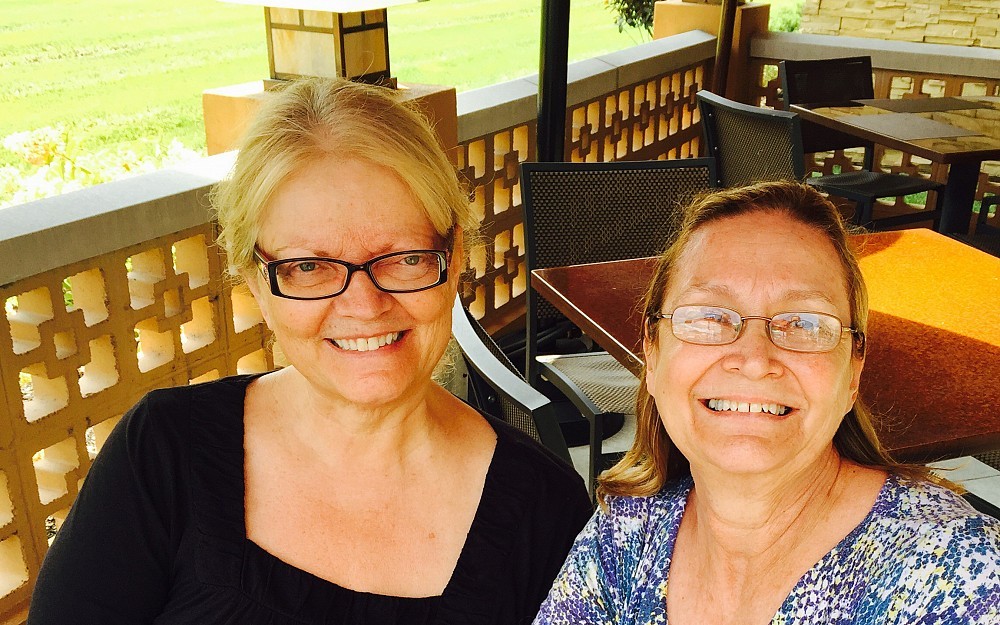
Deborah Ambroza outside of her "summer home," the American Cancer Society Hope Lodge, where she stayed while being treated for an aggressive eye tumor.
Tags
Related Stories
UC radiation oncologist speaks with Local 12 news about clinical trial for head and neck cancer treatment
August 10, 2026

Dr. Sara Medek, a UC radiation oncology professor, speaks with Local 12 news about a new clinical trial aimed at reducing radiation in certain areas while still treating cancer effectively but with fewer painful side effects.
Cancer Center director charts future based on collaboration, AI
August 10, 2026

David Gius, MD, PhD, was featured in a Cincinnati Business Courier article and The Cancer Letter’s “The Directors" podcast discussing his priorities and goals as he recently took the helm as director of the University of Cincinnati Cancer Center.
Bidirectional link between oral, kidney health calls for patient education, access
August 4, 2026

Despite growing awareness of the connection between oral health and chronic health conditions, patient awareness and access to dental care remain limited, according to University of Cincinnati experts who recently spoke with Healio | Nephrology News & Issues.