Interprofessional Pharmacy Leadership Graduate Program is Launched

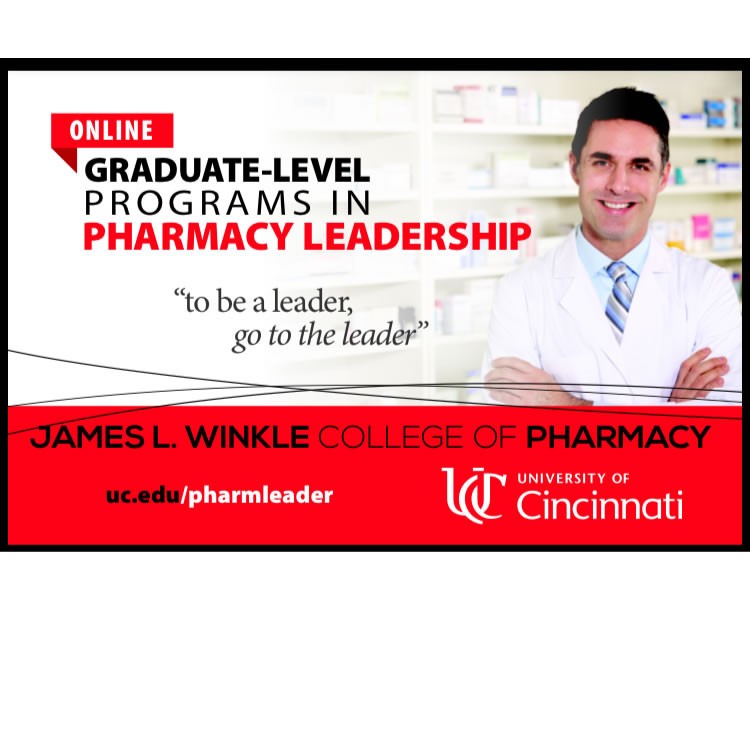
The University of Cincinnatis (UC) James L. Winkle College of Pharmacy is one of the first pharmacy schools in the country to design a completely online graduate degree/certificate program in pharmacy leadership, with classes to begin in fall 2016.
"You can complete this program from anywhere in the world and the courses are targeted toward working pharmacists, says Dean Neil MacKinnon, PhD.
Potential students, MacKinnon says, would be practicing pharmacists both in the community/retail setting and in health systems/hospitals.
"As the scope of practice of pharmacists has increased in recent years and as many pharmacists enter into management positions, the need for pharmacist-specific leadership training has become apparent, he says.
According to MacKinnon, deciding what type of leadership program to offer was a direct result of input from pharmacy faculty, alumni and preceptors. The college has partnered with UCs Lindner College of Business and College of Allied Health Sciences to incorporate courses from their Masters in Business Administration (MBA) and Masters in Health Administration (MHA) programs into the curriculum. Pharmacy-specific courses and capstone projects are also incorporated to ensure that the program is truly pharmacist-centric.
"The health professions are leaning heavily toward an interprofessional teaching element because a quality patient-centered approach to care requires that all current and future health care providers learn about other health professions and work together effectively to ensure that the best possible health outcomes are achieved," says Tina Whalen, EdD, dean of the College of Allied Health Sciences.
The online pharmacy leadership program also addresses a gap in the profession: "For the past 25 years there has been an emphasis on direct patient care training, which is still the heart of our profession, but we now need to encourage pharmacists, if they are inclined to move into management, to get the appropriate training to develop leadership skill sets, says its program director, Professor Marianne Ivey, PharmD, who currently serves as president of the Hospital Pharmacy Section of the International Pharmaceutical Federation (FIP) and is past-president of American Society of Hospital Pharmacists.
Students can enroll in the online program to earn either a certificate or a masters degree in pharmacy leadership.
While other programs in pharmacy leadership already exist in the country, they require in person attendance and are typically combined with a residency program, says MacKinnon.
"We know that many pharmacists who are working full-time and have other family or life commitments are unable to relocate to pursue pharmacy leadership training. Our program was developed with those types of pharmacists in mind.
For more admission information visit pharmacy.uc.edu
Related Stories
UC radiation oncologist speaks with Local 12 news about clinical trial for head and neck cancer treatment
August 10, 2026

Dr. Sara Medek, a UC radiation oncology professor, speaks with Local 12 news about a new clinical trial aimed at reducing radiation in certain areas while still treating cancer effectively but with fewer painful side effects.
Cancer Center director charts future based on collaboration, AI
August 10, 2026

David Gius, MD, PhD, was featured in a Cincinnati Business Courier article and The Cancer Letter’s “The Directors" podcast discussing his priorities and goals as he recently took the helm as director of the University of Cincinnati Cancer Center.
UC graduates cross finish line at commencement
August 7, 2026
The University of Cincinnati recognized 2,125 graduates in two ceremonies at summer commencement Friday on campus at Fifth Third Arena.