Patient Attributes Phase 1 Clinical Trial, Research to Keeping Him Alive

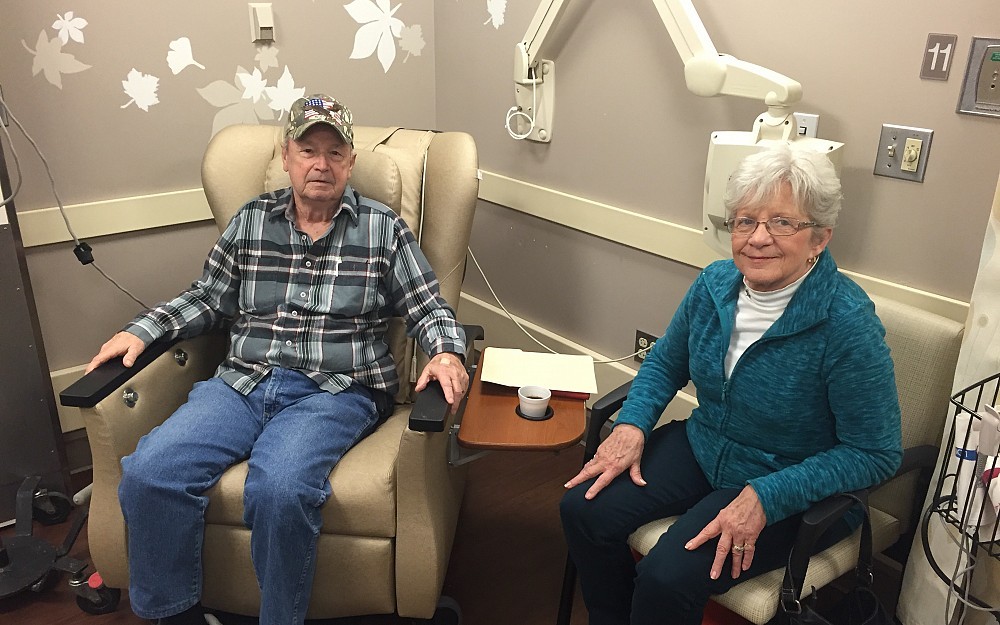
Roy Hartman, 74, a Milford, Ohio, resident says what he thought was pneumonia sent him to urgent care on Christmas Eve 2012.
However, a chest X-ray found something more startlinga spot on his right lung.
"I went to the Cincinnati VA where I was diagnosed with Stage IV cancer, he says. "I was ordered to undergo chemotherapy and had six treatments.
Hartman says the therapy stabilized his tumor; however, a three month appointment after completing treatment revealed that 30 percent of the cancer had grown back and worse had spread to his other lung.
"I was stuckId have to endure chemotherapy forever otherwise the cancer would return when I stopped, he says. "Dr. (Trisha) Wise-Draper, who was a fellow overseeing my care at the time I was at the VA, joined the faculty at UC and told me about the Phase 1 Experimental Therapeutics Program within the UC Cancer Institute which might have a study that could help me.
This program offers cancer treatment options only available in an experimental clinical trial setting; the UC Cancer Institute is the only facility in the Tristate area with a phase 1 program. These clinical research trials are the first step in moving tested scientific concepts from the laboratory bench to the clinic and are intended to evaluate safe dosages, method of administration (oral or injection) and frequency.
"Trials typically include less than 50 people and therapy is administered in a hospital setting where the patient can be closely monitored by the attending physicians and support staff, says Trisha Wise-Draper, MD, PhD, assistant professor in the Division of Hematology Oncology at the UC College of Medicine and a member of both the Cincinnati Cancer Center and UC Cancer Institute who became Hartmans oncologist. "Phase 1 trials are important for patients like Roy who don't have many standard treatment options as these are therapies not yet available to patients off trial. Although they are not promised to work, it gives hope to patients with no other options and sometimes they derive great benefit.
Hartman was enrolled in a trial that targets the protein PD-L1 releasing the break on the immune system to fight lung cancer; hes using this as a second line of treatment and has had a very good response.
"I have an infusion every two weeks and a CT scan every six weeks to track my progress, he says. "The cancer in my left lung is gone and the cancer in my right lung hasnt grown. Now, I can do just about anything I feel like doing.
Hartman enjoys camping in Brown County, Ohio, and says he heads out to nature for peace and quiet with his wife, Joyce, following each treatment.
"I just cant say enough kind things about Trish or thank her enough, he says. "Shes one of the smartest people Ive ever talked to, and her devotion to all of her patients is incredible. All of the physicians and staff at UC are wonderful; they really care about you, and it shows.
As far as being part of a clinical trial, Hartman says he would do it again in a heartbeat to help himself and others.
"If theres a study out there that could help, what do you have to lose by participating? he says. "You may not know the outcome by participating, but you certainly do know the outcome if you dont participate. In my case, it was lifesaving.
"I got two more years of life thanks to a clinical trial; I wouldnt be here without UC.
Related Stories
'Discovery, mentorship, momentum': UC College of Medicine's graduate programs celebrate year of success
September 22, 2026
From new mentorship honors to a growing research pipeline, see how the University of Cincinnati College of Medicine's graduate programs made this a standout year.
Tina Cheng, MD, receives American Academy of Pediatrics’ highest honor
September 22, 2026
UC Pediatrics chair Tina Cheng, MD, has received the American Academy of Pediatrics' highest honor for her decades of advancing child health.
President Pinto’s 2nd glow party brings first-year Bearcats together
September 20, 2026
UC President Neville Pinto and team hosted the second annual Bright Beginnings glow party for first-year students