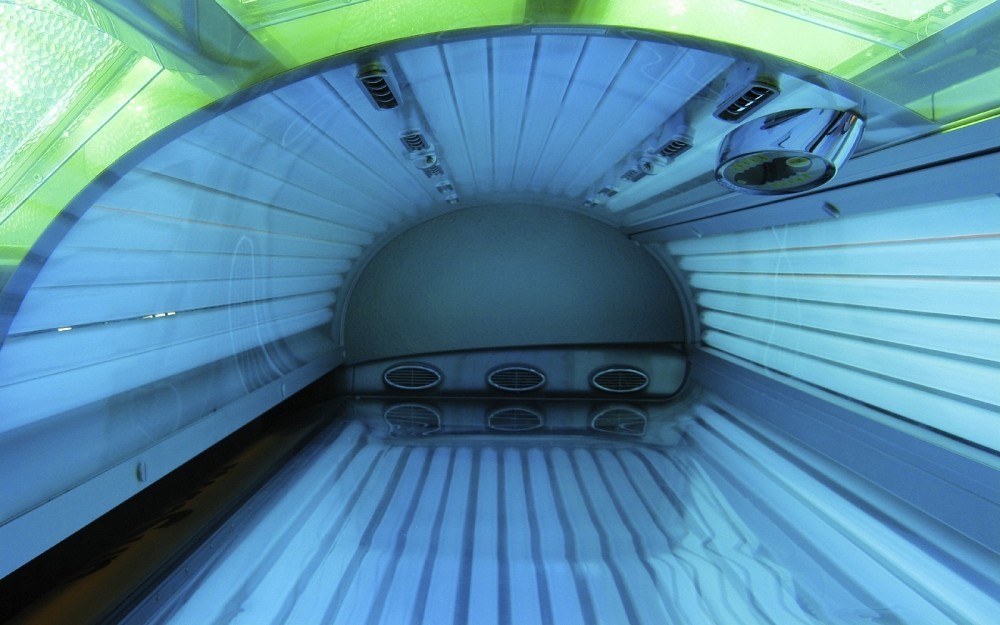
HEALTH LINE: Melanoma Expert Discusses Dangers of Indoor Tanning

CINCINNATIAs spring break plans are being finalized, many people are heading for the tanning salons to get that beach-ready glow.
However, Jeffrey Sussman, MD, professor and surgical oncology division chief at the UC College of Medicine and surgical oncologist with UC Health and the UC Cancer Institute, urges those who are tempted by the thought of indoor tanning to think again.
A recent study, released in late January from the University of Minnesota, showed that women under the age of 40 who started indoor tanning at a younger age and tanned more often have a higher risk of melanoma diagnosisthe deadliest form of skin cancer.
Sussman says the alarming findings of this study are being recognized by melanoma experts throughout the country and that people who continue to use indoor tanning should take notice.
"We, too, are certainly seeing more women under 40 with melanoma and a history of tanning bed use when they were younger, he says. "We know UV light causes melanoma and non-melanoma skin cancers. This study adds to the evidence, that tanning beds, which emit UV light, cause cancer.
"Thats why health care providers refer to tanning beds as cancer booths and why they should be regulated and taxed like tobacco to restrict or discourage their use.
Sussman says 50 years ago, the surgeon general warned that tobacco can cause cancer and almost everyone accepts this as fact now, even if some continue to smoke.
"Hopefully, people will learn the dangers of tanning beds and UV radiation exposure more quickly than the dangers of tobacco to stop or reduce their risk for skin cancer development, he says. "We are seeing more young patients in their 20s, 30s and 40s with melanoma who use tanning beds. In addition to preventing cancer by avoiding harmful UV rays, people will benefit with younger looking skin. Melanoma, a cancer that even at a few millimeters thick, can spread and cause death.
"Theres no such thing as a good or healthy base tan. Its important to use sunblock when youre out in the sun, which also means frequent reapplication, and to sit under an umbrella or cover for the majority of day. I know that as a young person, its easy to think that it couldnt happen to you, but there is evidence that it could. Skip the tanning bed."

Jeffrey Sussman, MD, is a professor and chief of surgical oncology at UC.
Related Stories
Imaging reveals how a tumor-fighting drug triggers cellular breakdown
August 24, 2026

Optics trade publication SPIE highlighted research led by the University of Cincinnati's Jiajie Diao, PhD, published in Biophotonics Discovery that demonstrated how super-resolution microscopy can track how a drug alters several important structures within cancer cells.
A new year, a shared purpose: President Pinto welcomes Bearcats to UC’s 208th fall
August 24, 2026
President Neville G. Pinto welcomes students, faculty and staff back to UC's 208th academic year.
Back to School 2026: UC remains a destination campus
August 24, 2026
The University of Cincinnati welcomes its largest first-year class and a record share of first-generation students for fall 2026, reinforced by affordability initiatives, co-op opportunities and new academic offerings across all campuses.