College of Nursing Students Serve Up Health Screenings and Education

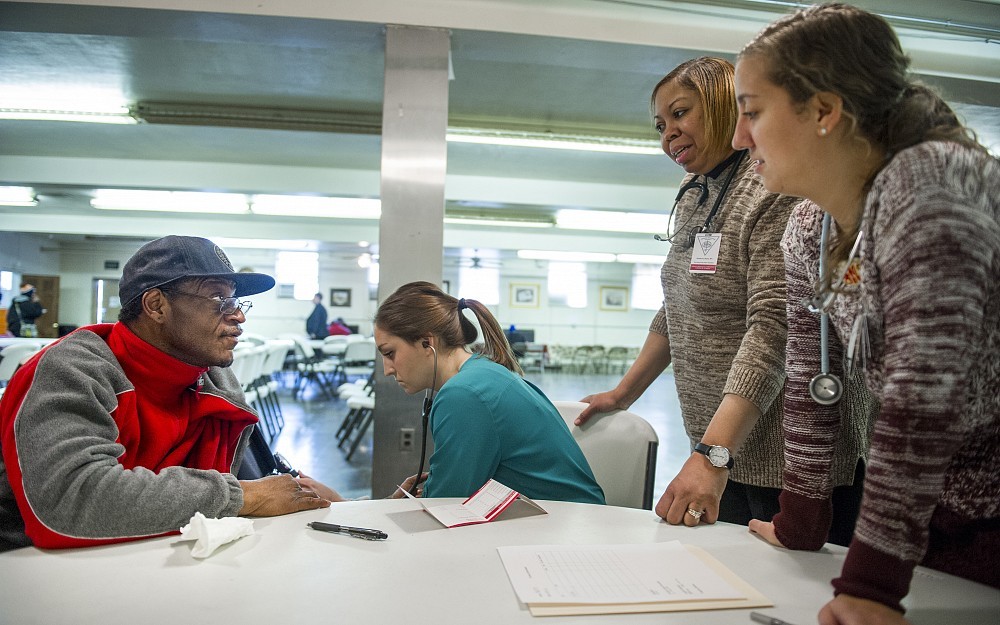
The menu for the clients of the Food for the Soul soup kitchen at St. Johns AME Zion church in Avondale is a hot dog, cole slaw, applesauce and cake. For the students from the University of Cincinnati (UC) College of Nursing who provide free health screenings and education for those clients, its a buffet of real-world nursing experience.
"The most gratifying aspect of this for me is to see the students interaction with the clients and just to see that they get it, and that they understand it, says Valorie Grant, RN, MEd at the UC College of Nursing. She oversees the nursing students who spend 14 weeks each spring and fall semester working with the Food for the Soul clientele as part of their community clinical rotation.
Food for the Soul began a few years ago when Jean Taylor, a member of the church, responded to a request from the pastor that the congregation start a food kitchen. "I really like it, Taylor says, "I really like helping people, and the need is great in the community.
The health screenings and education program were added in 2013 after a discussion between Grant and Fulton Jefferson, the co-chair of the Avondale Community Council. Grant had been doing tutoring with nursing students in the community and Jefferson told her there were some people who came to the soup kitchen who were sick and needed to be given a health screening.
"Basically if you want to get anywhere in Avondale, you go to Fulton and ask what does the community need and what would you like us to do, Grant says. "Hes got some really good ideas about what the community needs so I usually go by that direction and address those needs.
Lunches are offered at the church every Wednesday, with the exception of the first Wednesday each month. The kitchen is staffed with community volunteers who say they typically serve about 50 clients a week, with the numbers growing toward the end of the month.
Clients are required to eat their food at one of the tables set up in the basement of the church, in an effort to get them to talk with the student nurses and hopefully get a health screening. Grant says initially, some of the students are reluctant to interact with the clients, but that usually fades in the following weeks, in part because of the help of the volunteers in the kitchen.
"What usually happens is the ladies in the kitchen, especially Miss Taylor, have a good eye for seeing students who arent comfortable or are having a problem, Grant says. "So they take the students into the kitchen and they work there for a week or two and they talk to them and give them a little education, and after that the students kind of soften up.
After getting a plate of food and something to drink, some clients walk over to the other side of the room, where the nursing students are waiting with blood pressure cuffs and conversation. The clients are asked some basic health questions and have their blood pressure taken, and that information is kept on file. Client records are kept anonymously, as they are asked only their initials and birth date. If the screening shows that a client needs medical attention, the student nurses will call and make a doctors appointment for them at the University of Cincinnati Medical Center.
Clients are also given a brochure on how to get a primary care provider and a health information card, where they can record their blood pressure readings and blood glucose levels, as well as keep track of their daily medications and dosages to be shared with a medical professional.
The health screenings and education offered at Food for the Soul has fostered a sense of community among the clients, according to Grant. "They will tell other people in the neighborhood that the church is feeding them and they have the nurses in this week, she says. "Basically its the clients who get the word out. Most of the people in the community know when the soup kitchen is and theyll come in.
Clyde McCullough is one of the more regular clients of Food for the Soul. He makes the 15-minute walk most Wednesdays from where he lives on Reading Road to get a nourishing lunch and then a health screening. He doesnt need to be coaxed into having his blood pressure read, saying he knows he needs to have it checked regularly as he continues to recover from a stroke he suffered four years ago.
"It feels good to know that somebody cares about you, McCullough says of Taylor, Grant and the UC nursing students. "Its good for me to walk here.
Jenn Murphy is a College of Nursing student from Cleveland who says its gratifying to see clients who a few weeks earlier had high blood pressure return with better readings after going to a doctors appointment that was set up for them.
"Thats our end goal, she says, "so it was nice to see that. Hopefully its helping them realize they need to be more informed about their health. A lot of them come in not knowing what their blood pressure is.
As for what she has learned from the experience?
"It shows that community health nursing is a key part of every different nursing specialty and subspecialty, which I did not realize when I first started nursing school, Murphy says.
Grant says what her students learn at the soup kitchen each Wednesday cant be taught in a clinical or classroom setting. "It really gives them a better picture of the community as they will see a lot of these clients in an acute care setting at the hospital, she says. "This helps them to understand how the clients got there. They have more compassion and understanding because the patients might not have the proper nutrition or housing or transportation or anything that we take for granted a lot of the time.
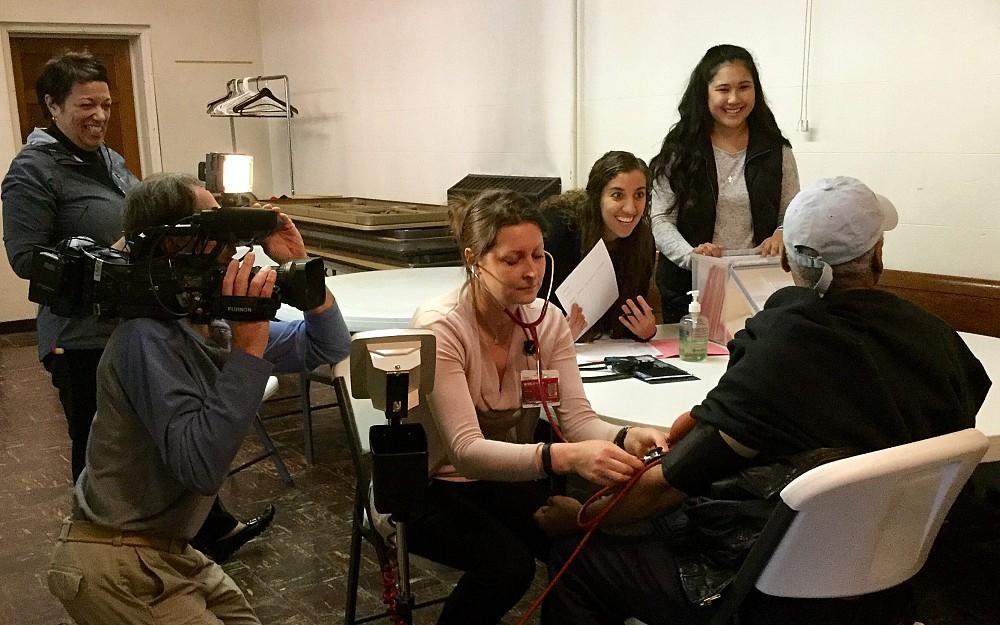
UC College of Nursing students performing health screenings and education at the Food for the Soul soup kitchen at St. John AME Zion Church in Avondale with Valorie Grant looking on to the left. The students from left to right are Luliana Braga, Jennifer Murphy and Tess Akgunduz.

Food for the Soul soup kitchen, held at St. John's AME Zion Church in Avondale where College of Nursing students perform health screenings and education for clients.
Tags
Related Stories
UC radiation oncologist speaks with Local 12 news about clinical trial for head and neck cancer treatment
August 10, 2026

Dr. Sara Medek, a UC radiation oncology professor, speaks with Local 12 news about a new clinical trial aimed at reducing radiation in certain areas while still treating cancer effectively but with fewer painful side effects.
Cancer Center director charts future based on collaboration, AI
August 10, 2026

David Gius, MD, PhD, was featured in a Cincinnati Business Courier article and The Cancer Letter’s “The Directors" podcast discussing his priorities and goals as he recently took the helm as director of the University of Cincinnati Cancer Center.
UC graduates cross finish line at commencement
August 7, 2026
The University of Cincinnati recognized 2,125 graduates in two ceremonies at summer commencement Friday on campus at Fifth Third Arena.