UC Researcher Receives $2 Million Grant to Study Dendritic Cell Regulation

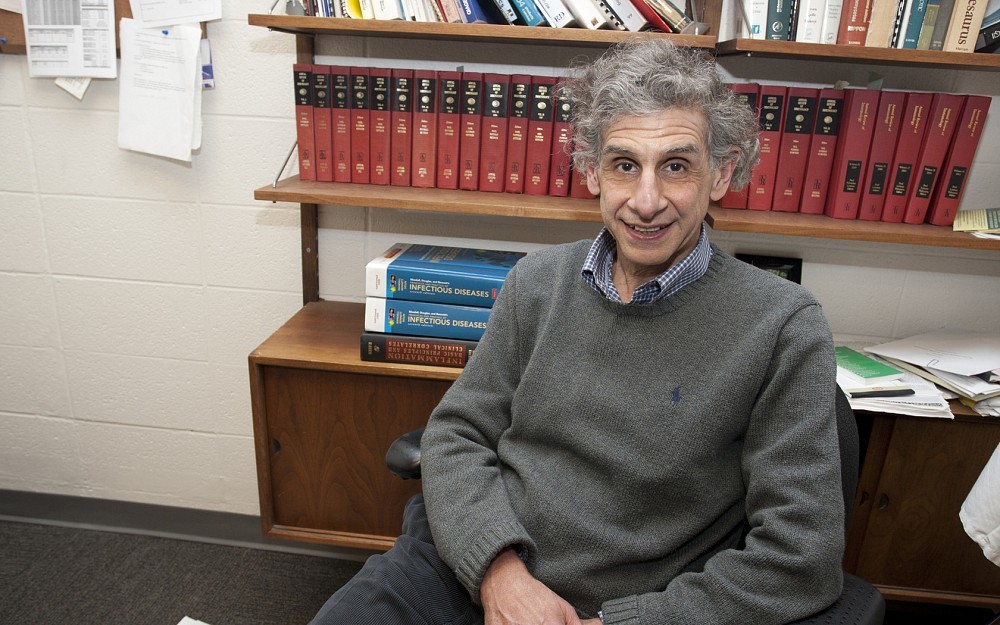
CINCINNATIA $2.2 million five-year grant from the National Institutes of Health will allow a University of Cincinnati researcher to continue his investigation into how dendritic and T-cell interaction may alter the bodys immunity to Histoplasma capsulatum, a pathogenic fungus that causes histoplasmosis.
George Deepe, MD, professor in the Department of Internal Medicine, says the presence of Krüppel-like factor 2 (KLF2), a transcription factor that controls immune response in dendritic cells by boosting Th2 cell response, is helpful in fighting off the effects of infections, such as histoplasmosis. However, the absence or reduction of KFL2 in dendritic cells weakens a cells ability to resist Histoplasma capsulatum.
"Our studies are based on what happens when you take KLF2 away, says Deepe. "What is different about the cell when this transcription factor is removed?
Histoplasmosis is a disease most prevalent in the Ohio and Mississippi River Valleys. It is most often caused by breathing in fungal spores from bird and bat droppings. Symptoms can include fever, chills, headache, muscle aches, dry cough and chest discomfort, although mild cases can be free of symptoms. There is an estimated 6.1 cases per every 100,000 population in the Midwest, according to the Centers for Disease Control and Prevention.
"One of the major factors that is different is dendritic cells that lack that this transcription factor express a member of a family of Notch proteins, which are very important in embryonic development, says Deepe. "What we found is when KLF2 is missing or absent there is enhanced expression on the surface of dendritic cells of a Notch ligand, one of the proteins that will bind to a Notch receptor.
"Its sort of a lock and key. All cells have the capacity to express Notch receptors and Notch Ligands. What we found is that in the absence of KLF2 there is enhanced expression of a Notch Ligand called Jagged 2. When it is increased it stimulates Notch signaling. We dont yet know how, but it enhances Notch signaling which leads to the increase in Th2 cell activity.
Ye Xiong, PhD, a post-doctoral fellow in UCs College of Medicine, assisted Deepe in his research. Two additional co-investigators are Julio Aliberti, PhD, professor of pediatrics, and Artem Barski, PhD, assistant professor of pediatrics at UC. Both also are researchers at Cincinnati Childrens Hospital Medical Center.
Deepe says his research will be performed in mouse models, but could have an impact on human health in the future. The absence of KLF2 may be beneficial in fighting the effects of obesity and parasitic infections, while the absence of the transcription factor may worsen the impact of allergies, says Deepe, noting those findings remain preliminary.
"In some patients with aggressive or bad histoplasmosis where it is spreading all over the body, we theorize that if Th2 cells are involved, in addition to the standard anti-fungal treatment, we could bolster the expression of KLF2 and by doing so persuade the immune response to go back to a more balanced approach. This would allow T-cells to be more active so they can deliver signals to inhibit the growth of the organism, says Deepe.
"If this is correct, then you could take somebody with a bad parasite infection and who is not mounting a good enough response, one could theoretically design drugs that would inhibit the activity of this transcription factor in dendritic cells in particular and bolster the type of T-cells you want to clear the infection faster and better, explains Deepe.
This study is funded by NIH grant 1R01AI126818-01.

The Bullock Fund will further UCÂ s study of infectious diseases, including how the soil-based fungus histoplasma capsulatum can cause chronic pulmonary diseases.
Related Stories
UC radiation oncologist speaks with Local 12 news about clinical trial for head and neck cancer treatment
August 10, 2026

Dr. Sara Medek, a UC radiation oncology professor, speaks with Local 12 news about a new clinical trial aimed at reducing radiation in certain areas while still treating cancer effectively but with fewer painful side effects.
Cancer Center director charts future based on collaboration, AI
August 10, 2026

David Gius, MD, PhD, was featured in a Cincinnati Business Courier article and The Cancer Letter’s “The Directors" podcast discussing his priorities and goals as he recently took the helm as director of the University of Cincinnati Cancer Center.
UC graduates cross finish line at commencement
August 7, 2026
The University of Cincinnati recognized 2,125 graduates in two ceremonies at summer commencement Friday on campus at Fifth Third Arena.