Researcher Using Big Data to Target Brain Cancer

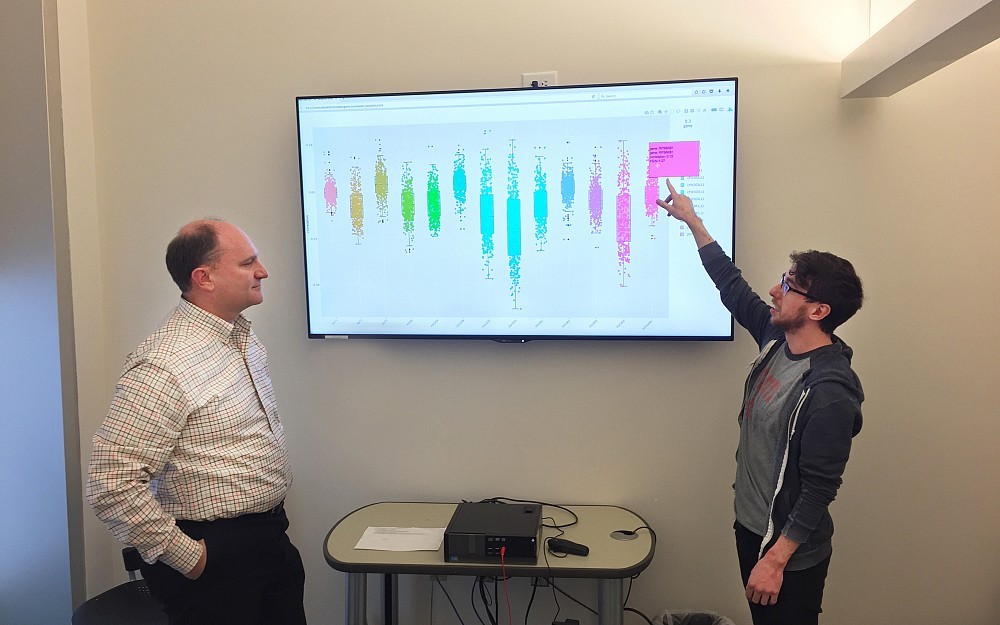
Nicholas Clark, a doctoral student at the University of Cincinnati College of Medicine, is taking a big data approach to the problem of glioblastoma multiforme, the most stubborn and aggressive of all brain tumors. Clark, who specializes in biostatistics and bioinformatics, is using a one-year, $25,000 grant to explore whether biomedical big data can predict and optimize responses to a form of targeted therapy for glioblastoma, which claims thousands of American lives each year.
The therapy involves using compounds called kinase inhibitors to target proteins that are frequently activated in human cancers, including glioblastoma.
Clark is a PhD student in the Department of Environmental Healths new Big Data Biostatistics program. His mentors include Mario Medvedovic, PhD, professor of environmental health, and David Plas, PhD, associate professor of cancer biology and holder of the Anna and Harold W. Huffman Endowed Chair in Glioblastoma Experimental Therapeutics.
"My work with Dr. Plas is in the very beginning stages and is still taking shape, Clark says. "But in the simplest terms the plan is to help with his research on new potential drug therapies for glioblastoma by making use of the huge amounts of publicly available genomic data on cancer cells.
Publicly available data include:
the toxicity of thousands of drugs to hundreds of cancer cell lines;
gene and protein expression of cancer cells in response to treatment with these drugs;
and the mutational status of cancer-related genes in these cell lines.
"We hope to use this large-scale data, as well as smaller-scale data and knowledge from experiments in Dr. Plass lab, to inform new experiments and develop new insights into glioblastoma treatment, Clark says.
Clark received his fellowship from the Advanced Multidisciplinary Training Program for Systems Biology, which is run by UCs Department of Molecular and Cellular Physiology. The multidisciplinary training program is designed to prime researchers to tackle the complex mechanisms of human disease through a cross-disciplinary approach. The training program involves 38 program faculty members paired with students who have matriculated into 13-degree granting PhD programs at UC.

Plas-Data-Glio
Related Stories
UC radiation oncologist speaks with Local 12 news about clinical trial for head and neck cancer treatment
August 10, 2026

Dr. Sara Medek, a UC radiation oncology professor, speaks with Local 12 news about a new clinical trial aimed at reducing radiation in certain areas while still treating cancer effectively but with fewer painful side effects.
Cancer Center director charts future based on collaboration, AI
August 10, 2026

David Gius, MD, PhD, was featured in a Cincinnati Business Courier article and The Cancer Letter’s “The Directors" podcast discussing his priorities and goals as he recently took the helm as director of the University of Cincinnati Cancer Center.
UC graduates cross finish line at commencement
August 7, 2026
The University of Cincinnati recognized 2,125 graduates in two ceremonies at summer commencement Friday on campus at Fifth Third Arena.