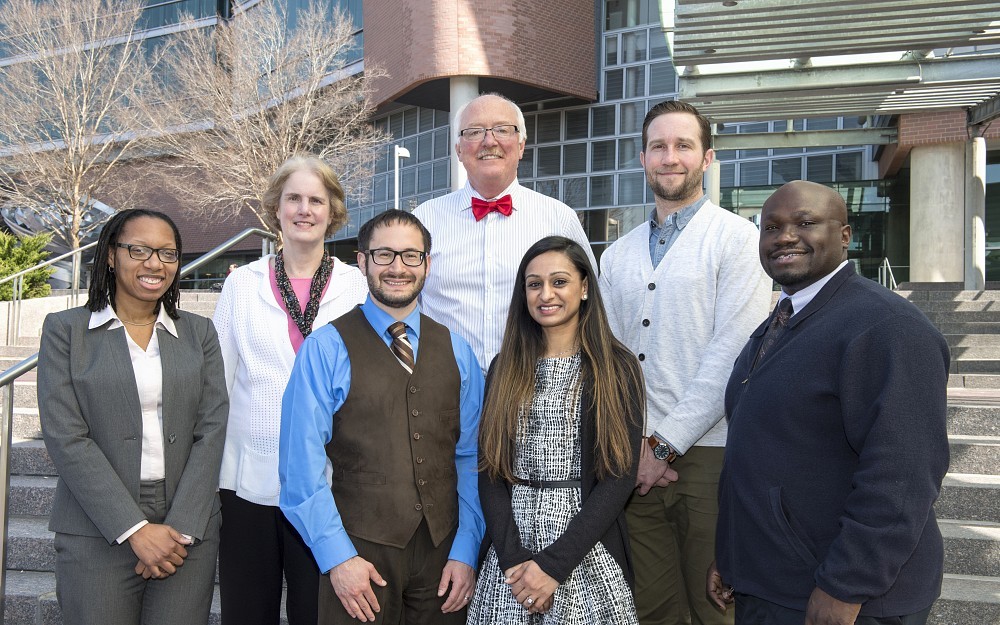
Neurobiology Research Center Awards 7 Peer-Reviewed Pilot Grants

The University of Cincinnati (UC) Neurobiology Research Center and the UC Gardner Neuroscience Institute recently awarded seven researchers with peer-reviewed pilot grants totaling $175,000. Awardees each receive a $25,000 grant toward their pilot research.
"Our goal with these pilot grants is to advance neuroscience research efforts across the university, says James Herman, PhD, Donald C. Harrison Professor of Psychiatry and Behavioral Neuroscience and director of the UC Neurobiology Research Center (NRC). "Pilot grants not only foster collaboration across different disciplines to further thinking and research in the neurosciences, but also can lead to national funding of the research project.
Herman says that NRC grants funded in recent years have paired pharmacy researchers with the UC Brain Tumor Center, psychiatry with internal medicine, and neurology and environmental health, to name a few, and that these collaborations "can go on to be competitive for NIH funding, which is the ultimate goal.
In addition to the NRC, funding for these pilot awards comes from the UC Gardner Neuroscience Institute, George J. and Elizabeth Wile Neuroscience Research Endowment, the Department of Psychiatry and Behavioral Neuroscience, Patient-Centered Outcomes Research Institute (PCORI) and Meshawa Farms.
"With each year, we continue to have a good translational emphasis, adds Herman. "Of this years awards, three are clinical, three are basic science and one is truly translational (testing a possible new therapy for glioblastoma using preclinical approaches).
- Oluwole Awosika, MD, assistant professor, Department of Neurology and Rehabilitation Medicine Enhancing Locomotion in Stroke: A Non-Invasive Neuromodulatory Approach
- Mary Beth Genter, PhD, professor, Department of Environmental Health
Intranasal Nilotinib in a Mouse Model of Parkinsons Disease - Adam Jasne, MD, fellow, Department of Neurology and Rehabilitation Medicine
Epidemiology of Rural/Urban Disparities in Stroke - Laura Ngwenya, MD, PhD, assistant professor, Department of Neurosurgery
Substrates Underlying TBI-Induced Cognitive Deficit - Smruti Patel, MD, resident, Department of Neurosurgery
Developing Novel Preclinical Models of Brain Tumors With in Utero Electroporation - Atsuo Sasaki, PhD, associate professor, Department of Internal Medicine, Division of Hematology Oncology
Development of a New Adjuvant Modality Targeting GTP Metabolism for GBM Therapy - Eric Wohleb, PhD, assistant professor, Department of Psychiatry and Behavioral Neuroscience
Neuronal Modulation of Microglia Function: Implications for Synaptic Plasticity
Tags
Related Stories
UC radiation oncologist speaks with Local 12 news about clinical trial for head and neck cancer treatment
August 10, 2026

Dr. Sara Medek, a UC radiation oncology professor, speaks with Local 12 news about a new clinical trial aimed at reducing radiation in certain areas while still treating cancer effectively but with fewer painful side effects.
Cancer Center director charts future based on collaboration, AI
August 10, 2026

David Gius, MD, PhD, was featured in a Cincinnati Business Courier article and The Cancer Letter’s “The Directors" podcast discussing his priorities and goals as he recently took the helm as director of the University of Cincinnati Cancer Center.
Bidirectional link between oral, kidney health calls for patient education, access
August 4, 2026

Despite growing awareness of the connection between oral health and chronic health conditions, patient awareness and access to dental care remain limited, according to University of Cincinnati experts who recently spoke with Healio | Nephrology News & Issues.