UC Health s Arrhythmia Center Helps Heart Patients Stay Active

"I never thought the hot tub would cause an issue, but it did, says Youn. "I had several episodes of ventricular tachycardia that my device was able to pace me out of. Fortunately, I was able to get a shower and great dressed.
Youns defibrillator activated, sending fast electrical impulses to his heart in an attempt to stop the ventricular tachycardia a dangerous heart arrhythmia that can lead to cardiac arrest or sudden death. After receiving several high energy shocks from his defibrillator, Youn was rushed to West Chester Hospital where he was diagnosed with "ventricular tachycardia storm. After being stabilized he was transferred to University of Cincinnati Medical Center where the team of electrophysiologists performed a complex emergent ventricular tachycardia ablation.
"It was a long procedure, and it took six hours, but it was done with the aid of an artificial heart pump (Impella®) in order to maintain a stable blood pressure while my doctor was inducing and treating the abnormal rhythms of my heart, he says. "They got my heart to go into this weird rhythm for more than one hour, then mapped the electrical impulses and ablate them.
The surgery was a success for Youn, an Air Force veteran and retired engineer, who saw a medical team at UC Healths Arrhythmia Center. Youn and his wife, Sonny, are now back to enjoying time with their three adult children and five grandkids.
"Frankly, I feel as if I live a charmed life because of the care I receive at UC Health, from my electrophysiologist to my general cardiologist and endocrinologist, they are all rock stars, says Youn. "I am blessed and highly favored.
Nationally, more than 4 million Americans, most aged 60 and older, experience heart arrhythmias. Some are simply bothersome while others can be life-threatening, explains Alexandru Costea, MD, director of UC Healths Arrhythmia Center and the Electrophysiology Center at UC Medical Center.
"Our team is employing state-of-the art cardiac mapping systems, intra-cardiac ultrasound and radiofrequency ablations along with advanced cardiac support technologies for the most complex arrhythmias, says Costea, also a professor in the University of Cincinnati College of Medicine. "We focus on minimizing the patients exposure to radiation and shorter duration of procedures, while maintaining exemplary results.
Costea says the centers use of the latest technology allows medical staff to safely and effectively manage very high risk, life-threatening conditions, like Mr Youns. The heart team approach, uniting experts from electrophysiology, interventional cardiology, heart failure and cardiac anesthesia is unique in the Tri-State area no other hospital is currently performing this kind of procedure. Complex procedures in our institution have become a daily routine, and we are happy to report excellent outcomes, Costea adds.
Signs of an Arrhythmia
Heart rhythm problems are not always obvious, but when they are, we recommended immediate medical attention. Some warnings include:
- Fluttering in your chest
- A racing heartbeat
- A slow heartbeat
- Chest pain
- Shortness of breath
- Lightheadedness or dizziness
- Sweating
- Fainting or near fainting
One Number. Multiple Locations.
UC Health Arrhythmia Services
Clifton Montgomery West Chester
(513) 475-8521

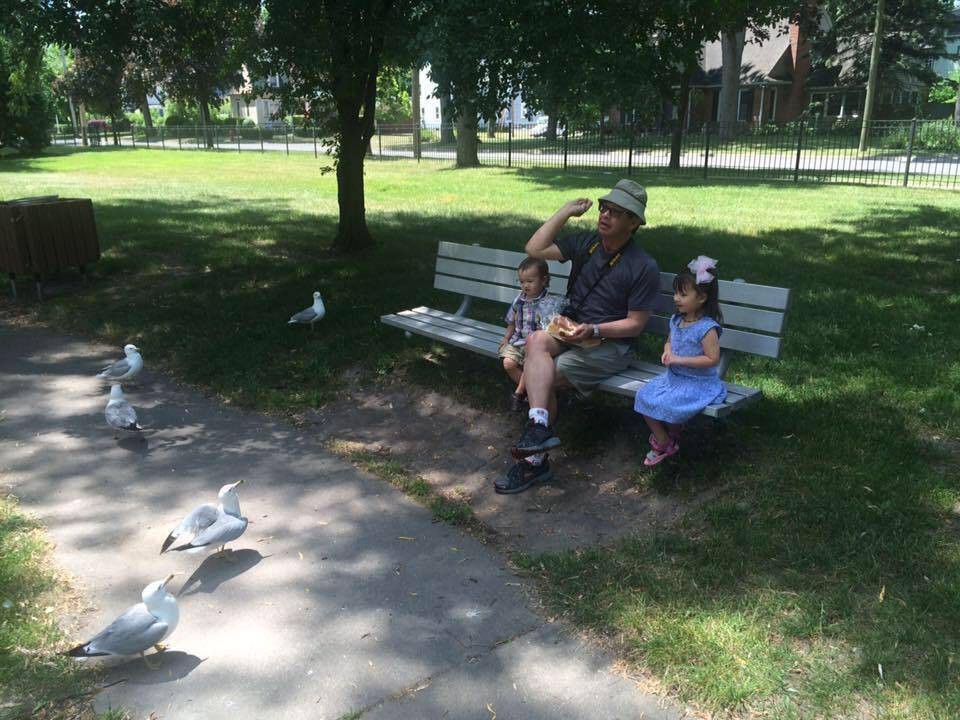
Baron Youn shown with his daughters during a visit.

Alexandru Costea, MD, is director of UC Health's Arrhythmia Center. He is shown during a medical procedure.
Related Stories
Cancer Center plays key role in lab research, clinical trials for new pancreatic cancer drug
September 1, 2026

WLWT and WCPO highlighted the contributions of University of Cincinnati Cancer Center researchers that helped lead to the recent FDA approval of daraxonrasib, a new treatment for pancreatic cancer.
Cancer Center physician receives $150,000 New Investigator Research Grant to study treatment-resistant leukemia
September 1, 2026
The University of Cincinnati Cancer Center’s Sarah Skuli, MD, PhD, received a two‑year, $150,000 Leukemia Research Foundation New Investigator Grant to study TP53‑mutated leukemia, a treatment‑resistant subtype with very poor outcomes.
Heavy social media use linked to depression
August 31, 2026

U.S. News and World Report, Yahoo! News, MSN, USA Today and other national media highlight a new study by the University of Cincinnati and Northwestern University that found a correlation between heavy social media use and depression in adults.