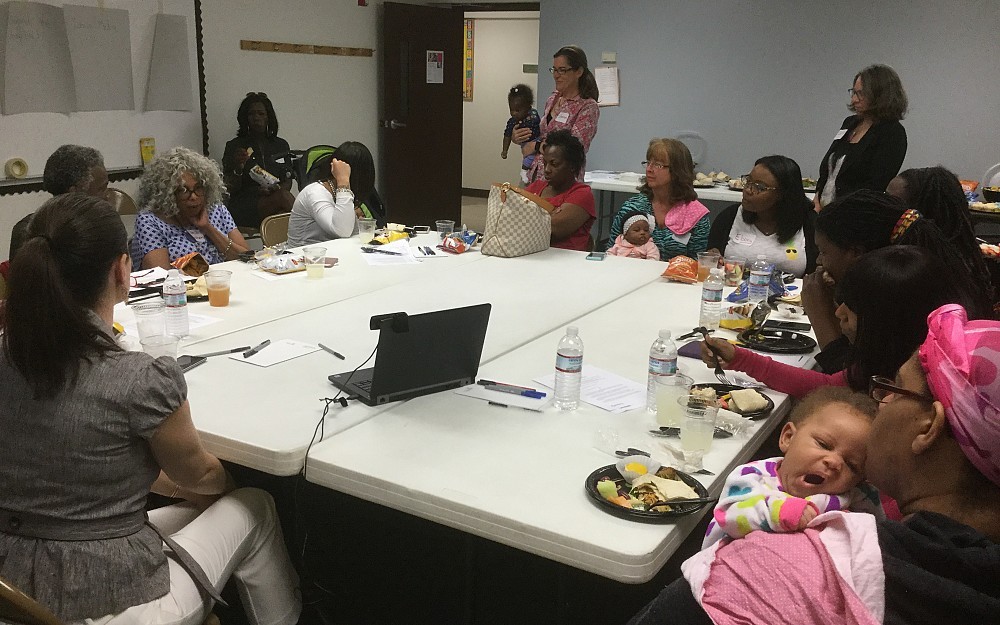
Research Study in Need of Breastfeeding Women

The University of Cincinnati (UC) Maternal and Child Nutrition Lab in the College of Allied Health Sciences is in need of women currently breastfeeding to take part in a research study the week of June 19, 2017. The purpose of the study is to determine the feasibility of a breast pumping program designed to test whether a womans body will make more milk in response to additional pumping.
Researchers are looking for women who have infants between three and six weeks old who are being exclusively breastfed. The study will last three days and participants will come to the Schubert Research Clinic at Cincinnati Childrens Hospital Medical Center for a three- to four-hour visit for blood sugar testing and milk production measuring. Participants will then add three extra pumping sessions to their usual breastfeeding routine for two days and have their milk production re-measured the following morning.
Study participants will be compensated up to $200 for their time and effort. Those interested in taking part in this study or wanting more information should contact the UC Maternal and Children Nutrition Lab office at 513-558-7041.
Related Stories
Cancer Center plays key role in lab research, clinical trials for new pancreatic cancer drug
September 1, 2026

WLWT and WCPO highlighted the contributions of University of Cincinnati Cancer Center researchers that helped lead to the recent FDA approval of daraxonrasib, a new treatment for pancreatic cancer.
Cancer Center physician receives $150,000 New Investigator Research Grant to study treatment-resistant leukemia
September 1, 2026
The University of Cincinnati Cancer Center’s Sarah Skuli, MD, PhD, received a two‑year, $150,000 Leukemia Research Foundation New Investigator Grant to study TP53‑mutated leukemia, a treatment‑resistant subtype with very poor outcomes.
Heavy social media use linked to depression
August 31, 2026

U.S. News and World Report, Yahoo! News, MSN, USA Today and other national media highlight a new study by the University of Cincinnati and Northwestern University that found a correlation between heavy social media use and depression in adults.