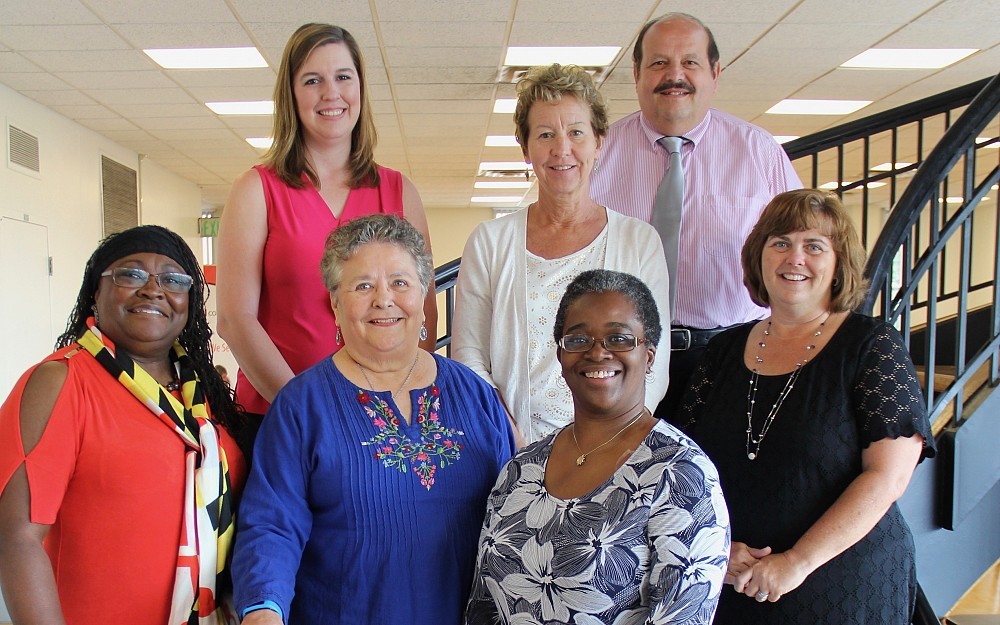
College of Nursing Hosts Workforce Diversity Retreat

The University of Cincinnati (UC) College of Nursing hosted a retreat on Thursday, June 29, 2017 to share best practices to increase diversity in the nursing workforce. Representatives from Robert Morris University, Elms College and the University of Texas Health Science Center at San Antonio attended the Nursing Workforce Diversity (NWD) retreat at Procter Hall, home to the College of Nursing.
As with the UC College of Nursing, all represented universities have received Health Resources & Services Administration (HRSA) grants to aid their efforts. The College of Nursing used its HRSA grant to establish the Leadership 2.0 program, a comprehensive program designed to increase the number of racially diverse, first generation, underrepresented ethnically and/or economically disadvantaged students.
"I think this opportunity to bring the awardees together offers great potential for the College of Nursing to meet its vision of leading the transformation of health care, says Karen Bankston, PhD, associate dean of clinical practice, partnership and community engagement at the UC College of Nursing. "We have diversity in the types of colleges invited to get a sense of what others were doing. We have small colleges, health science centers, liberal arts colleges, state colleges, all with different populations being focused on.
The NWD program increases nursing education opportunities for students from disadvantaged backgrounds by using social determinants to guide the implementation of evidence-based approaches successful in retaining such students in schools of nursing. The program supports projects that provide stipends or scholarships for a variety of initiatives designed to help students continue and complete their education.
The agenda featured sessions on recruitment and retention, mentoring, outcome measures, challenges and issues, key successes and learning and sustainability. The sessions were led by Bankston, Kimberly McGinnis, research associate and program director of Leadership 2.0 Scholars at the College of Nursing and Tracy Pritchard, PhD, director, Center for Educational Research, Scholarship and Innovation at the College of Nursing.
"It was an excellent experience and a very needed experience, says Carl Ross, PhD, professor of nursing and primary investigator for the HRSA Nurses in the Workforce diversity grant at Robert Morris University. "We have to promote diversity in the workforce if nursing is going to thrive in health care nowadays. We also need to promote equal opportunity for our disadvantaged students.
"Its been a great experience hearing about how we have all used the nursing workforce diversity grant funding in very different programmatic ways, says Cheryl Sheils, EdD, nursing faculty at Elms College in Chicopee, Massachusetts. "We all have a different take, based on what student population were addressing and what our goals are. We have different paths with the same missionwere all trying to increase diversity in the nursing workforce.
Tags
Related Stories
UC radiation oncologist speaks with Local 12 news about clinical trial for head and neck cancer treatment
August 10, 2026

Dr. Sara Medek, a UC radiation oncology professor, speaks with Local 12 news about a new clinical trial aimed at reducing radiation in certain areas while still treating cancer effectively but with fewer painful side effects.
Cancer Center director charts future based on collaboration, AI
August 10, 2026

David Gius, MD, PhD, was featured in a Cincinnati Business Courier article and The Cancer Letter’s “The Directors" podcast discussing his priorities and goals as he recently took the helm as director of the University of Cincinnati Cancer Center.
UC graduates cross finish line at commencement
August 7, 2026
The University of Cincinnati recognized 2,125 graduates in two ceremonies at summer commencement Friday on campus at Fifth Third Arena.