Nursing Research to Examine Technology in Counseling of At-Risk Teens

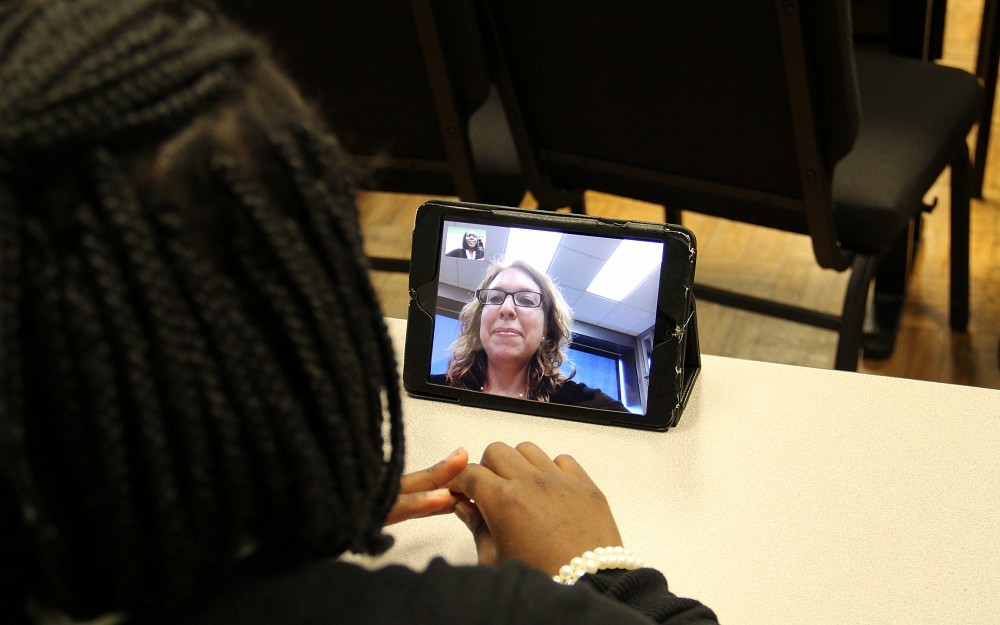
Researchers in the University of Cincinnati (UC) College of Nursing are examining the role of technology in the counseling of teens in domestic violence shelters. The research, funded through an R21 grant by the Eunice Kennedy Shriver National Institute of Child Health and Development (NICHD), hopes to demonstrate how technology can be a feasible way to deliver intervention and potentially be a resource shared among shelters.
"In this study, instead of looking only at preventing teen dating violence, were also examining other risk behaviors, says Carolyn Smith, PhD, assistant professor at the College of Nursing. "Research has shown that teens who are exposed to violence in their home of origin are more likely to engage in risky health behaviors, likely as a coping strategy or an escape from what theyre experiencing at home.
Smith is the principal investigator on the study, with Donna Martsolf, PhD, professor emerita at the UC College of Nursing and Clair Draucker, professor at the Indiana University School of Nursing as co-investigators.
The research will target five risky behaviors:
- Teen dating violence.
- Risky sexual activity.
- Substance use.
- Tobacco use.
- Disordered eating (eating unhealthy foods or overeating).
The name of the project is "Time for You, which Smith says offers the teens the opportunity to make a fresh start in their lives.
"This is time for you to think about making a change, to think about doing something positive in your own life, and here are some of the topics we can talk about, she says is how the program is presented to the teens.
Smith will start recruiting participants for the study in October at domestic violence shelters in Cincinnati and in Summit and Medina Counties in northeastern Ohio. Smith has been conducting a pilot study at those shelters to demonstrate that teens would be willing to participate in the project.
"The technology aspect of this research is counseling sessions done using FaceTime video conferencing, says Smith. "Our team members delivering the sessions are here at the College of Nursing, delivering counseling through iPads we have fixed at the shelter locations.
Smith says there are three components to the eight-week long program, the first of which is a counseling session using a technique called motivational interviewing. The counselors are undergraduate nursing students on the College of Nursing research team trained in delivering this type of intervention. In the four weekly counseling sessions, the nursing students ask questions aimed at getting the teens to think introspectively about where they are in their lives and encouraging them to make a plan for their future and to start to engage in healthier behaviors. The team follows up for weeks later to determine if changes have been sustained.
"In between the counseling sessions, we have a website that weve developed where teens get health facts and health messages about their selected behavior to try and learn a little bit more about that behavior and what the changes they make could mean for their own health, says Smith of the second component of the program. "The third component is website tracking, so theyre tracking what changes theyve made that day toward their health behavior.
Over the course of the two-year study, Smith says she hopes to recruit about 100 teens. The project will see ongoing recruitment and enrollment in the eight-week sessions.
The research is funded by the NICHD (1R21HD086749-01A1) in the amount of $248,842.
Tags
Related Stories
UC radiation oncologist speaks with Local 12 news about clinical trial for head and neck cancer treatment
August 10, 2026

Dr. Sara Medek, a UC radiation oncology professor, speaks with Local 12 news about a new clinical trial aimed at reducing radiation in certain areas while still treating cancer effectively but with fewer painful side effects.
Cancer Center director charts future based on collaboration, AI
August 10, 2026

David Gius, MD, PhD, was featured in a Cincinnati Business Courier article and The Cancer Letter’s “The Directors" podcast discussing his priorities and goals as he recently took the helm as director of the University of Cincinnati Cancer Center.
UC graduates cross finish line at commencement
August 7, 2026
The University of Cincinnati recognized 2,125 graduates in two ceremonies at summer commencement Friday on campus at Fifth Third Arena.