Serving the Underserved While in Medical School

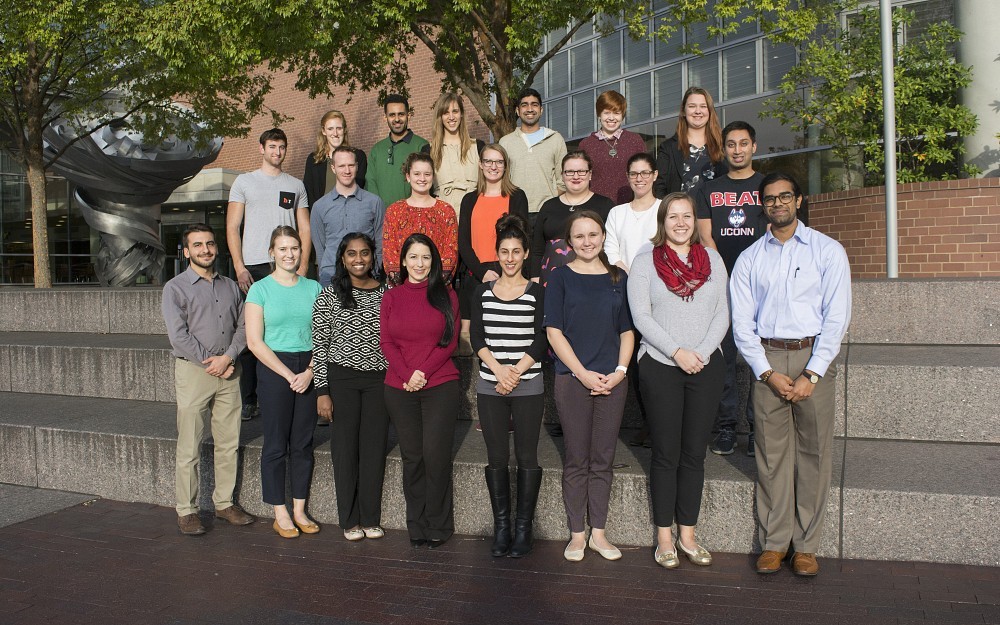
Second-year medical student Caroline Hensley is really passionate about bringing healthcare to underserved populations in the Tristate.
She is working with a group of about 40 medical, nursing, pharmacy and allied health students to create a student-run clinic designed to assist undocumented immigrants, primarily Latino residents, along with other underinsured or uninsured residents, in and around Cincinnati. The emergent effort has been ongoing since May 2016, the summer before Hensley entered medical school at UC.
Thats when she along with three other medical studentsFarah Hussain, Mahima Venkatesh and Manoj Ambalavananstarted making inquiries, speaking with individuals in the community and leaders at UC to find a space for another healthcare option. They also searched to see if physicians and other medical professionals at UC would agree to provide oversight for a new health clinic.
The students enthusiasm and ambition has captured the attention of the Ohio Latino Affairs Commission which awarded the UC medical students the "Nuestra Familia, Our Family DHO Award during the 2017 Distinguished Hispanic Ohioan Award Gala held Oct. 14 in Columbus. The honor is given to individuals, companies or organizations that have performed service of exceptional benefit to Ohios Latino community.
So far $13,500 has been secured to advance the project with funding coming from the UC Center for Translational and Science Training, the Latino Health Summit, the UC College of Medicine and FUEL Cincinnati.
Hensley, who graduated from UC with an undergraduate degree in Spanish and biology and a masters in public health, volunteered and later worked at the Crossroad Health center. There, she along with two of her fellow medical students saw first-hand some of the challenges undocumented immigrants face in obtaining healthcare.
"I was working with a lot of the Spanish speakers, and I noticed they were coming from an hour away and that we were one of the very few options that they had because they dont have insurance, says Hensley. "Not many people have staff that speak Spanish. There is Crossroad and just a few other places that are prepared to see patients without insurance and who dont speak English.
According to the Pew Research Center there at least 20,000 undocumented residents living in Greater Cincinnati in 2014. The Greater Latino Cincinnati Coalition estimates there are 60,000 Hispanic immigrants, both documented and undocumented in the region.
"This is really a population that no one is talking about, especially in Ohio, says Hensley. "You dont think of this as an immigrant destination. You think of Florida or California, but there are large populations here that are going unnoticed and ending up in the emergency rooms because they dont have the care that they need.
Hensley said a large number of Latino residents residing in northern Hamilton County are far from locations that offer free healthcare services. The Healthcare Connection, a community health center, is located in Lincoln Heights with satellite offices in Forest Park and Mount Healthy, but it can be a challenge for some undocumented residents to reach.
"We met with one organization that said undocumented immigrants were nervous about driving because they didnt have licenses and they didnt know if they would be pulled over so they were nervous about driving to Lincoln Heights, says Hensley. "That was something we had never considered until we were meeting with someone up in Forest Park and they said they would never want to drive and its so far to not have a license.
Hensley and her student colleagues have secured a site for their health clinic. The Healing Center in Springdale, a ministry of Vineyard Cincinnati Church, has agreed to assist the students, says Hensley.
Meanwhile, the students have made presentations before faculty and leadership of the Colleges of Nursing, Pharmacy, Allied Health, and Medicine while working with physicians in the departments of family medicine and internal medicine to secure physician preceptors to oversee a future medical clinic.
"We are working with the College of Allied Health right now; they have a medical lab sciences program where students are trained in phlebotomy, and we are hoping to bring those students in to help us do lab draws and figure out all the things involved in being able to provide labs to patients, says Hensley. "We have tried really hard to make things interdisciplinary so there is not just one profession carrying everything.
"We are bringing in the students who have good expertise in certain areas. As med students we dont know that much about lab draws or care coordination that some of our lab science or nursing colleagues would know a lot more about, says Hensley. We have med students, pharmacy students, nursing students and we have a ton of undergraduates who have been awesome and energized about making the clinic a reality.
Mia Mallory, MD, associate dean in the College of Medicines Office of Diversity and Inclusion, says shes excited about the students progress which also advances a core mission of the collegenurturing a diverse group of future physicians to serve a diverse community, nation and world.
"Our students are passionate about creating opportunities to serve and our job is to support and encourage their amazing energy and commitment to the complete care of all patients who need them, says Mallory, also a pediatric hospitalist at Cincinnati Childrens Hospital. "We are proud to be working not just with talented students, but future healers whose impact we know will affect the lives of many individuals.
Related Stories
UC radiation oncologist speaks with Local 12 news about clinical trial for head and neck cancer treatment
August 10, 2026

Dr. Sara Medek, a UC radiation oncology professor, speaks with Local 12 news about a new clinical trial aimed at reducing radiation in certain areas while still treating cancer effectively but with fewer painful side effects.
Cancer Center director charts future based on collaboration, AI
August 10, 2026

David Gius, MD, PhD, was featured in a Cincinnati Business Courier article and The Cancer Letter’s “The Directors" podcast discussing his priorities and goals as he recently took the helm as director of the University of Cincinnati Cancer Center.
UC graduates cross finish line at commencement
August 7, 2026
The University of Cincinnati recognized 2,125 graduates in two ceremonies at summer commencement Friday on campus at Fifth Third Arena.