$1.25 Million Grant Will Study Infection Control in Histoplasmosis Patients

A $1.25 million five-year grant from the National Institutes of Health will allow a University of Cincinnati (UC) researcher to determine whether or not the hypoxia-inducible factor 1-alpha (HIF-1α) could control infection in patients with histoplasmosis. The result of this research could aid in the search for potential therapies for those patients.
Histoplasmosis is a disease most prevalent in the Ohio and Mississippi River Valleys. It is most often caused by breathing in fungal spores from bird and bat droppings. Symptoms can include fever, chills, headache, muscle aches, dry cough and chest discomfort, although mild cases can be free of symptoms. There is an estimated 6.1 cases per every 100,000 population in the Midwest, according to the Centers for Disease Control and Prevention.
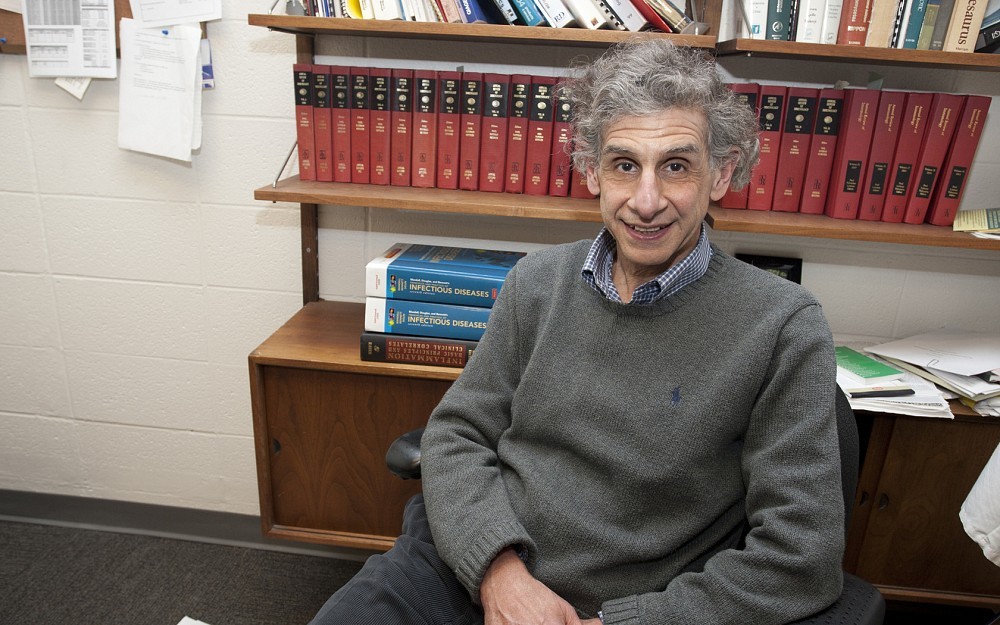
"HIF-1α is important in metabolism and specifically in allowing cells to utilize glucose, says George Deepe, MD, professor in the Division of Infectious Diseases in the Department of Internal Medicine at the UC College of Medicine, and the principal investigator of the study.
"One aspect of this research is examining whether the metabolic function of HIF-1α in some way restrains production of interleukin 10 (IL-10).
IL-10 is a cytokine produced by cells to limit inflammation and inhibit macrophage activity.
Macrophages are a principal effector cell in combating histoplasmosis and require external signals to limit intracellular growth. The transcription factors HIF-1α and -2α are needed for proper functioning of these cells. Researchers will explore how these factors regulate the antifungal properties of macrophages.
An injection of Histoplasma into animal models creates the formation of granulomas, which are small areas of inflammation in tissue.
"Inside this collection of cells is a lot of dead debris, says Deepe. "If you actually were to look for histoplasma, its in the center of that and thats a hypoxic environment, which is a low-oxygen environment. We decided, based on that, to see whether the HIF-1α gene was important in controlling infection.
Through an immunology group at Cincinnati Childrens, Deepe collaborated with Jan Rupp, an immunologist at the University of Lübeck in northern Germany also studying HIF-1α. Some members of Rupps lab have come to UC to study in the lab at the College of Medicine, while some College of Medicine students in the PhD portion of their training have traveled to the lab in Lübeck.
This study is supported by the National Institute of Allergy and Infectious Diseases of the National Institutes of Health under award number R01AI133797.
Related Stories
UC radiation oncologist speaks with Local 12 news about clinical trial for head and neck cancer treatment
August 10, 2026

Dr. Sara Medek, a UC radiation oncology professor, speaks with Local 12 news about a new clinical trial aimed at reducing radiation in certain areas while still treating cancer effectively but with fewer painful side effects.
Cancer Center director charts future based on collaboration, AI
August 10, 2026

David Gius, MD, PhD, was featured in a Cincinnati Business Courier article and The Cancer Letter’s “The Directors" podcast discussing his priorities and goals as he recently took the helm as director of the University of Cincinnati Cancer Center.
UC graduates cross finish line at commencement
August 7, 2026
The University of Cincinnati recognized 2,125 graduates in two ceremonies at summer commencement Friday on campus at Fifth Third Arena.