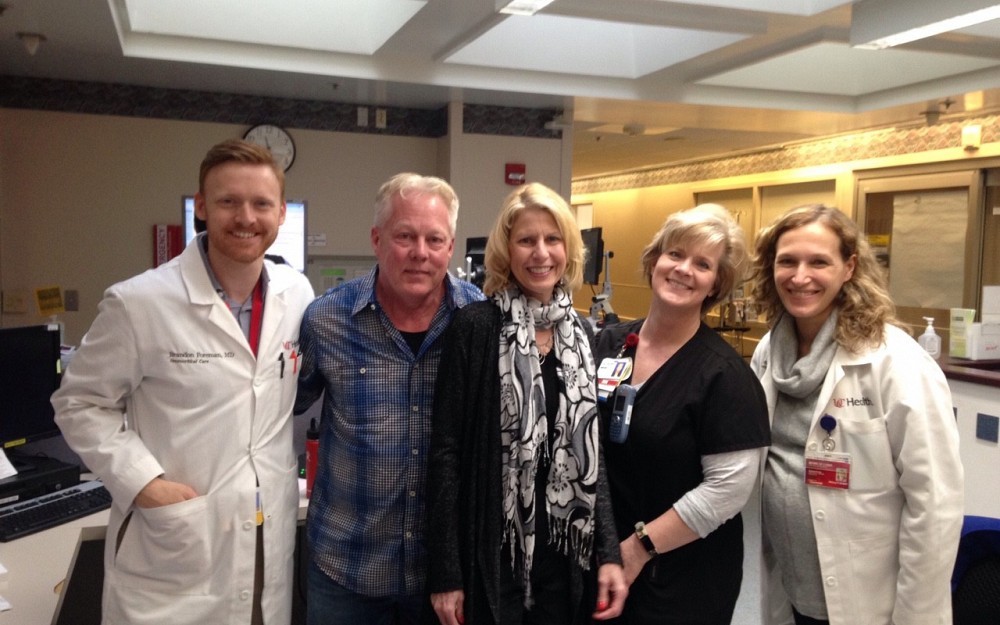
Patient on Road to Recovery Thanks to Neuroscience Team, and Time

After collapsing from a heart attack in December 2017, 51-year-old Mary Cooper remained in status epilepticus, or a constant state of seizure activity for nearly two weeks. With continuous EEG monitoring, available in the region only at UC Medical Centers neurocritical care unit, specialists at the UC Gardner Neuroscience Institute were able to get her seizure activity under control to begin the brains healing process.
"At UC, we know a lot about post-cardiac arrest seizures, so when we got the call and heard what was going on, we made room for her, says Brandon Foreman, MD, an assistant professor of neurology. "If a patient is in a coma, it can be hard for a standard EEG to determine what is going on inside the brain; that is where the continuous monitoring becomes critical.
Tags
Related Stories
UC radiation oncologist speaks with Local 12 news about clinical trial for head and neck cancer treatment
August 10, 2026

Dr. Sara Medek, a UC radiation oncology professor, speaks with Local 12 news about a new clinical trial aimed at reducing radiation in certain areas while still treating cancer effectively but with fewer painful side effects.
Cancer Center director charts future based on collaboration, AI
August 10, 2026

David Gius, MD, PhD, was featured in a Cincinnati Business Courier article and The Cancer Letter’s “The Directors" podcast discussing his priorities and goals as he recently took the helm as director of the University of Cincinnati Cancer Center.
Bidirectional link between oral, kidney health calls for patient education, access
August 4, 2026

Despite growing awareness of the connection between oral health and chronic health conditions, patient awareness and access to dental care remain limited, according to University of Cincinnati experts who recently spoke with Healio | Nephrology News & Issues.