Architecture Alive:
UC to co-lead regional research in ‘living architecture’ and green infrastructure

By: John(na) Jackson
The University of Cincinnati, in collaboration with Kent State University and Heidelberg University, will begin researching the best methods for integrating plants and living systems within buildings as designed ecologies. Together the three institutions will form the Greater Ohio Living Architecture Center (GOLA) – dedicated to exploring the best applications of green architecture, and training the industry professionals who seek to implement them.
The GOLA Center will study the use of integrative vegetation within and upon buildings – refocusing infrastructure as unique ecosystems, rather than static structures. As concerns around resources and the climate heighten, environmental design and green architecture are on the rise. UC has been a leading institution for expertise and research on green roofs for over a decade, partnering with organizations like the Civic Garden Center and the Cincinnati Zoo – both of which have green roofs.
Ishi Buffam, associate professor in UC’s departments of biological sciences and geography, describes the necessity of investing in research and education in green architecture:
“For the first time in human history, the majority of the world’s population lives in cities – this provides a lot of opportunity but also results in concentrated environmental issues and intense pressure on available space in those urban centers. Living architecture provides a clever way to turn the exterior of buildings into urban green space.”

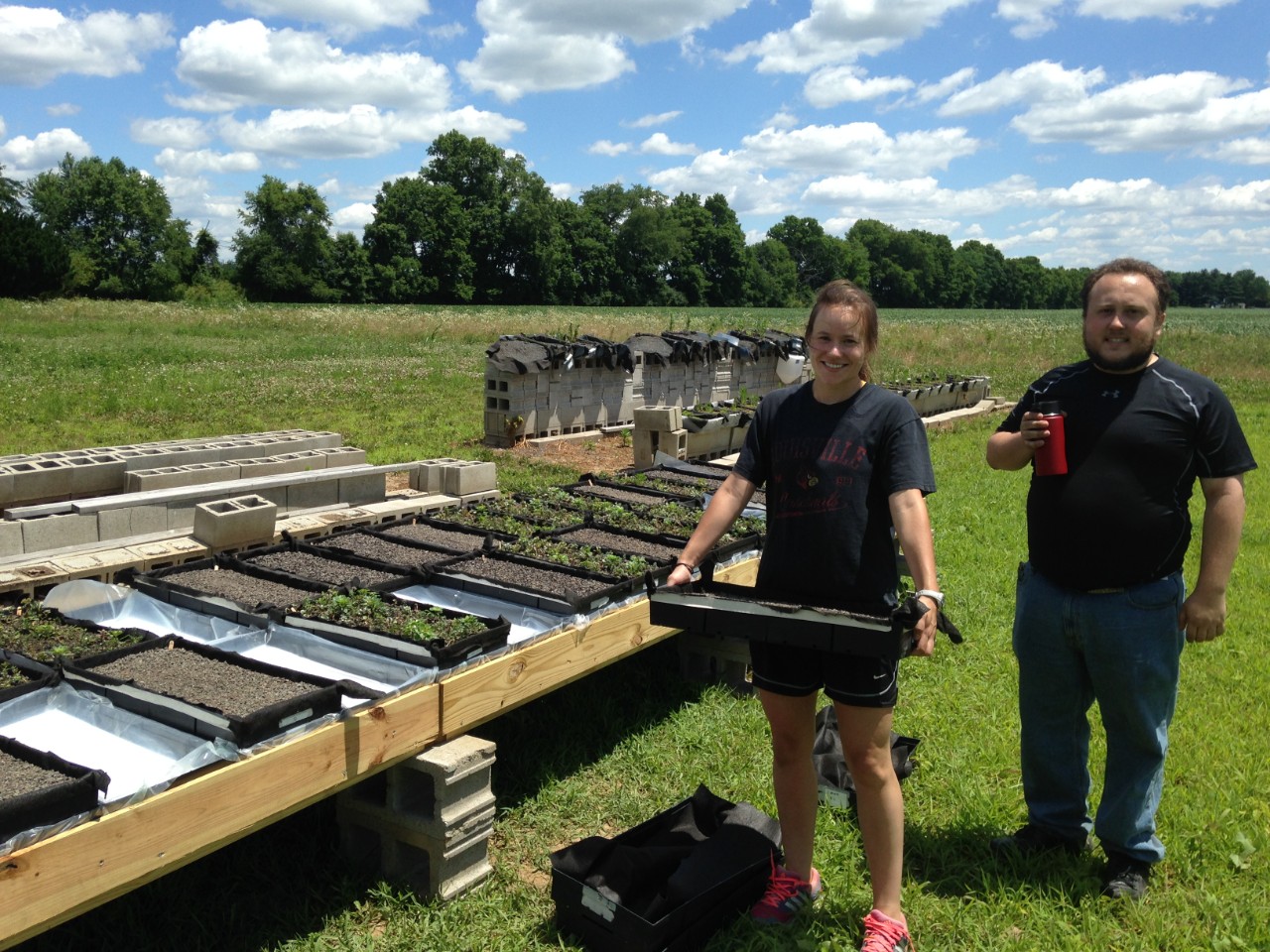
Dr. Buffam and students in his research group on the Zimmer Hall Green Roof.
The benefits of green design include habitat preservation, storm water run-off reduction, improved air and water quality and mitigation of the urban heat island effect – how human activity can cause metropolitan areas to become significantly warmer than the surrounding rural areas. Green spaces also contribute to human health in ways that are only just beginning to be quantified, according to Buffam.
UC, represented by Buffam and DAAP Professor Virginia Russell, and the other contributing universities were chosen to form this consortium by Green Roofs for Healthy Cities and the Green Infrastructure Foundation at the 16th Annual CitiesAlive Conference in New York City.
“The Living Architecture Center is intended to be a catalyst for collaboration, and will provide frequent opportunities for faculty and students at UC to work with academics at our partner institutions, as well as with municipalities and professionals in the growing field of living architecture,” says Buffam.
For students pursuing a degree in environmental studies, GOLA will open opportunities to participate in regional seminars and workshops centered around the research of design and implementation of living architecture.
For those interested in learning more about the role of living architecture, UC’s campus features several of its own green roofs – Proctor Hall, DAAP, the new Lindner Business College and Zimmer Hall, which even includes trees.
GOLA is also a part of a larger network of centers for living architecture excellence that includes regional centers based in Illinois, Colorado, New Jersey and New York. As for future goals, together the centers are proposing a new study to investigate how green roof ecosystems change as they age and how the process varies depending on the climate zone.
Click here to learn more about the GOLA Center and research related to living architecture.
Related Stories
Drone-delivered groceries descending into Cincinnati
June 25, 2026

Walmart is bringing drone delivery to Cincinnati, as reported by 700WLW. Host Scott Sloan spoke with Michael Jones, associate professor of economics at the University of Cincinnati's Lindner College of Business, for a look at what it means for Cincinnati shoppers.
CCM welcomes Hiram Diaz as Visiting Artist of Euphonium
June 25, 2026
UC College-Conservatory of Music Dean Pete Jutras has announced the appointment of Hiram Diaz as CCM's Visiting Artist of Euphonium for 2026-27. A CCM alumnus (BM Euphonium Performance, 2007), Diaz's visiting appointment begins this fall.
CCM welcomes Ben Nicholson as Assistant Professor of Immersive Media and Live Events
June 24, 2026
UC College-Conservatory of Music Dean Pete Jutras has announced the appointment of Benjamin Nicholson as CCM's new Assistant Professor of Immersive Media and Visuals for Live Events. A CCM alumnus (MFA Lighting Design & Technology, 2025), Nicholson's faculty appointment officially begins on Aug. 15, 2026, and he will work with college leadership to develop classes, content and programming in Live and Immersive Media at CCM. Nicholson's position is a joint appointment shared by CCM's Divisions of Media Production and Theatre Arts, Production and Arts Administration, and he will teach classes for both areas of the college.