Teaching for the Stars: UC hosts famed astronomer alumna
Renowned astrophysicist Amanda Bauer returns to teach a seminar to physics students at the alma mater she says set her up for success

By: John(na) Jackson

UC physics alumna Amanda Bauer
Ever since she was a young child, Amanda Bauer always wanted to understand more about the universe. Her fascination with space was sparked at 16 by the Hale-Bopp comet’s pass by Earth.
By 2002 she graduated with honors from the University of Cincinnati with a degree in physics.
Today, Bauer’s research explores the process of galaxy formation and the reasons they stop creating new stars. Bauer began college as a French language major, but an introduction to astronomy course prompted her to switch to science.
Known for being a regular guest on ABC Radio and ABC News, Bauer has made a name for herself as an astrophysicist after graduating from UC. She has traveled internationally to present her findings in the field of cosmology, working as a research astronomer at the Australian Astronomical Observatory from 2013 to 2016. She was named to Radio National's and University of New South Wales’ list of Top 5 Under 40, a nationwide call to find the next generation of great science communicators.
Now working as the head of education and public outreach at the Large Synoptic Survey Telescope in Tucson, Ariz. Bauer was recently invited back to UC to present a seminar to physics students.
Bauer said she had the opportunity to work in small class sizes and in project-based labs. These classes fulfilled a “puzzle-solving mentality” that Bauer had grown up nurturing.
Bauer’s interactive classes set her up for success, but she also benefited from mentors within the department, particularly her Women in Science and Engineering peers. The group's vision is to provide an environment for women in science and engineering to attain their full potential as students and faculty.
“Seeing a lot of other women in sciences – I thought, 'Yeah, I can do this!'” Bauer said.

Hubble Space Telescope image of galaxy NGC 1277. It is composed exclusively of aging stars born 10 billion years ago and has ceased further star formation, one of Bauer's primary research topics. Photo/NASA
Looking to stay inspired by the women in her field, Bauer attended a lecture with particle physics professor Janet Conrad hosted by the department when she was an undergraduate.
In a moment of kismet, Bauer was the only one to attend for the first 45 minutes, allowing her private time to discuss her career goals with Conrad. Their discussion was a small step to getting a student internship with the Sloan Digital Sky Survey that would lead to her giant leap into a career in astronomy and physics.
“You never know where what you learn here will take you,” Bauer said.
Bauer’s recent trip to Cincinnati also included her third sold-out public talk at the Cincinnati Observatory. Professor and Associate Dean for Natural Sciences Margaret Hanson praised Bauer for her accessible speaking events.
“Beyond a strong work ethic, Amanda’s talent and gift is her amazingly positive and adaptable attitude toward others,” Hanson said.
While the physics department didn’t offer an astronomy track when Bauer attended, the program doubled its majors from 45 to 90 between 2004 and 2016. Currently, around one-third of physics students are majoring in astrophysics.
Bauer’s advice to these students: “Ask questions, be enthusiastic! That curiosity can create serendipitous opportunities you weren’t necessarily looking for.”
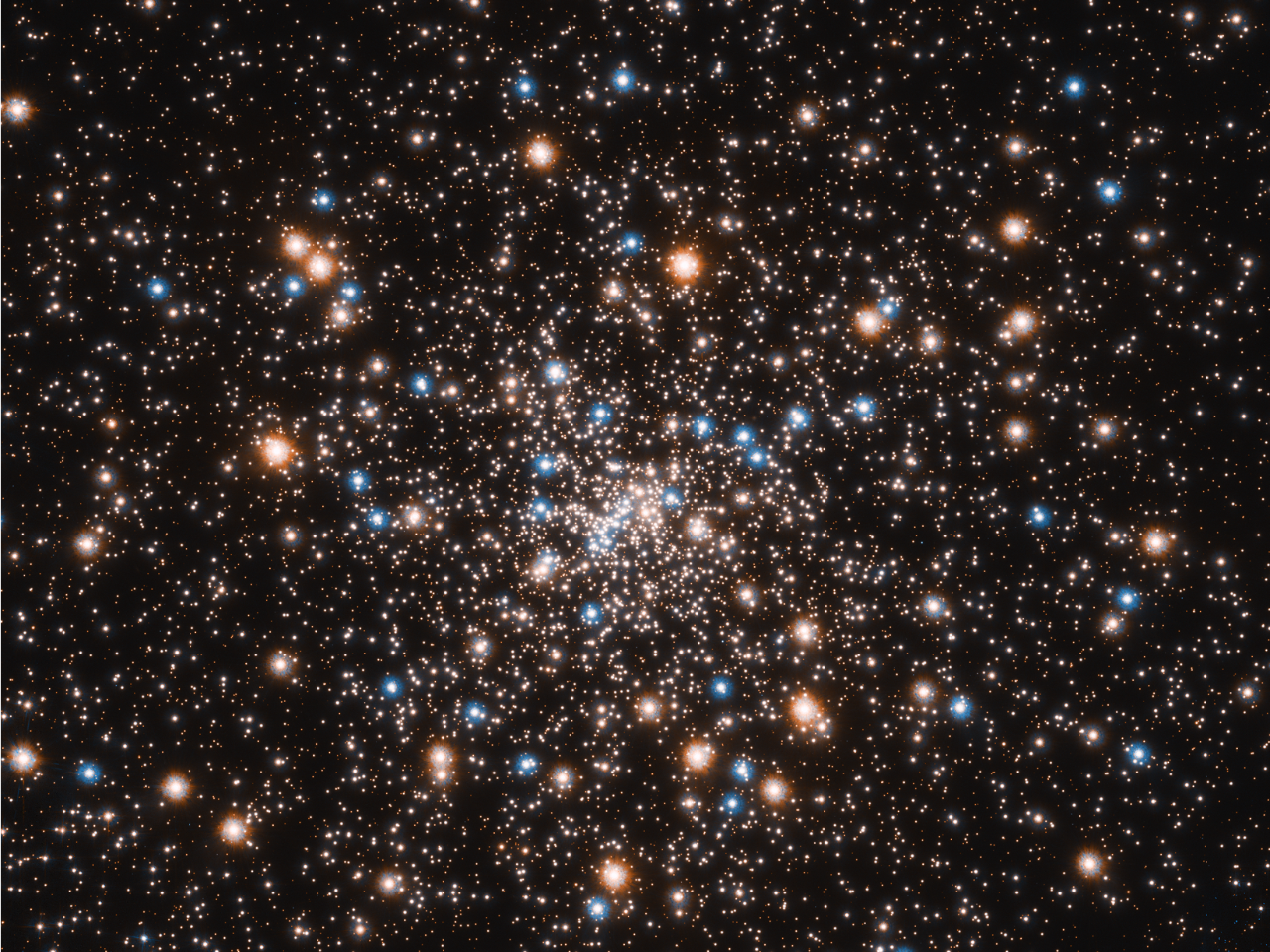
Featured image at top: The Hubble telescope captures colorful stars in a distant galaxy. Photo/NASA/JPL-Caltech
Related Stories
How scammers can persuade you with AI
July 27, 2026

Spectrum News recently dove into how cloning voices with artificial intelligence is making it easier to scam people over the phone. The news outlet spoke with Kimberly Hyun, assistant professor of marketing at UC’s Lindner College of Business, to examine why AI is making it so much easier to trick people.
Claude now available in BearcatsGPT AI platform
July 27, 2026
The University of Cincinnati has added Claude as a model option within BearcatsGPT, UC’s generative AI platform. Claude availability in BearcatsGPT marks another step forward in expanding access to dependable, enterprise-supported AI tools for teaching, research, operations, and administrative work.
Decade of discovery
July 27, 2026
Every summer, UHP Discover has connected undergraduate students in the University Honors Program (UHP) to a unique array of opportunities in original interdisciplinary research. This year, the program celebrates its 10th anniversary.