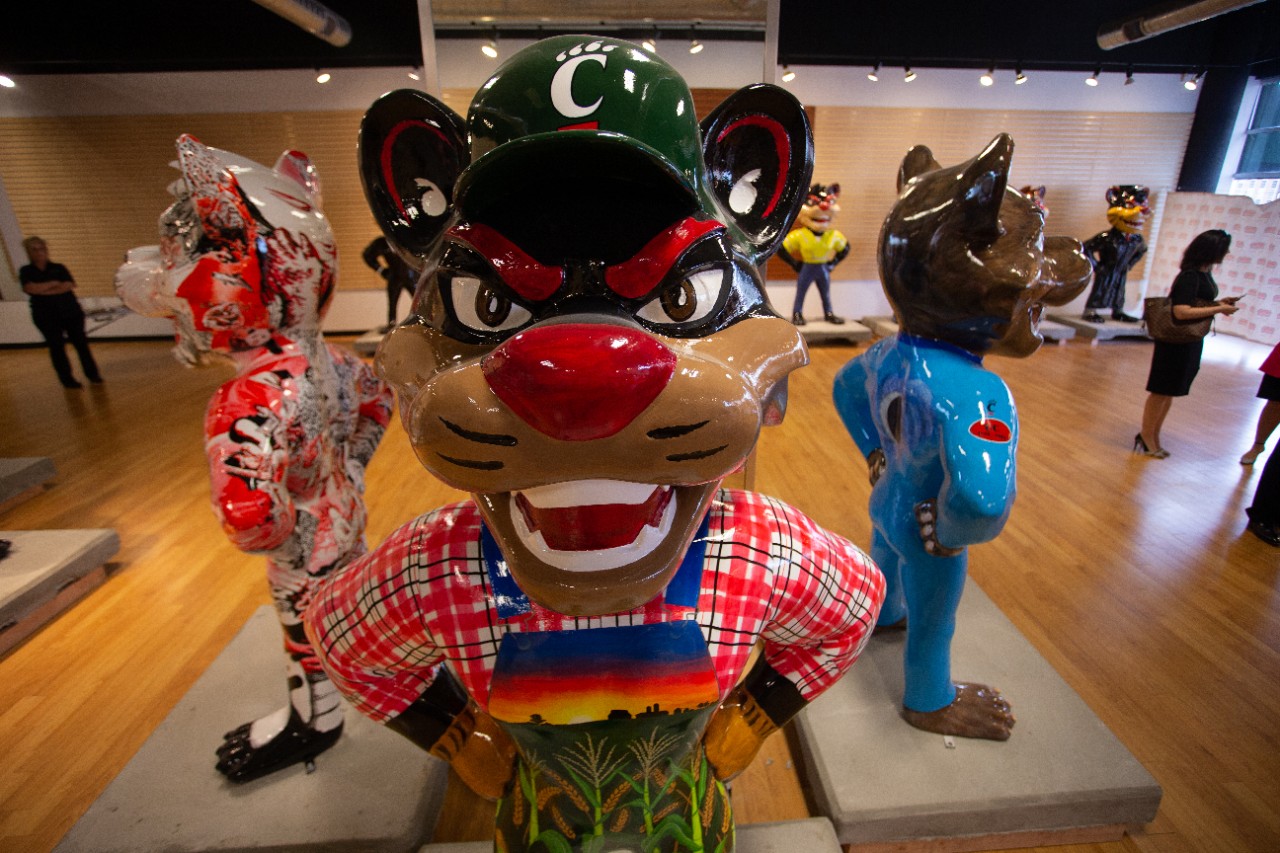
Masks off: UC unveils Hero Bearcats
New UC art exhibit supports student scholarships and services, celebrates Cincinnati’s everyday heroes

The masks are off: The University of Cincinnati unveiled 30 life-sized, distinctively decorated statues of its iconic Bearcat mascot Thursday as part of a new public art event launching this week across Greater Cincinnati.
Hero Bearcats celebrates everyday heroes like astronauts, nurses, firefighters, police officers, farmers and others in colorful, whimsical ways, says Marty Ludwig, UC’s director of trademarks and licensing.
“The campaign is a way to engage the community and celebrate the people that make Cincinnati such a great place to live, and recognize that heroes can come from anywhere,” he said. “We think this will be a fun way to engage the community and bring attention to other cultural gems throughout the city, and we have some fun surprises lined up to encourage people to visit the statues and share pictures with them on social media.”
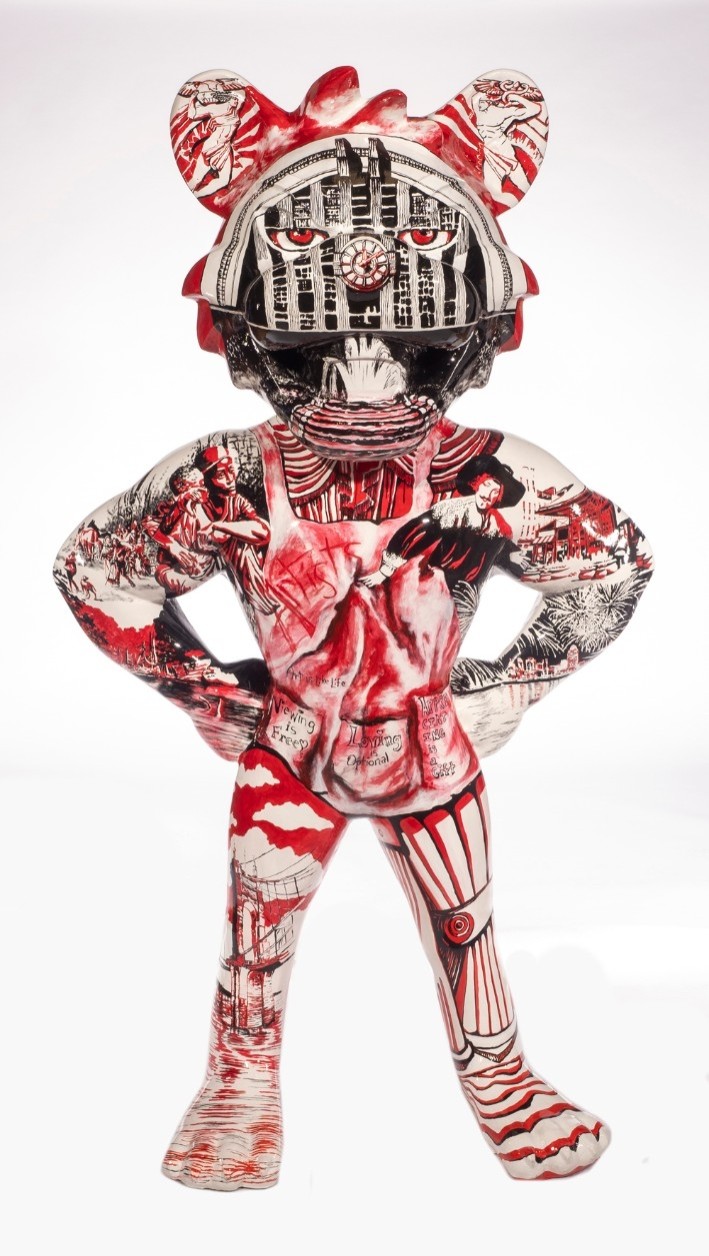
"Encore Bearcat" designed by local art teacher Patty New will be installed at the Cincinnati Museum Center
The statues, decorated by local artists, including students from area high schools, will blanket the region for six months. You can find them at prominent locations across Greater Cincinnati from Florence to Downtown to Butler County’s Liberty Center.
Ludwig says the creative campaign is designed to showcase the university’s impact on Cincinnati and beyond. UC, Ludwig points out, serves as an economic powerhouse for the Queen City, with more than 15,000 employees, 45,000 students, 300,000 living alumni and countless Bearcat fans.
And among the state’s five counties in southwestern Ohio, UC generates a whopping $3.3 billion annual impact. The campus community is also credited with an $8.5 million annual impact thanks to volunteerism and community engagement.
The Hero Bearcats exhibit not only celebrates local ordinary superstars, but the event itself provides a way for sponsors to serve as heroes for students and members of the community in need.
Proceeds from statue sponsorships benefit student scholarships, the Bearcats Food Pantry and healthcare services for underserved members of the community. Kroger and UC Health are presenting sponsors of the campaign.
These initiatives align with the Urban Impact platform of the university’s Next Lives Here strategic direction, launched in February 2018 to propel the university through the next decade and lead urban public universities into a new era of innovation and impact.
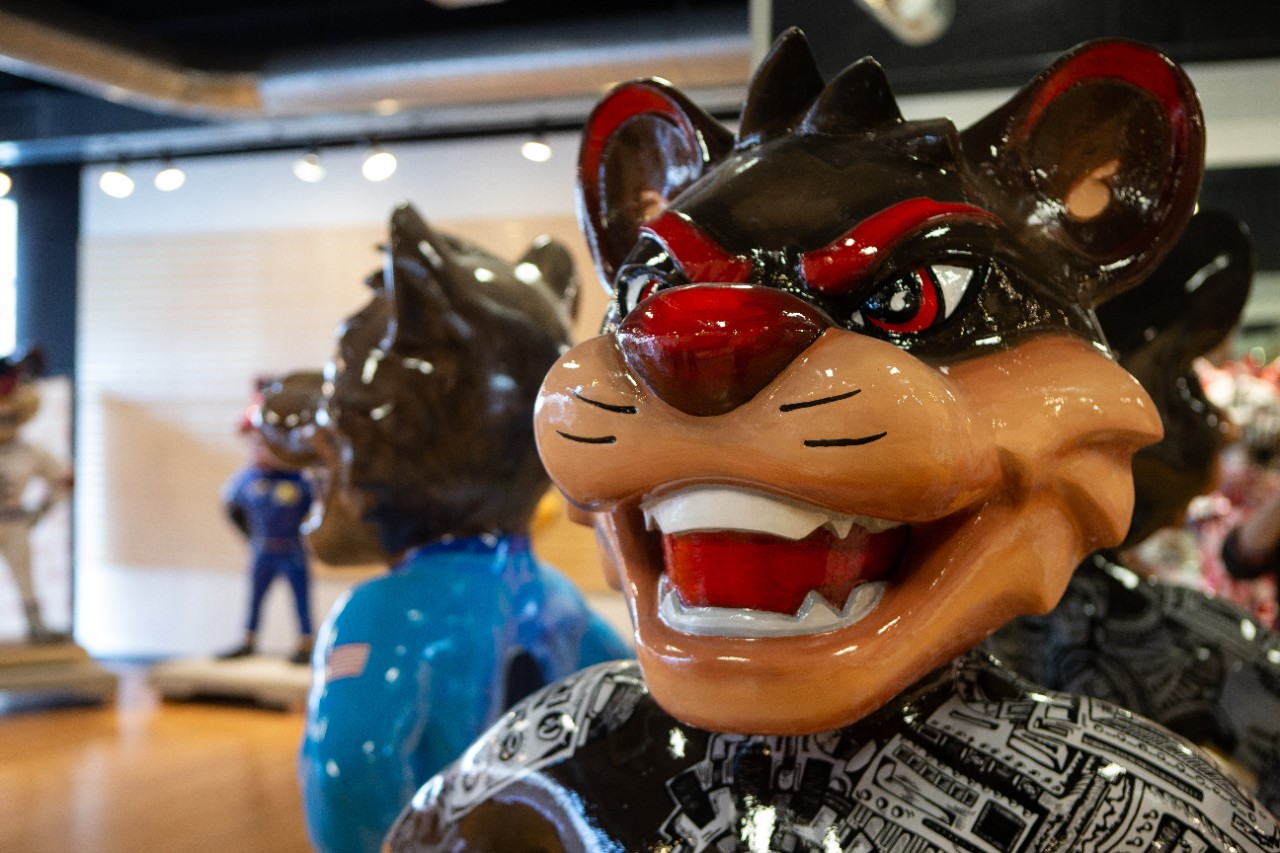
"Engineering Bearcat" designed by Destanie Sexton will be installed at U-Square at the Loop on Calhoun St. near UC's campus
Find the Bearcats
Thirty Hero Bearcats statues will grace the Greater Cincinnati region through September. For a map of all the Hero Bearcat locations, click here. When you see a statue, snap a photo or a selfie with it and post it to social media with the hashtag #HeroBearcats.
The story of the Bearcat
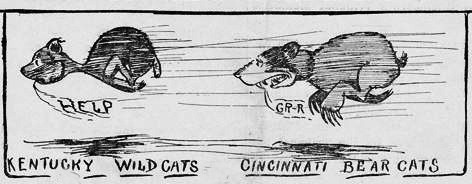
UC’s most loveable and best recognized mascot’s roots were born during a formidable football game between the University of Cincinnati and the University of Kentucky on Oct. 31, 1914. To drum up support, cheerleader Norman "Pat" Lyon, introduced a new chant, using a play on fullback Leonard K. "Teddy" Baehr’s name: "They may be Wildcats, but we have a Baehr-cat on our side." UC won the day, 14-7, and a cartoon published in the student newspaper memorializing the victory featured a Kentucky Wildcat being chased by a creature labeled the “Cincinnati Bear cat.” The name stuck, and a legend was born.
Related Stories
This September, give blood for local patients fighting cancer and sickle cell disease
September 18, 2026
September is dedicated to raising awareness of several serious diseases, including sickle cell disease and childhood cancer. For patients in Greater Cincinnati fighting these diseases, awareness is only part of the equation. They also need lifesaving blood products.
UC emergency medicine physicians safely eliminate thousands of unnecessary CT scans
September 18, 2026
A University of Cincinnati emergency medicine quality improvement campaign avoids 3,500-plus head and cervical spine CT scans, saving $6.2 million in patient charges, more than 14,000 hours of waiting time and significant radiation exposure with no patient harm.
University of Cincinnati and Hamilton County work to lower overdose deaths
September 17, 2026

University of Cincinnati researchers and Hamilton County officials are using overdose data to identify Cincinnati hot spots and place free NaloxBoxes and fentanyl test strip dispensers where they are needed most to help prevent opioid overdose deaths.