
UC hosts panel on ending the opioid epidemic

The University of Cincinnati is pooling its resources to address the opioid epidemic.
UC’s Office of Research on Thursday hosted a panel at the 1819 Innovation Hub titled “Resolving to Save Lives: Partnerships for the Goal of Ending the Opioid Epidemic.” The event was part of 2019 Research and Innovation Week.
The opioid crisis is affecting communities and families across the country. Today, unintentional drug overdose is Ohio’s leading cause of injury-related death, according to the Ohio Department of Health.
“We know that the rippling effects [of the epidemic] are for years to come and generations to come, and we need to start addressing it in such a way,” said panelist Angela Clark, a professor in UC's College of Nursing.
Clark was joined by Lori Criss from the Ohio Department of Mental Health & Addiction Services; Lisbet Hope Portman from the Washington D.C.-based nonprofit Addition Policy Forum; and author and investor J.D. Vance, whose bestselling book Hillbilly Elegy helped draw national attention to the opioid crisis. Cincinnati Enquirer staff writer Terry DeMio moderated the event.
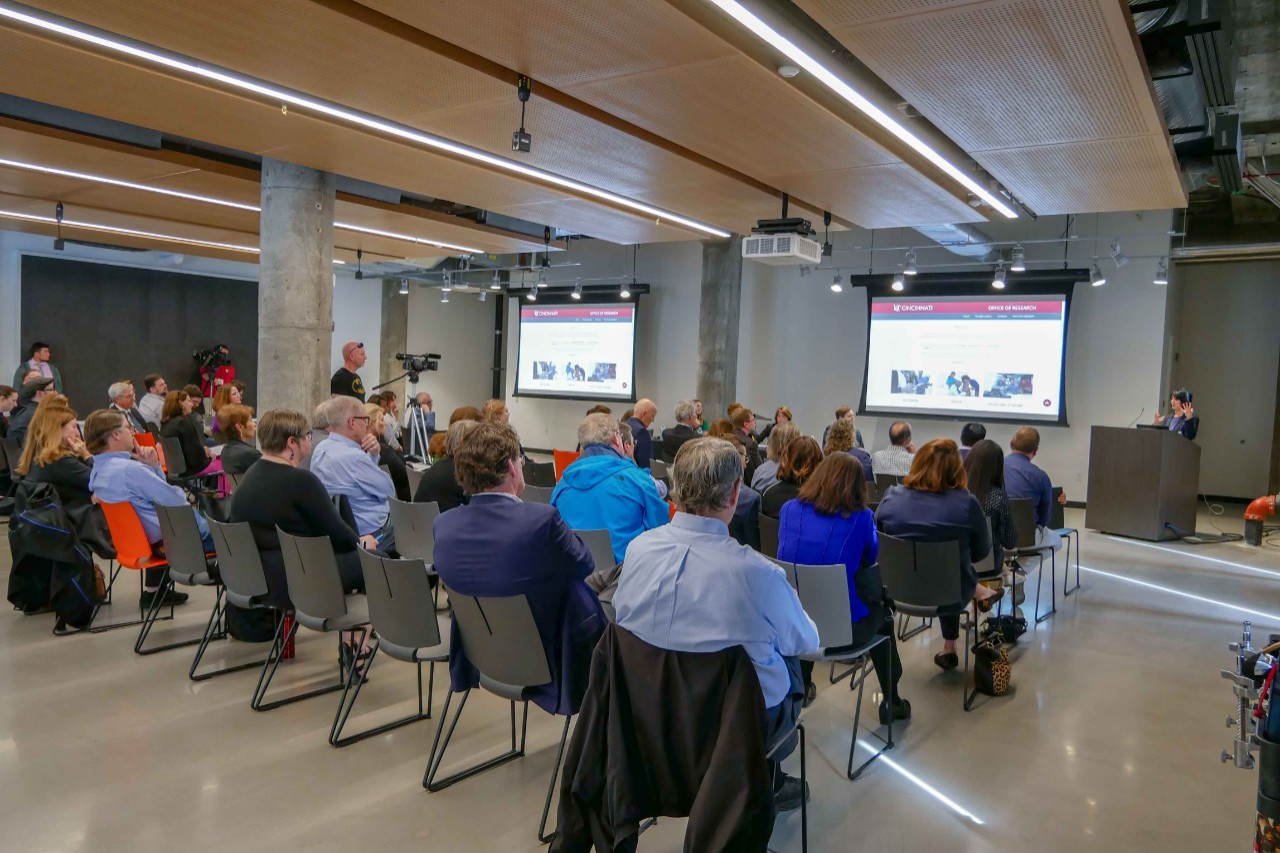
UC's Office of Research hosted the panel, “Resolving to Save Lives: Partnerships for the Goal of Ending the Opioid Epidemic.” The event was part of 2019 Research and Innovation Week. Photo/Corrie Stookey/CEAS Marketing
Focusing on changing outcomes and saving lives, the panel reflected the urban impact platform of the University of Cincinnati’s strategic direction, Next Lives Here.
Panelists told stories from their own reporting and research, shared statistics that put these stories into perspective and presented ways to collaborate.
One such collaboration is the UC/UC Health Opioid Task Force. The task force, started in 2017, brings together researchers, educators, clinicians and advocates to tackle challenges surrounding the opioid crisis.
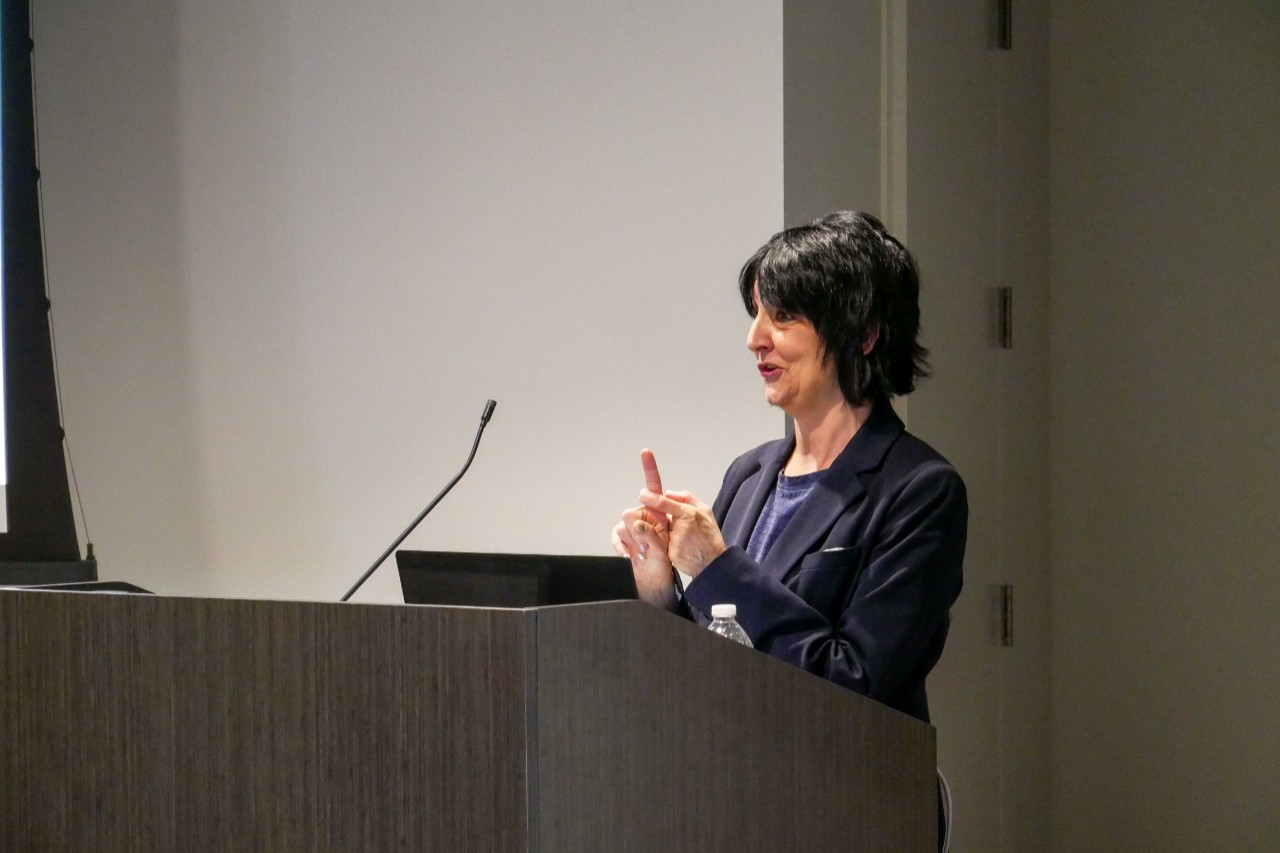
Cincinnati Enquirer staff writer Terry DeMio moderated the talk on Thursday. DeMio won the 2018 Pulitzer Prize for Local Reporting for her special report, "Seven Days of Heroin." Photo/Corrie Stookey/CEAS Marketing
“We have such a strong support system in this community and we’re doing a lot across campus,” Clark said. “We’re working together to increase research and improve the workforce that we’re outputting at the university.”
Panelists also talked about changing the conversation about opioid addiction, including overturning myths and reversing stigmas associated with addiction.
“I think we know what works,” Criss said. “I think what we don’t know as a community is that this is a chronic disease, and we treat it like it’s an acute an illness.”
Medication treatments are only part of what the Ohio Department of Mental Health & Addiction Services does, Criss added. Recovery plans should also include long-term solutions like safe living areas, supportive employment environments and participation in community organizations.
The opioid epidemic has been affecting families and communities for years, and its effects will be felt for many years more, but discussions and partnerships like these can help create positive change.
“We’re going to have to deal with the public health crises of addiction and mental illness long-term,” said Criss. “We know a lot of communities are doing that, and we’re poised to do that in the state, too.”
Featured image at top: Author and investor J.D. Vance speaks at the event. Vance's bestselling book Hillbilly Elegy helped draw national attention to the opioid crisis. Photo/Corrie Stookey/CEAS Marketing
UC tackles the opiate crisis
Researchers at the University of Cincinnati have been approaching the opiate problem from different perspectives.
UC map identifies opiate hot zones
UC team uses design to combat opioid crisis
UC trains students to treat substance use disorders
UC nursing faculty create pain management guidelines to cut opioid use in new mothers
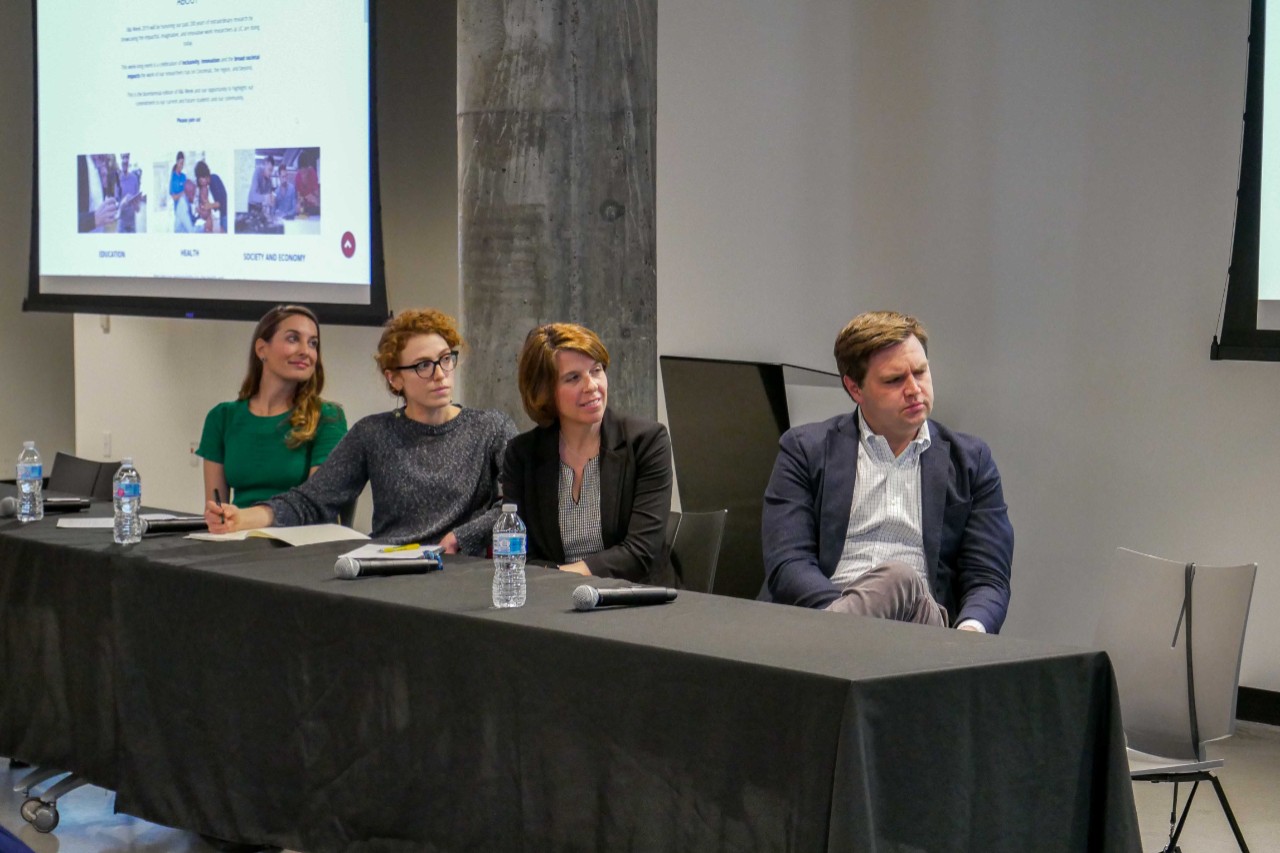
Panelists shared initiatives and approaches for dealing with the opioid epidemic. Seated, from left, Angela Clark, Lisbet Hope Portman, Lori Criss and J.D. Vance. Photo/Corrie Stookey/CEAS Marketing
Changing Outcomes, Saving Lives
The panel engaged the campus community in solving urban issues related to health and well-bring, prevention and quality care. Urban impact is one of the platforms of UC’s strategic direction, Next Lives Here.
Related Stories
UC Biomedical Engineering student launches mobile healthcare platform
October 22, 2026
As a fifth-year biomedical engineering student at the University of Cincinnati College of Engineering and Applied Science, Amelia Wares has been a trailblazer in nearly every area imaginable — and this is only the beginning of her journey.
UC aerospace engineer leads global computational fluid dynamics taskforce
October 21, 2026
The American Institute of Aeronautics and Astronautics' CFD 2030 Integration Committee has announced the formation of the Computational Fluid Dynamics (CFD) Vision 2045 Team, a multi-institution working group tasked with defining where the field of computational fluid dynamics should be by 2045 to align with the changing and evolving needs of the aerospace industry. The University of Cincinnati's Prashant Khare, Bradley Jones professor and head of the Department of Aerospace Engineering, is leading this specialized group.
Still the top ‘cat
October 20, 2026

The University of Cincinnati Bearcat mascot was voted Cincinnati’s favorite mascot in a Cincinnati Enquirer reader poll, earning 45.1% of the vote and topping other local favorites.