Weather Channel explores UC's research into mass extinction
UC geology professor Thomas Algeo is studying Earth's biggest mass extinctions to understand today's biodiversity crisis

The Weather Channel explored the University of Cincinnati's latest research into mass extinctions, which is helping scientists understand today's precipitous loss of biodiversity.
UC geology professor Thomas Algeo and China University of Geosciences professor Jun Shen found spikes in mercury in 252-million-year-old rock at nearly a dozen locations around the world, suggesting that volcanic eruptions caused the extinction believed to wipe out 95 percent of life on Earth.
This Permian Period extinction was one of the five biggest known mass extinctions in Earth's history and heralded the rise of dinosaurs.
The study was published in the journal Nature Communications.
Algeo said scientists have observed elevated rates of extinction around the planet that suggest we are at the cusp of another mass extinction.
UC Geology in the news
The Daily Mail (UK)
Mercury signatures suggest that eruptions DID cause the 'Great Dying'
Science Daily
New evidence suggests volcanoes caused biggest mass extinction ever
Daily Galaxy
'A Forgotten World:' Apocalypse of the 'Great Dying' Gave Rise to Dinosaurs
Sci-News
Volcanic Eruptions Caused End, New Evidence Confirms

A Permian Period predator called a gorgonopsid surveys the volcanic eruption that spells its doom. Illustration/Margaret Weiner/UC Creative Services
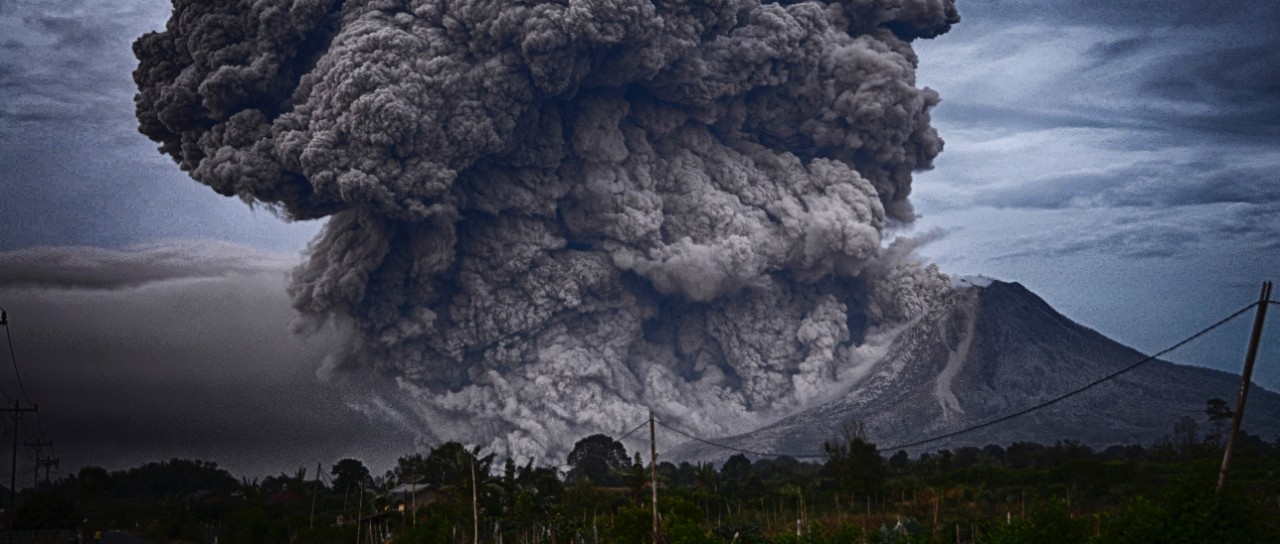
Featured image at top: Mount Sinabung erupts in Indonesia. Photo/Yosh Ginsu/Unsplash
Tags
Related Stories
Cincinnati Enquirer: Behind the ventilator, specialists provide breaths for COVID-19 patients
April 21, 2020
Suzanne Bennett, MD, associate professor in the UC College of Medicine and UC Health anesthesiologist and critical care physician, spoke to the Cincinnati Enquirer for a story about ventilators, their operators and their roles in the COVID-19 pandemic. She said the respiratory therapists can be the lifesavers for some COVID-19 patients.