Cosmos Magazine: UC biologists on Galapagos finches and genetic diversity
Published research on genetic diversity getting international attention

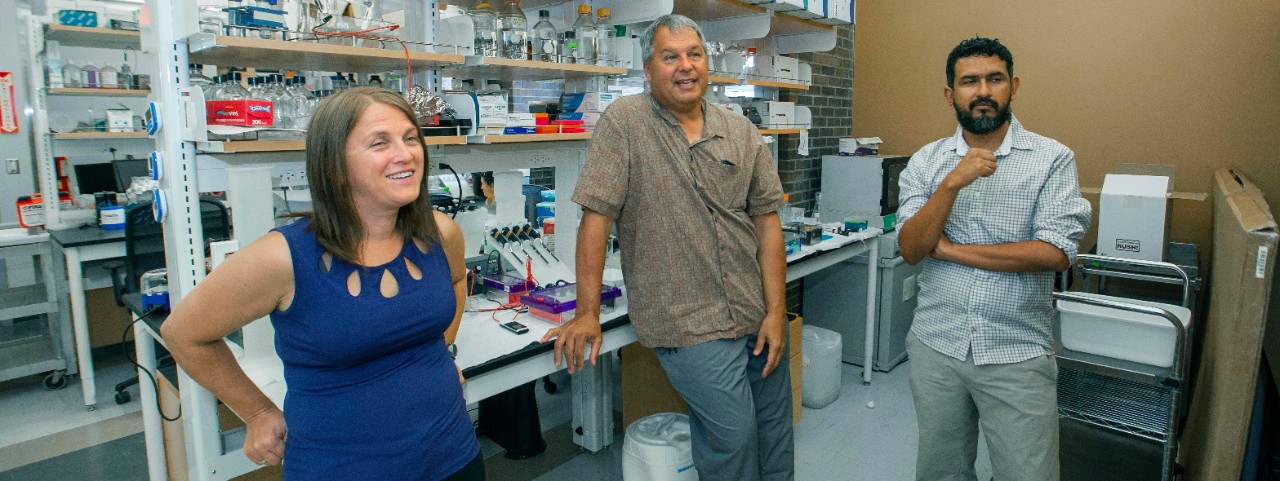
UC graduate Heather Farrington and UC biologists Kenneth Petren and Lucinda Lawson found that genetic diversity was not a good predictor of whether populations of finches would survive.
Their work was recently featured in Cosmos Magazine.
The study was published in the journal Conservation Genetics in August. A UC lab analysis of century-old museum specimens found that six of eight extinct populations had more genetic diversity than similar museum specimens from which descendants survive today. In most other species, low genetic diversity is a signal of a population in decline.
Related Stories
Engineering graduate student developing intelligent AI systems
September 21, 2026
Artificial Intelligence is on the rise, and researchers are working harder than ever to understand, develop, and improve it. Aneesh Deshmukh, computer science M.S. student at the University of Cincinnati, is working on AI systems modeled after human brain functionality. Deshmukh's goal is to help these robots understand their surroundings and take this knowledge to navigate unfamiliar environments in the future. For this work, he has been named Graduate Student Engineer of the Month by the College of Engineering and Applied Science.
AI is going to change all our lives
September 21, 2026

UC College of Arts and Sciences Assistant Professor Kelly Merrill Jr. tells the Columbus Dispatch that AI is becoming engrained in every aspect of health care.
President Pinto’s 2nd glow party brings first-year Bearcats together
September 20, 2026
UC President Neville Pinto and team hosted the second annual Bright Beginnings glow party for first-year students