UC grad student digs into unique internship opportunity
Kerry Ulm combines writing and global studies to give Classics a digital facelift

By Michelle Flanagan
It’s not every day that professional writing students find themselves working at an archaeological dig in Greece for one of the most significant projects of its kind. But last summer Kerry Ulm, a graduate student in the English department in UC’s College of Arts and Sciences, found herself on site in Pylos for an internship with UC’s Department of Classics.
“My background is not in classics,” Ulm said. But when she was contacted by Professional Writing program director and associate professor of English Lora Arduser about the internship opportunity, it turned out she was just right for the job.
“I majored in Globalization Studies in undergrad, which I found useful when exploring examples of Mycenaean trading practices through some of the objects we discovered this summer," Ulm said. "And I’m fascinated by museums, and would eventually like to work for one as an information designer, so in that respect, this position was a perfect fit.”

UC graduate student Kerry Ulm works at the archaeological site in Pylos, Greece.
UC’s Classics Department has a team excavating the Mycenaean site known as the Palace of Nestor, an important center in Mycenaean times, so much so that Homer described it in "The Odyssey" and "The Iliad."
The current excavation by UC husband-wife team Jack Davis and Sharon Stocker, builds on previous work by UC Classics professor and influential American Classics scholar Carl Blegen. In 2015, Davis and Stocker discovered the grave of the Griffin Warrior, one of the most significant finds in Greek archaeology from the past 50 years.
That revolutionary discovery didn’t mark the end of their work. With large areas that have yet to be explored, the duo are confident there is more to the story. For Ulm, this meant more chances to get in on the ground level of something revelatory.
Using her previous education as a building block for her future plans, Ulm was largely focused on communications around the project – which, despite it being an ancient site, are vital.
“In preparation for announcements about future discoveries that we’re hopeful we’ll find, I was brought to Greece largely to improve upon the project’s online presence,” Ulm said. “The previous website was out-of-date, the social media was inconvenient for them to manage and the lengthy excavation seasons required by a string of discoveries meant they were in need of new ways to appeal to donors.”
Before Ulm could determine what a meaningful web presence would look like, she spent time with the team and at the site. Before any online changes were made, she had her boots on the ground, living and working alongside the rest of the team digging in the field.
“After I became familiar with the process, I started redoing the website, managing the Facebook page and putting together newsletters that explained the discovery to a select group of donors and potential donors. I also prepared online material to last them through the next few months after the end of the summer season,” she said.
“I find the longevity of UC’s work at the site particularly interesting. And as a newbie to the field of archaeology, it was fascinating to experience an excavation site of such significance,” Ulm said.
View the website dedicated to the dig and the team's findings here.
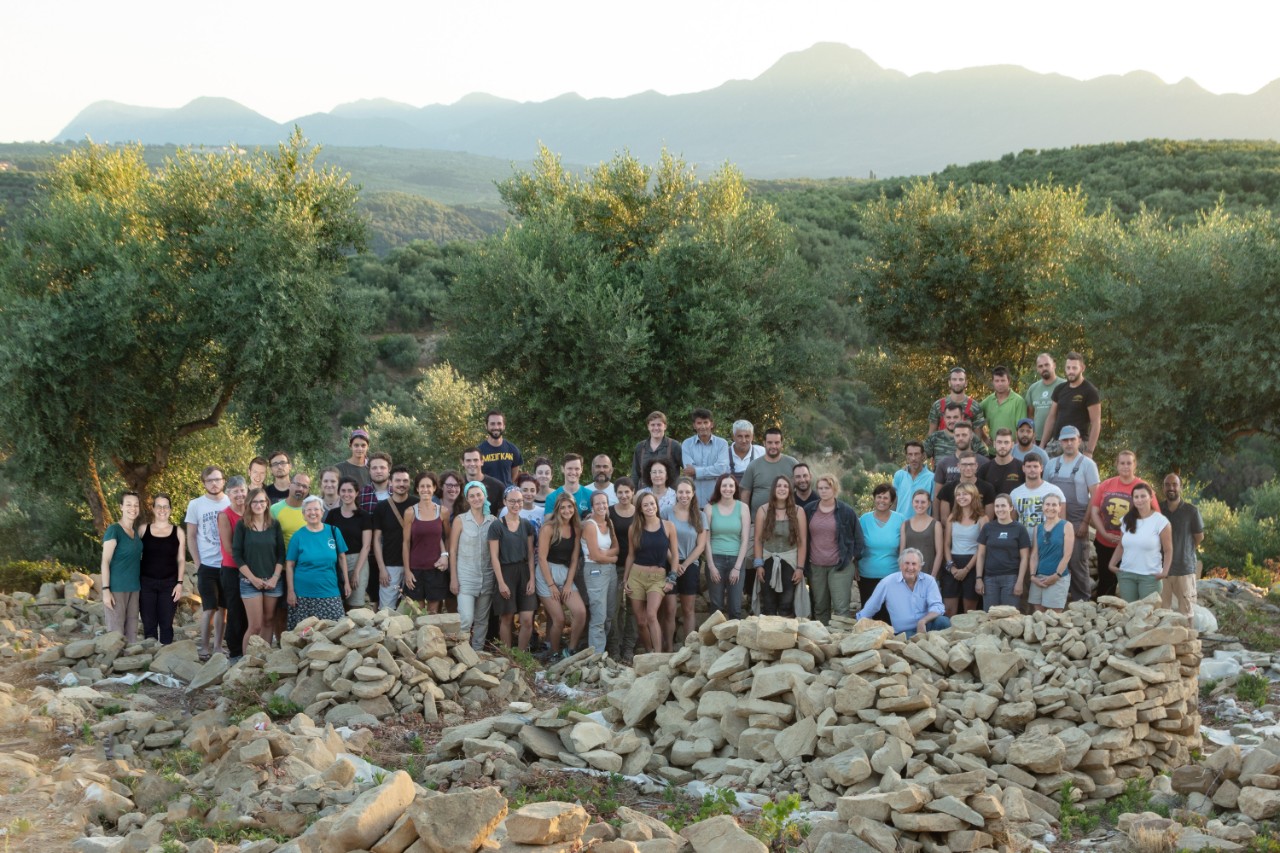
Featured image at top: Archaeologists Jack Davis and Sharon Stocker with the team from UC's Classics department on site in Pylos, Greece. Photo/Jeff Vanderpool.
Related Stories
UC-built detector at CERN looks for enticing evidence to explain dark matter
August 4, 2026
A physicist from the University of Cincinnati and his research partners from around the world conducted an experiment at CERN’s Large Hadron Collider in Switzerland to look for evidence that might help explain one of science’s most baffling questions: dark matter.
UC Blue Ash grad goes from commencement to the corporate world
August 4, 2026
Fairouz Maayah is a UC Blue Ash College alumna who is using her education, skills, and hands-on experience to launch her career with Ernst & Young, one of the world’s largest professional services firms, where she works with businesses from around the globe.
From UC co-op to world traveler
August 4, 2026
UC engineering student Zarria Gray turned a co-op at CERN’s Large Hadron Collider into a launchpad for global travel and an engineering career, starting with a UC-built detector project in Geneva.