Popular Science: UC geologist talks about natural gas leaks

Popular Science turned to University of Cincinnati geologist Amy Townsend-Small for help understanding a new report about harmful methane leaks.
A study of gas and oil resources in British Columbia found that many wells were losing gas through leaks. The methane is a strong greenhouse gas that has been associated with climate change. The study found that more than 10 percent of the 21,525 wells examined had natural gas seeping into the air.

Amy Townsend-Small. Photo/Jay Yocis/UC Creative Services
Townsend-Small, an associate professor of environmental science and geology in UC's McMicken College of Arts and Sciences, was not part of the study. But she has studied issues relating to natural gas extraction elsewhere.
Pollution from natural gas extraction can be harmful to people if it gets into sources of drinking water.
The British Columbia study suggests that leaks should be considered when evaluating how "clean" natural gas is compared to other sources of energy.
"Using natural gas as opposed to other fossil fuels emits less carbon dioxide than coal, but methane itself is such a powerful forcer that quantifying these leaks is really critical to determining the climate footprint," Townsend-Small told Popular Science.
"The more leaks we find, the worse news it is for natural gas."

UC professor Amy Townsend-Small uses a device to measure methane in a beaker of water. Photo/Jay Yocis/UC Creative Services
A 2018 study in Science, in which Townsend-Small was a co-author, found that 2.3 percent of methane production leaks into the environment at some point during the extraction, transport, storage and refinement process. This was much higher than estimates by the U.S. Environmental Protection Agency.
Another 2018 study by Townsend-Small in the journal Environmental Monitoring and Assessment found there was no evidence of contamination in underground sources of drinking water from oil and gas drilling in parts of northeastern Ohio.
Townsend-Small said there is no U.S. mandate for companies to report natural gas leaks.
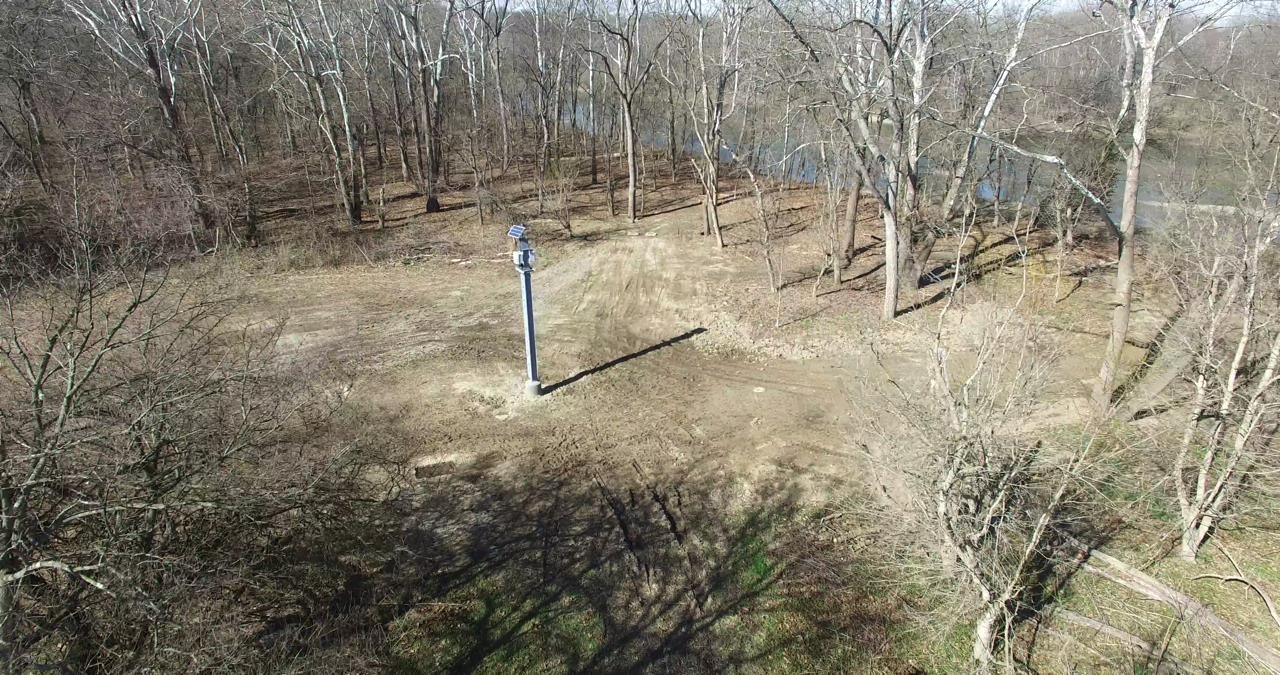
UC's Geology Department is studying how rivers affect groundwater at UC's C.V. Theis Groundwater Observatory on the banks of the Great Miami River. The observatory provides real-time data to help geologists understand how river flooding affects groundwater, a source of drinking water for 2.3 million people in southwest Ohio.
Featured image at top: An aerial view of UC's C.V. Theis Groundwater Observatory on the banks of the Great Miami River. Photo/Dylan Ward
Become a Bearcat
Do you like the idea of conducting your own research? UC geology students get hands-on experience in their chosen field.
- Apply online or get more information about undergraduate enrollment by calling 513-556-1100.
- Learn more about UC's many undergraduate and graduate programs.
Related Stories
UC climbs to No. 3 in the nation for co-ops and internships in 2027 U.S. News rankings
September 22, 2026
In U.S. News & World Report’s 2027 Best Colleges rankings, the University of Cincinnati rises to No. 3 in the nation for co-ops and internships — No. 1 among public institutions — and posts gains in undergraduate business, computer science and psychology.
UC expert explains geology of Mammoth Cave
September 21, 2026

UC Associate Professor Dylan Ward and UC geosciences graduate Rachel Bosch joins an episode of OutSCIder Classroom to talk about weathering in caves found in places such as Mammoth Cave National Park.
AI is going to change all our lives
September 21, 2026

UC College of Arts and Sciences Assistant Professor Kelly Merrill Jr. tells the Columbus Dispatch that AI is becoming engrained in every aspect of health care.