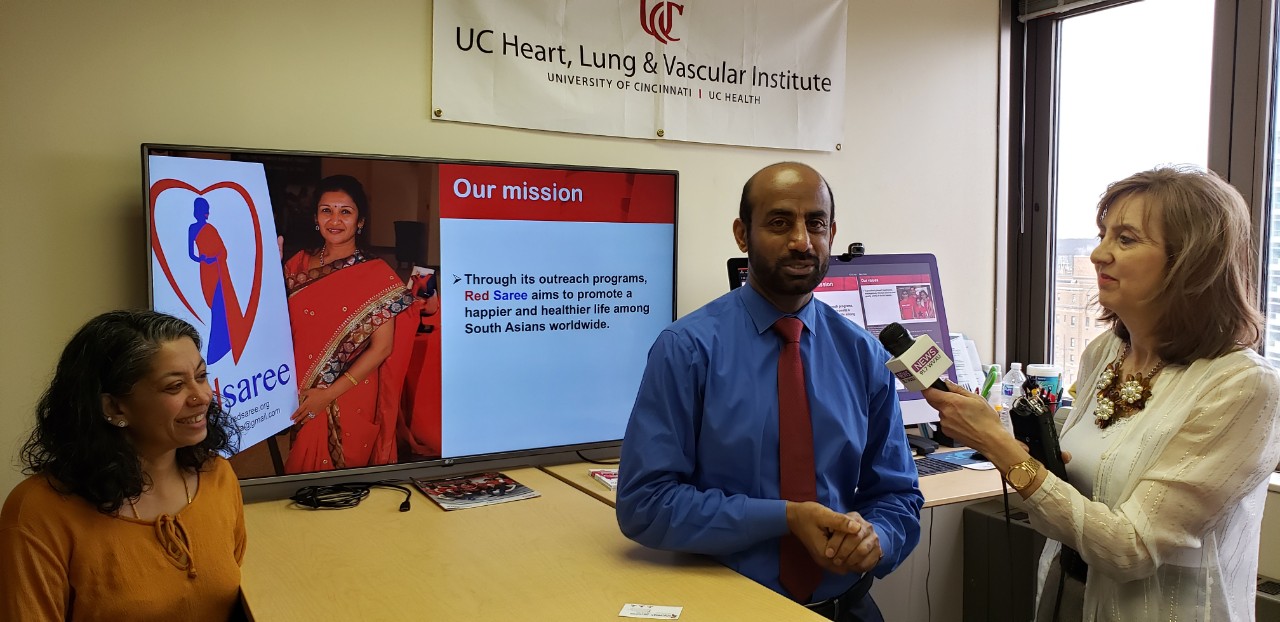
WVXU: New heart program from UC scientist is keeping South Asians across U.S. healthy
Red Saree reaches community with outreach and education

Research shows South Asians are four times more likely to develop heart disease than the rest of the population. One University of Cincinnati scientist is moving beyond genetics to talk about risk and prevention. In the midst of collecting saliva for one of his studies, Satkthivel Sadayappan, PhD, professor and director of heart research in the UC Heart, Lung and Vascular Institute, realized the South Asian community needed a greater awareness of its risk for heart disease, and a list of preventative measures to save lives.
The solution? Red Saree an awareness campaign he started in Cincinnati in 2018 and it is now spreading across the country. Chapters include Boston, San Francisco, Detroit and Chicago.
Related Stories
'Discovery, mentorship, momentum': UC College of Medicine's graduate programs celebrate year of success
September 22, 2026
From new mentorship honors to a growing research pipeline, see how the University of Cincinnati College of Medicine's graduate programs made this a standout year.
Tina Cheng, MD, receives American Academy of Pediatrics’ highest honor
September 22, 2026
UC Pediatrics chair Tina Cheng, MD, has received the American Academy of Pediatrics' highest honor for her decades of advancing child health.
President Pinto’s 2nd glow party brings first-year Bearcats together
September 20, 2026
UC President Neville Pinto and team hosted the second annual Bright Beginnings glow party for first-year students