
UC anthropologist explains ingenious engineering of ancient China
UC professor emeritus Vernon Scarborough wrote about water management of Liangzhu

New Scientist highlighted the University of Cincinnati's analysis of the engineering feats of an ancient Chinese city called Liangzhu.
In an article titled "The civilization that time forgot," New Scientist wrote of the ancient city's extensive network of dams and reservoirs that controlled seasonal flooding.
Research suggests Liangzhu was eastern Asia's oldest state-based society. And its city infrastructure rivaled that of Egypt and Mesopotamia thousands of miles away.
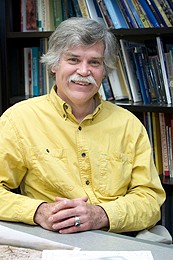
Vernon Scarborough
"There's nothing in the world, from my vantage point, that is as monumental in terms of water management – or for that mater, any kind of management – that occurs so early in history," UC professor emeritus Vernon Scarborough told New Scientist.
Scarborough spent his career studying ancient civilizations around the world. He visited Liangzhu in 2017. He was struck by how the city had reshaped its floodplain to accommodate the city.
"It's an engineering landscape that is second to none, given its antiquity," Scarborough said.
Scarborough wrote about the water infrastructure of Liangzhu in 2017 for the journal Proceedings of the National Academy of Sciences of the United States of America.
"Liangzhu concentrates human-modified landscapes, productive resources, and the supporting labor responsible for the initiation of East Asia’s earliest known experiment in truly complex sociopolitical order," Scarborough wrote in his critical analysis that complemented a study of the 5,300-year-old city.
More UC anthropology news

A jaguar. Photo/Marcella Kelly/Virginia Tech Jaguar Project
Featured image at top: Vernon Scarborough has studied ancient civilizations around the world. Photo/Joseph Fuqua II/UC Creative + Brand
Become a Bearcat
- Apply online or get more information about undergraduate enrollment by calling 513-556-1100.
- Learn more about UC's many undergraduate and graduate programs.
Related Stories
'There's a strong community here:' UC transfer student finds place in College of Arts and Sciences
October 23, 2026
This week marks National Transfer Students Week, and the College of Arts and Sciences celebrated those students Thursday. Olivia White, assistant director of recruitment, said around 13-15% of students at UC are transfer students, and with that comes its own set of challenges.
AI breast cancer survival model from Cancer Center could improve accuracy and personalize care
October 23, 2026
UC Cancer Center researchers, including lead author Wedad Alatebi, developed a deep learning survival model for breast cancer that combines detailed clinical and genetic information, potentially offering physicians a more accurate tool to guide treatment decisions.
Still the top ‘cat
October 20, 2026

The University of Cincinnati Bearcat mascot was voted Cincinnati’s favorite mascot in a Cincinnati Enquirer reader poll, earning 45.1% of the vote and topping other local favorites.