
UC researchers study processes that cause breast cancer recurrence, spread
National Cancer Institute grant allows researchers to look at targeted treatments for breast cancer

One in eight women will be diagnosed with breast cancer in their lifetimes. Recurrence and spread are the biggest contributors to the death of these women.
That’s why Susan Waltz, professor in the UC department of cancer biology, is teaming up with other researchers at UC, Cincinnati Children’s Hospital Medical Center and the University of Kentucky to study the processes that cause these events to occur — and ways to both target and stop them.
The National Cancer Institute recently awarded this collaborative team a $500,000 yearly grant for the next five years to do just that.
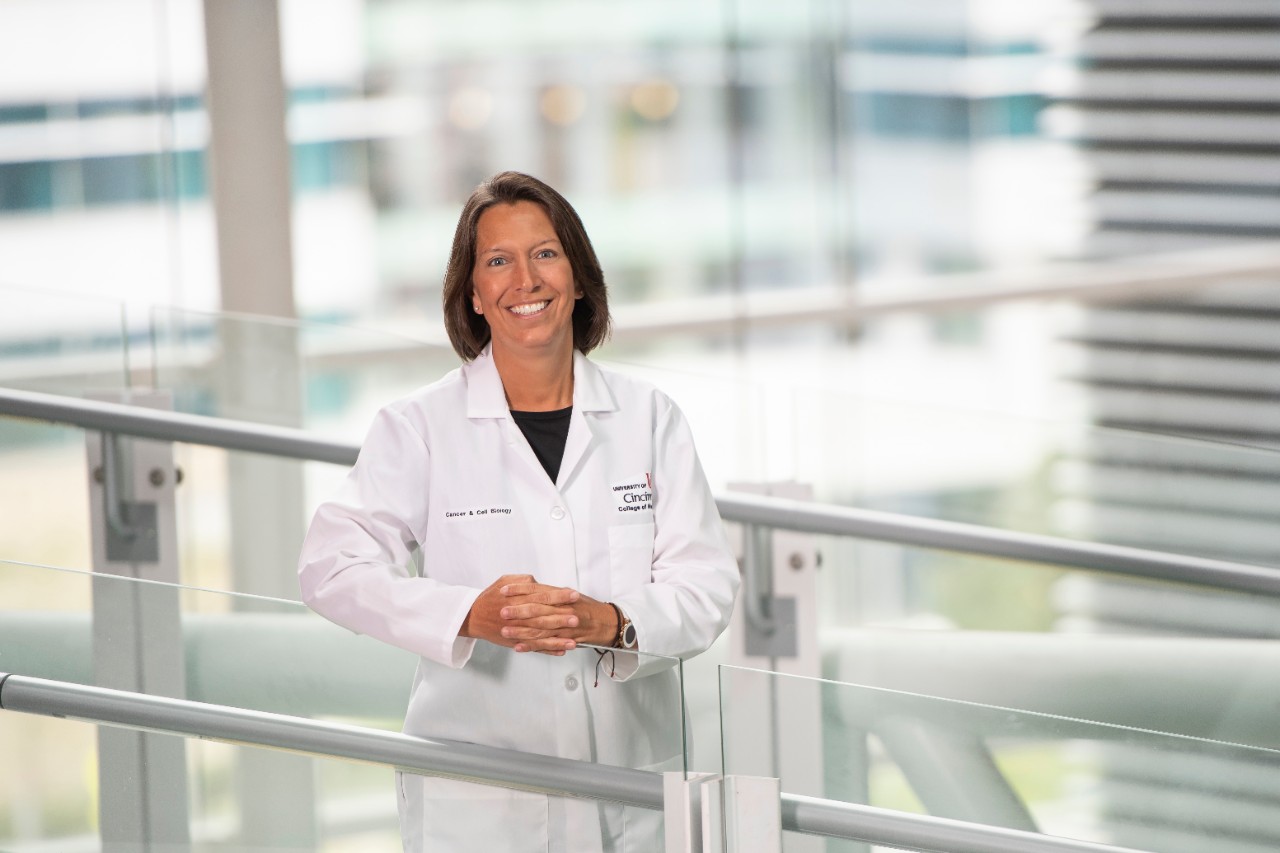
Susan Waltz, professor in the UC department of cancer biology. Photo credit: Colleen Kelley/UC Creative + Brand
“The focus of this grant is understanding why some breast cancers come back after initial treatment and metastasize and others don’t,” says Waltz, the principal investigator on the study. “We identified two genes (RON and DEK) which are both found in human breast cancers. When both of these genes combined are seen in breast cancers, they are highly predictive of the cancers recurring and spreading.”
She says the teams are trying to uncover reasons these genes make breast cancer so aggressive and discover whether or not this knowledge can be used to predict which tumors are more likely to come back.
“We hope this will help us identify new vulnerabilities in these cancers — an Achilles’ heel, if you will — that can be used for the treatment of these aggressive cancers,” she says. “Our new data suggest that these genes rewire breast cancer cells to support unique energy needs of the cells by increasing cholesterol and glucose use required for tumors to grow and spread.
“In this study, we hope to map, at high resolution at the atomic level, the unique energy network driven by these two genes, with the goal of using this information to identify key nutrients that might both predict and be used to block breast cancers from coming back or metastasizing,” Waltz added.
“This could provide new ways to identify and treat potentially aggressive breast cancers at early stages, increasing survival and improving lives.”
Featured photo courtesy of Drew Hays/Unsplash
Next Lives Here
The University of Cincinnati is classified as a Research 1 institution by the Carnegie Commission and is ranked in the National Science Foundation's Top-35 public research universities. UC's graduate students and faculty investigate problems and innovate solutions with real-world impact. Next Lives Here.
Related Stories
UC Foundation celebrates 2026 philanthropy winners
October 23, 2026
The University of Cincinnati Foundation recognized its Outstanding Philanthropic Volunteer Award honorees at the George Rieveschl Recognition Dinner on October 22, 2026.
AI breast cancer survival model from Cancer Center could improve accuracy and personalize care
October 23, 2026
UC Cancer Center researchers, including lead author Wedad Alatebi, developed a deep learning survival model for breast cancer that combines detailed clinical and genetic information, potentially offering physicians a more accurate tool to guide treatment decisions.
UC expert explains potential impact of Pennsylvania’s new vape product law
October 22, 2026

UC professor Ashley Merianos speaks to the Pittsburgh Post-Gazette about Pennsylvania’s new vape law, youth vaping prevention, enforcement challenges and possible unintended consequences.