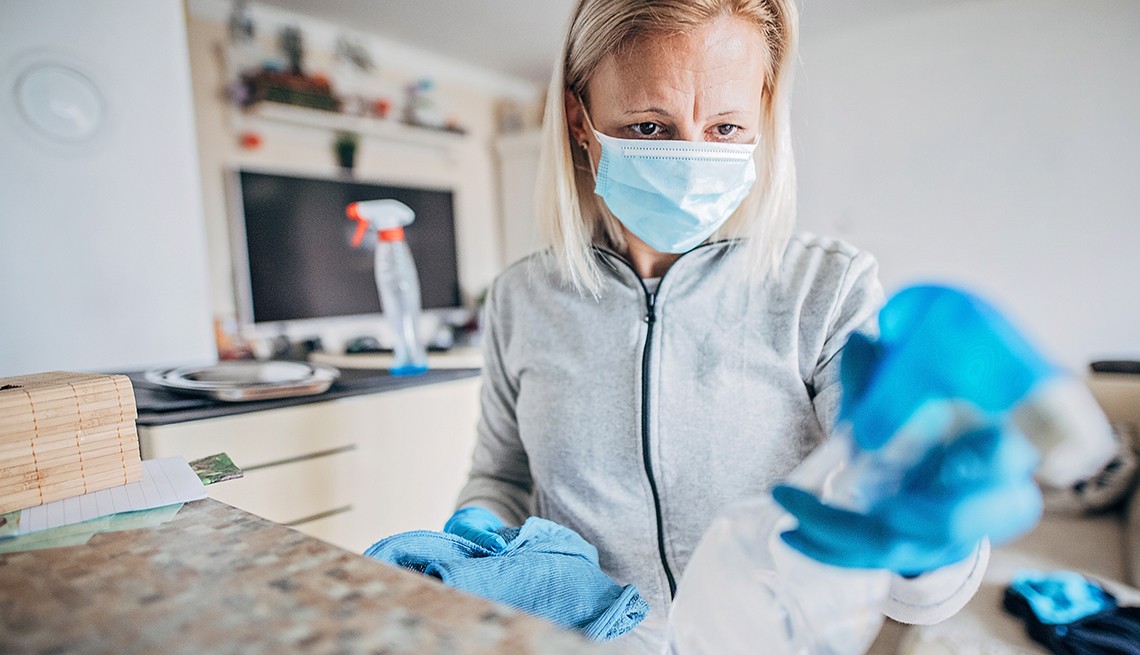
AARP: Keeping your home healthy before, during and after caregiver visits
UC expert offers tips on staying sanitary when a caregiver visits

AARP interviewed Dr. Carl Fichtenbaum of UC's Division of Infectious Diseases for a story on how to maintain a sanitary environment in your home before, during and after a visit from a caregiver.

Dr. Carl Fichtenbaum in a lab in the Division of Infectious Diseases at the UC College of Medicine. Photo credit/Joe Fuqua II/UC Creative + Brand
Dr. Fichtenbaum says older adults should first check with caretakers and aides through their home care company if they have a policy of screening staff for COVID-19 symptoms or exposure each day prior to a visit.
"If you hire someone directly, call them the day before and ask about symptoms like fever, cough, sneezing or runny nose," says Dr. Fichtenbaum. "Ask if they have been exposed to someone with COVID-19 in the past two weeks. If yes to either, it's probably best to avoid the visit."
Read the entire article here.
Find the latest details related to coronavirus disease 2019 (covid-19) on the Centers for Disease Control and Prevention (CDC) website, and follow UC's latest information with regard to the virus.
Related Stories
Is a colonoscopy painful?
May 13, 2026

The University of Cincinnati's Susan Kais, MD, assistant professor of clinical medicine in the Division of Gastroenterology and Hepatology in the College of Medicine and UC Health gastroenterologist, recently appeared on the ARC Cincinnati morning program on Local 12/WKRC-TV to answer common questions from viewers about colonoscopies and to dispel myths.
Is there anything to fear from Hantavirus?
May 12, 2026

The University of Cincinnati's Carl Fichtenbaum, MD, professor of clinical medicine in the Division of Infectious Diseases in the Department of Internal Medicine at the College of Medicine, recently appeared on Scott Sloan's show on 700 WLW to share facts surrounding Hantavirus.
What can oral health tell us about kidney health?
May 6, 2026

A recent article published in BMC Nephrology points to a connection between oral health and kidney health, citing evidence analyzed by University of Cincinnati College of Medicine researchers. The article shows an association between oral diseases and chronic kidney disease. Priyanka Gudsoorkar, assistant professor-educator in the Department of Environmental and Public Health Sciences, recently appeared on Cincinnati Edition on 91.7 WVXU News, to discuss the latest findings.