Engadget: UC engineers create AI that can beat pilots in dogfights
UC aerospace engineers are at the forefront of new machine learning technology

Engadget cited aerospace research by the University of Cincinnati in a story examining work by the Air Force Research Lab to create an autonomous drone that can defeat a human pilot in aerial combat.
From Engadget:
The US Air Force has long been exploring the way artificial intelligence (AI) can assist in its operations — back in 2016 we saw combat AI beat some of the Air Force’s top tactical experts, for example. Now, researchers are working on an autonomous drone designed to take down a piloted plane in air-to-air combat, with a showdown slated for July 2021.
UC's artificial intelligence project was an international revelation in 2016 as it demonstrated for the first time the vast potential for artificial intelligence to outwit human reflexes in a dogfight. UC's AI dubbed ALPHA was able to outflank retired U.S. Air Force Col. Gene Lee in simulation after simulation at the Air Force Research Lab at Wright-Patterson Air Force Base.
Lee called ALPHA "the most aggressive, responsive, dynamic and credible AI I've seen to date."
UC College of Engineering and Applied Science graduate Nick Ernest, who developed ALPHA, used the project to launch a Cincinnati startup company called Psibernetix. Ernest last year sold his company to the French arms manufacturer Thales.
The system Ernest developed used a type of machine learning called fuzzy logic in which the AI's decisions could be mathematically verified and validated, according to Thales.
Thales' senior vice president of avionics Gil Michielin called the system "a game-changer."
Ernest was a student of UC aerospace engineering professor Kelly Cohen, the interim department head. Cohen and his students continue to push the boundaries of autonomous systems in his UAV Master Lab.
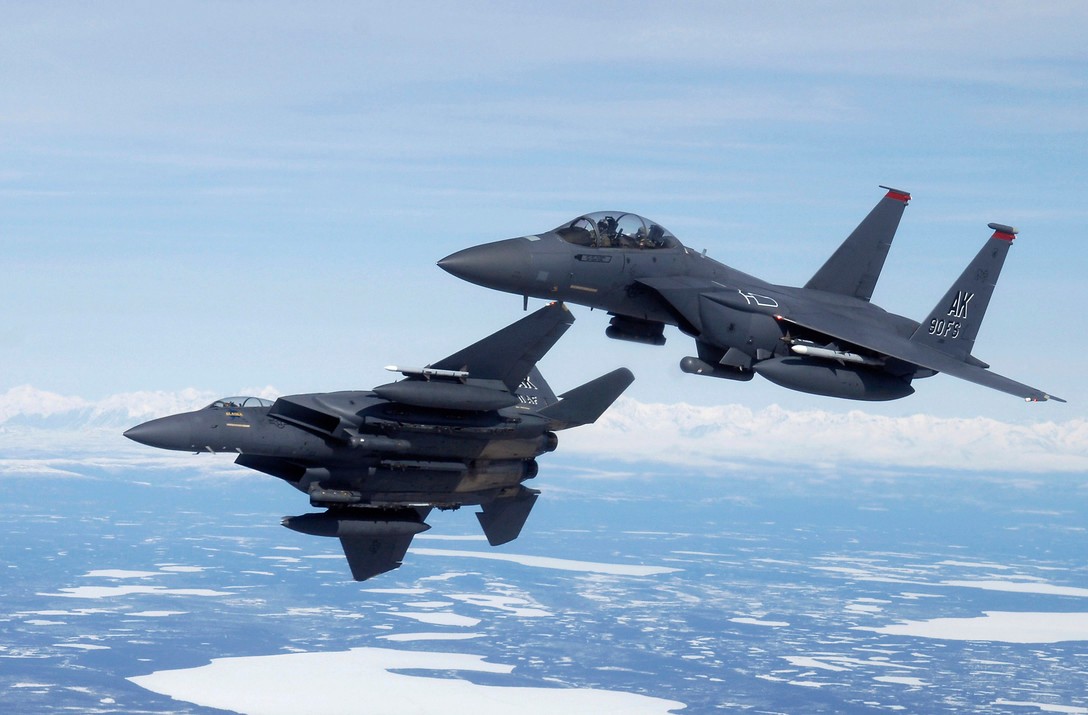
Featured image at top: F-15E Strike Eagles maneuver during an exercise over Alaska. Photo/Tech. Sgt. Keith Brown/U.S. Air Force

Retired U.S. Air Force Col. Gene Lee flies against a digital foe in a simulation that uses artificial intelligence developed in part by UC aerospace engineers in this 2016 file photo. Photo/Lisa Ventre/UC Creative + Brand
Related Stories
UC, NKU renew longstanding partnership supporting Army ROTC cadets
August 26, 2026
The University of Cincinnati Army ROTC and Northern Kentucky University (NKU) have renewed a longstanding partnership that supports students preparing to become Army officers and leaders in their communities. The universities formalized the renewed agreement during a signing event Aug. 11 at NKU.
One in four NFL players had CTE at death
August 25, 2026

Forbes cites research on concussions and football helmets by the University of Cincinnati in a report that found one in four NFL players had brain damage at death.
How UC's co-op model can benefit small businesses
August 25, 2026

The Business of Home recently dove into how a Chicago-based interior design firm benefits from UC's co-op model.