EdTech: How drones can sanitize for COVID
UC aerospace engineering professor Kelly Cohen explains how drones can help during pandemic

EdTech Magazine talked to University of Cincinnati professor Kelly Cohen about how drones theoretically could be deployed on college campuses to help fight the COVID-19 pandemic.
According to EdTech, studies are underway in Europe to see if unmanned aerial vehicles that do widescale crop spraying can instead be used to disinfect large indoor or outdoor areas for COVID-19 before people use them.
Kelly Cohen, interim department head of UC's Department of Aerospace Engineering and Engineering Mechanics, told EdTech that this is theoretically possible.
“There are spaces where you have a lot of students congregating, maybe moving from one building to another, and that open space could be disinfected by drones,” he told EdTech.
In UC's College of Engineering and Applied Science, Cohen's students work on new drone applications and technology in UC's UAV Master Lab. Students work on topics such as robotics, intelligent systems and navigation.
UC engineering students have partnered with such diverse agencies as NASA, the Ohio Department of Transportation and the U.S. Air Force Research Lab, among others. Their projects have tackled traffic monitoring, infrastructure inspections and disaster response and management.
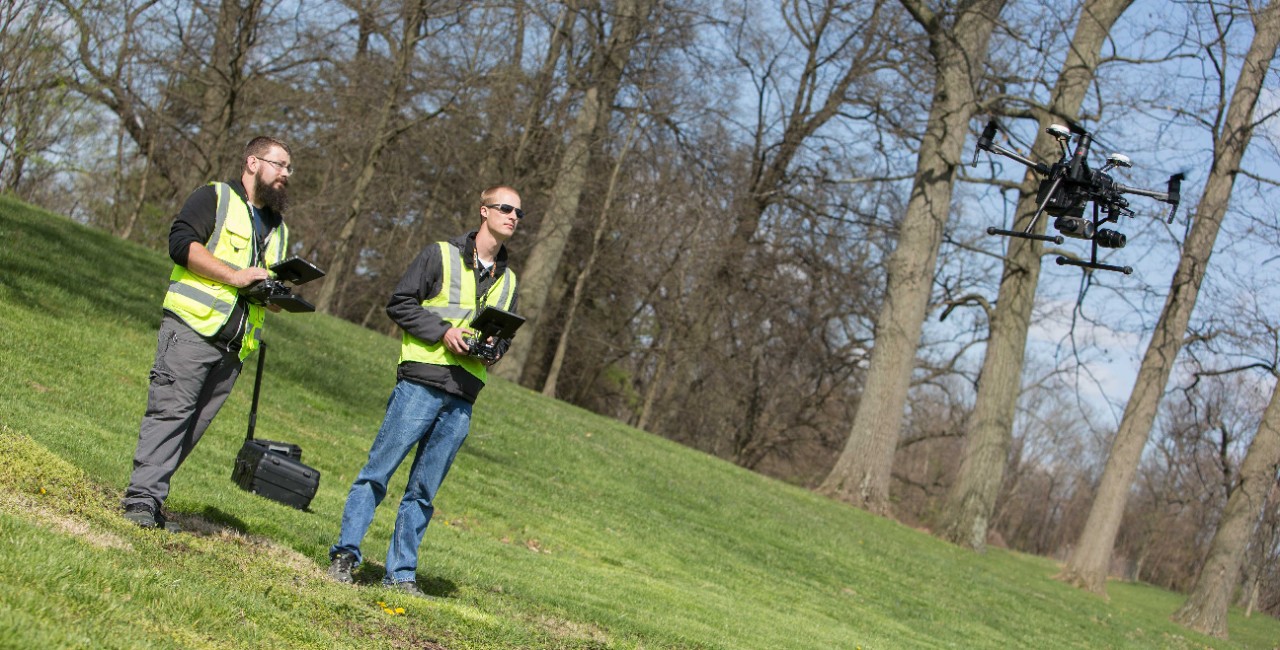
Featured image at top: UC research associate Bryan Brown, left, and UC graduate Austin Wessels operate a drone in this 2018 photo. UC collaborated with the Ohio Department of Transportation on a traffic-management project. Photo/Andrew Higley/UC Creative + Brand
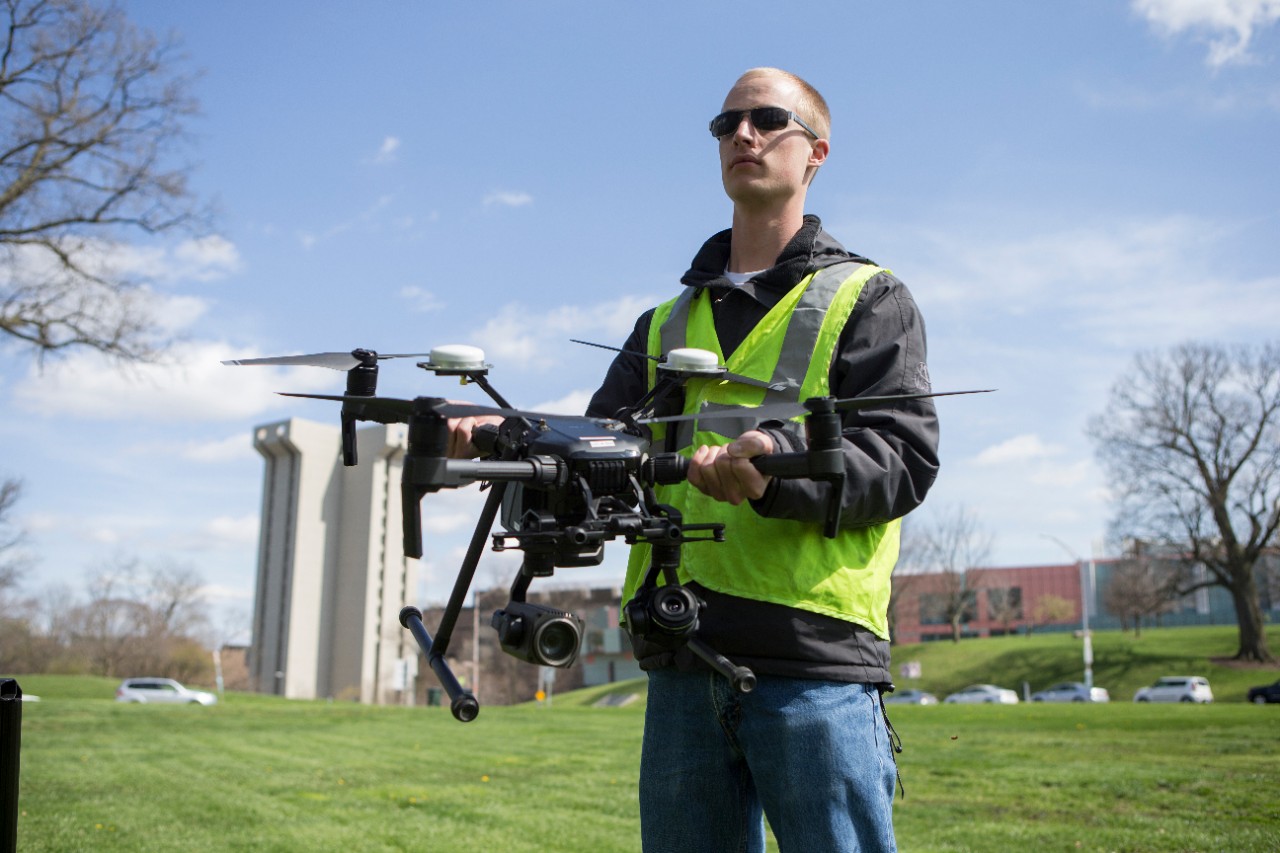
UC graduate Austin Wessels operates a drone in this 2018 photo. Photo/Andrew Higley/UC Creative + Brand
Related Stories
Is Cincinnati building new homes fast enough?
September 22, 2026

Gary Painter, professor and academic director of the Real Estate Center at UC's Lindner College of Business, offers comments on affordability issues in Cincinnati.
UC climbs to No. 3 in the nation for co-ops and internships in 2027 U.S. News rankings
September 22, 2026
In U.S. News & World Report’s 2027 Best Colleges rankings, the University of Cincinnati rises to No. 3 in the nation for co-ops and internships — No. 1 among public institutions — and posts gains in undergraduate business, computer science and psychology.
Engineering graduate student developing intelligent AI systems
September 21, 2026
Artificial Intelligence is on the rise, and researchers are working harder than ever to understand, develop, and improve it. Aneesh Deshmukh, computer science M.S. student at the University of Cincinnati, is working on AI systems modeled after human brain functionality. Deshmukh's goal is to help these robots understand their surroundings and take this knowledge to navigate unfamiliar environments in the future. For this work, he has been named Graduate Student Engineer of the Month by the College of Engineering and Applied Science.