NASA co-op helps shape aerospace engineering student’s future
Kyle Dunlap gained hands-on experience in control systems for electrified aircraft propulsion


Kyle Dunlap. Photo/Provided.
Kyle Dunlap’s mindset and approach to solving problems seemed to be pointing him towards a future in engineering from a young age. The University of Cincinnati aerospace engineering student had a particular interest in rockets and aircraft as a child, a curiosity that inspired his goal of working in the aerospace industry.
Dunlap’s cooperative education jobs (co-op) through UC’s College of Engineering and Applied Science have helped him to further determine where his career interests lie. For the spring 2020 semester, Dunlap completed a co-op position at NASA Glenn Research Center in Cleveland during which he worked on the development and application of control-based fault detection and mitigation strategies for electrified aircraft propulsion control systems. Electrified propulsion, which combines conventional and electric power, has the potential to improve fuel-efficiency and reduce emissions and noise for future commercial aircraft. UC students have worked with NASA on other projects related to electrified propulsion, including a proposed design of a propulsor system in hybrid electric aircraft.
Electrified aircraft propulsion requires controls technology to ensure system safety and efficiency, both during normal operation and in the event that the system experiences a fault, said Donald Simon, control systems engineer in the Intelligent Control and Autonomy Branch at NASA Glenn Research Center.
Simon, who served as Dunlap’s mentor and supervisor during his co-op, said Dunlap assisted the team in developing and evaluating controls technology for a concept vehicle proposed by NASA. He spent the first half of his 16-week co-op working onsite at NASA in Cleveland, until the COVID-19 pandemic necessitated a change. Because he was working on computer simulation and analysis, Dunlap said he felt lucky he was able to complete his co-op remotely.
“We exceeded the objectives we set out to complete at the beginning of his co-op, which is a testament to Kyle’s hard work and dedication,” Simon said. “I really enjoy mentoring students through our NASA internship programs. Students like Kyle bring new ideas and energy into our organization, and we have the opportunity to share with them the research that supports NASA’s unique missions and programs.”
Dunlap’s current co-op this summer has enabled him to work remotely for another high-profile organization, the Air Force Research Lab at Wright-Patterson Air Force Base. His new role is also focused on control-based engineering and failure mitigation and will be paired with research he will do at UC with Kelly Cohen, professor and interim head of the Department of Aerospace Engineering and Engineering Mechanics.
As part of the Accelerated Engineering Degree (ACCEND) program, Dunlap will earn his bachelor’s degree in the spring of 2021 and his master’s degree in 2022. He hopes to pursue a career in control-based engineering, similar to the work he’s doing in his co-op experiences. That area of interest seems to run in the family – Dunlap’s father is an electrical engineer who works with controls.
“I enjoy getting to look at a system-level view of the project, whereas if you only work in manufacturing, for example, you might only be looking at one component of the aircraft,” Dunlap said. “But with controls, you are looking at the entire propulsion system and entire aircraft, which is what I really enjoyed about my NASA co-op. I could see how the entire aircraft works together.”
UC’s integrated co-op program helped define Dunlap’s area of interest and provided him with hands-on skills for whatever future job he lands. It’s also a big reason he chose UC.
“I chose UC because of the mandatory co-op program,” Dunlap said. “I knew I would get good experience doing those four co-ops to graduate, which would help me get a job. At other schools, you’d get behind if you do a co-op.”
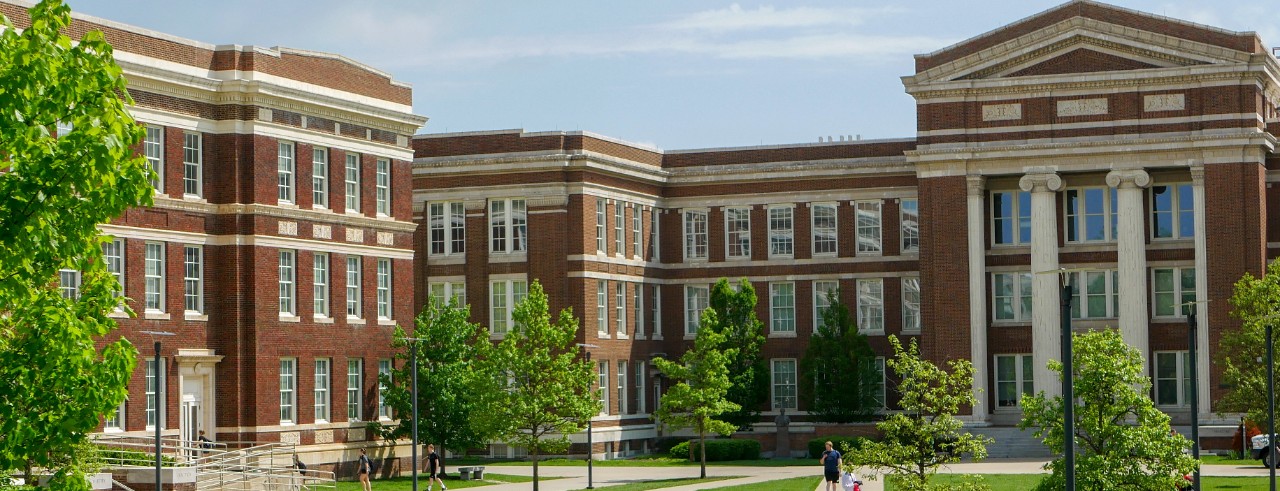
Featured image at top: Baldwin quad on UC's campus. Photo/Corrie Mayer/CEAS Marketing.
Become a Bearcat
- Learn about cooperative education at UC
- Explore majors and programs in the College of Engineering and Applied Science
- Apply to UC
Related Stories
UC climbs to No. 3 in the nation for co-ops and internships in 2027 U.S. News rankings
September 22, 2026
In U.S. News & World Report’s 2027 Best Colleges rankings, the University of Cincinnati rises to No. 3 in the nation for co-ops and internships — No. 1 among public institutions — and posts gains in undergraduate business, computer science and psychology.
'Discovery, mentorship, momentum': UC College of Medicine's graduate programs celebrate year of success
September 22, 2026
From new mentorship honors to a growing research pipeline, see how the University of Cincinnati College of Medicine's graduate programs made this a standout year.
Engineering graduate student developing intelligent AI systems
September 21, 2026
Artificial Intelligence is on the rise, and researchers are working harder than ever to understand, develop, and improve it. Aneesh Deshmukh, computer science M.S. student at the University of Cincinnati, is working on AI systems modeled after human brain functionality. Deshmukh's goal is to help these robots understand their surroundings and take this knowledge to navigate unfamiliar environments in the future. For this work, he has been named Graduate Student Engineer of the Month by the College of Engineering and Applied Science.