
Columbus Dispatch: State investigates groundwater risks
Dispatch relies on UC groundwater expert to explain public health risks

University of Cincinnati associate professor Amy Townsend-Small helped explain the significance of possible groundwater pollution from natural gas well-drilling in southeastern Ohio.
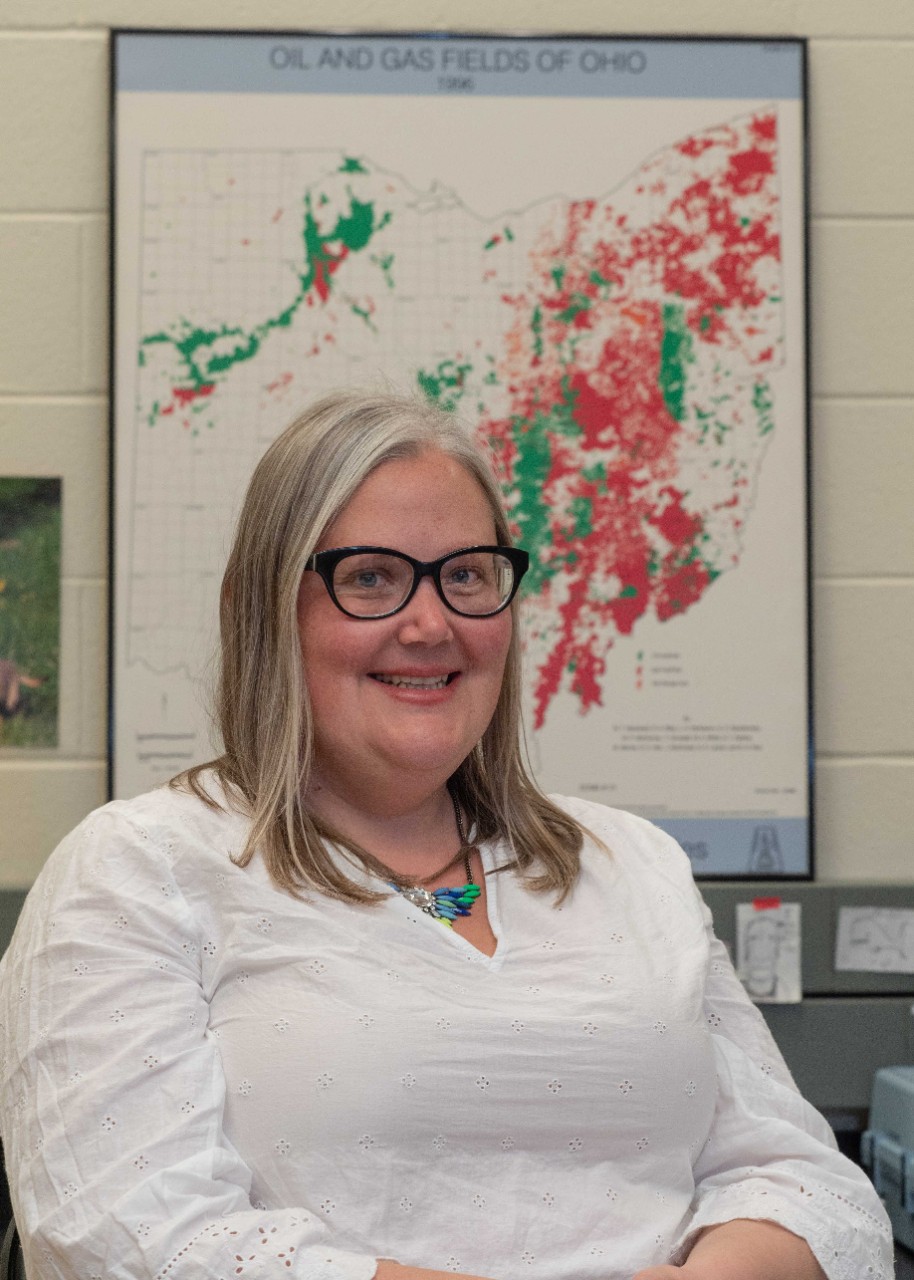
Amy Townsend-Small. Photo/Jay Yocis/UC Creative + Brand
The Columbus Dispatch reported that wastewater from the well-drilling process in an injection well in Washington County migrated to gas-producing wells 5 miles away, according to Ohio’s Department of Natural Resources. The state is investigating to ensure the chemicals used in hydraulic fracturing do not get into sources of drinking water.
Townsend-Small, an associate professor in geology and geography in UC’s College of Arts and Sciences, said that is a priority.
“That’s the biggest concern for people who live in shale gas producing areas,” Townsend-Small told the Dispatch.
According to the Dispatch, Ohio has more than 200 injection wells that contain chemicals natural gas companies do not have to disclose publicly.
“The wastewater from that injection well, was apparently migrating to the surface through an idle or an orphan well. Otherwise they wouldn’t have been able to find it,” Townsend-Small said.
Related Stories
Still the top ‘cat
October 20, 2026

The University of Cincinnati Bearcat mascot was voted Cincinnati’s favorite mascot in a Cincinnati Enquirer reader poll, earning 45.1% of the vote and topping other local favorites.
How will Ohio's minimum wage bump impact businesses and their employees?
October 20, 2026

UC economist Michael Jones spoke to WVXU's "Cincinnati Edition" on if Ohio's latest minimum wage increase will actually impact employees and businesses as inflation continues to rise.
Researchers test gene therapy as less invasive treatment for hydrocephalus
October 20, 2026

Researchers at the University of Cincinnati College of Medicine say an experimental gene therapy could eventually lead to a less invasive treatment for hydrocephalus, a condition in which excess fluid accumulates in the brain. The early-stage study, led by Agnes (Yu) Luo, PhD, professor and vice chair for research, was published in the journal Fluids and Barriers of the CNS. Yahoo! News recently featured it.