SciTechDaily: Silk offers homemade solution for COVID-19
UC biologist Patrick Guerra found that silk prevents infection better than other fabrics

SciTechDaily highlighted a study by the University of Cincinnati that concluded that silk masks were better at preventing infection from COVID-19 than cotton or synthetic fibers.
UC assistant professor Patrick Guerra and postdoctoral researcher Adam Parlin found that in the absence of a single-use N95 respirator or a surgical mask, homemade masks made of silk were a good alternative. Silk face masks are comfortable, breathable and repel moisture, which is a desirable trait in fighting an airborne virus.
Silkworms that eat mulberry leaves produce silk containing copper, which has natural virus-killing properties.
The study was published in the journal PLOS One.
“We’re trying to address this critical problem. Health care workers still don’t have enough personal protective equipment, namely N95 respirators or basic surgical masks,” Guerra said.
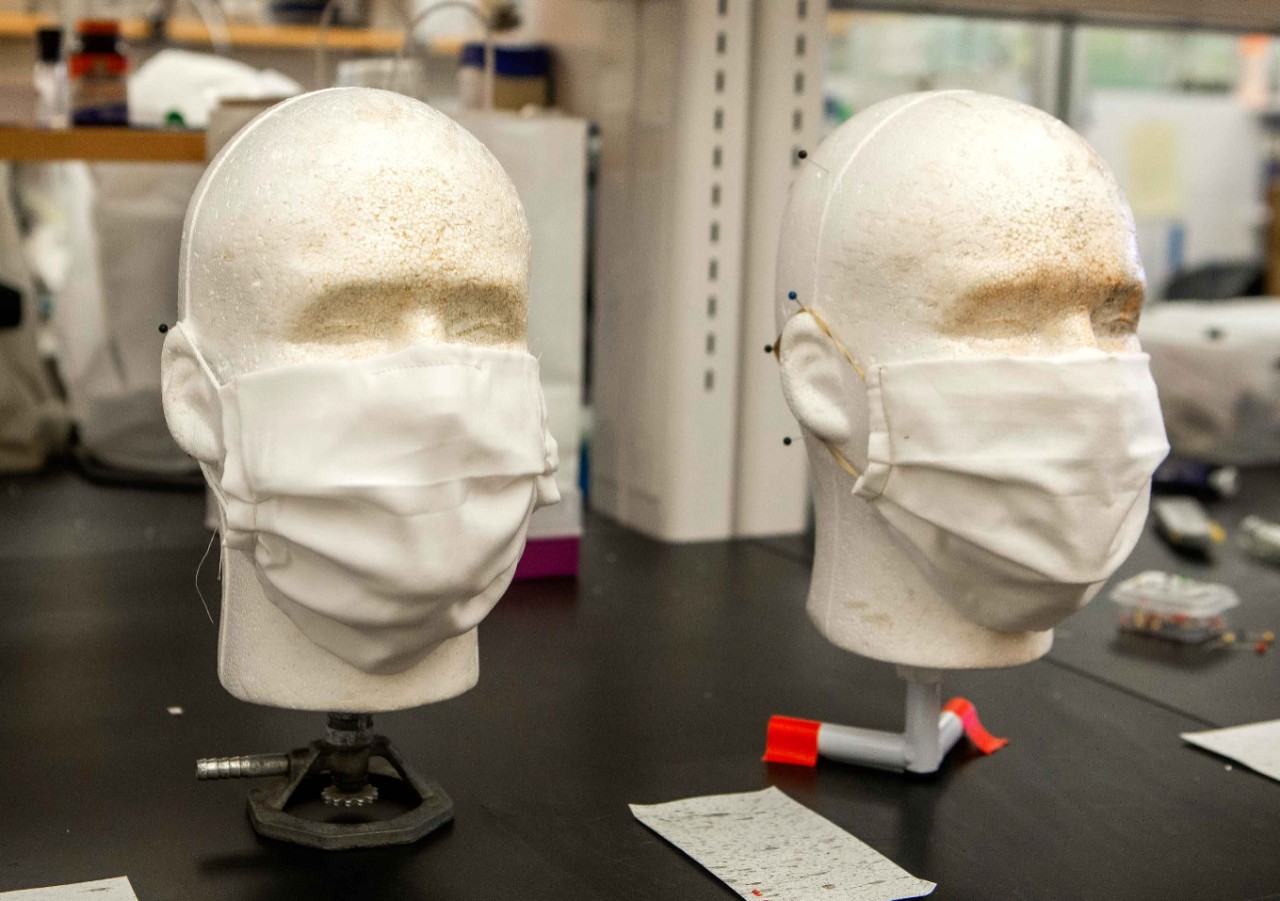
Featured image at top: UC tested face masks on styrofoam heads. Photo/Joseph Fuqua II/UC Creative + Brand

UC assistant professor of biology Patrick Guerra's work with moths and butterflies inspired his research into silk masks during the COVID-19 pandemic. Photo/Lisa Ventre/UC Creative + Brand
Related Stories
CCM Hollywood alumna reminisces on her Cincinnati roots over Skyline
July 28, 2026

Hollywood actress Diana Maria Riva recently sat down with the Cincinnati Enquirer to discuss her career over a Cincinnati staple — Skyline chili. The CCM Acting alumna has worked in Hollywood since the '90s, but she grew up on Cincinnati's West Side.
UC doctoral student shares his journey with Spectrum News
July 27, 2026

UC doctoral student Amota Ataneka spoke with Spectrum News about his educational journey. Ataneka, a native of the Pacific island nation of Kiribati, is one of 35 emerging scholars across the United States to win the National Academy of Education/Spencer Dissertation Fellowship.
How scammers can persuade you with AI
July 27, 2026
Spectrum News recently dove into how cloning voices with artificial intelligence is making it easier to scam people over the phone. The news outlet spoke with Kimberly Hyun, assistant professor of marketing at UC’s Lindner College of Business, to examine why AI is making it so much easier to trick people.