SciTechDaily: Silk offers homemade solution for COVID-19
UC biologist Patrick Guerra found that silk prevents infection better than other fabrics

SciTechDaily highlighted a study by the University of Cincinnati that concluded that silk masks were better at preventing infection from COVID-19 than cotton or synthetic fibers.
UC assistant professor Patrick Guerra and postdoctoral researcher Adam Parlin found that in the absence of a single-use N95 respirator or a surgical mask, homemade masks made of silk were a good alternative. Silk face masks are comfortable, breathable and repel moisture, which is a desirable trait in fighting an airborne virus.
Silkworms that eat mulberry leaves produce silk containing copper, which has natural virus-killing properties.
The study was published in the journal PLOS One.
“We’re trying to address this critical problem. Health care workers still don’t have enough personal protective equipment, namely N95 respirators or basic surgical masks,” Guerra said.
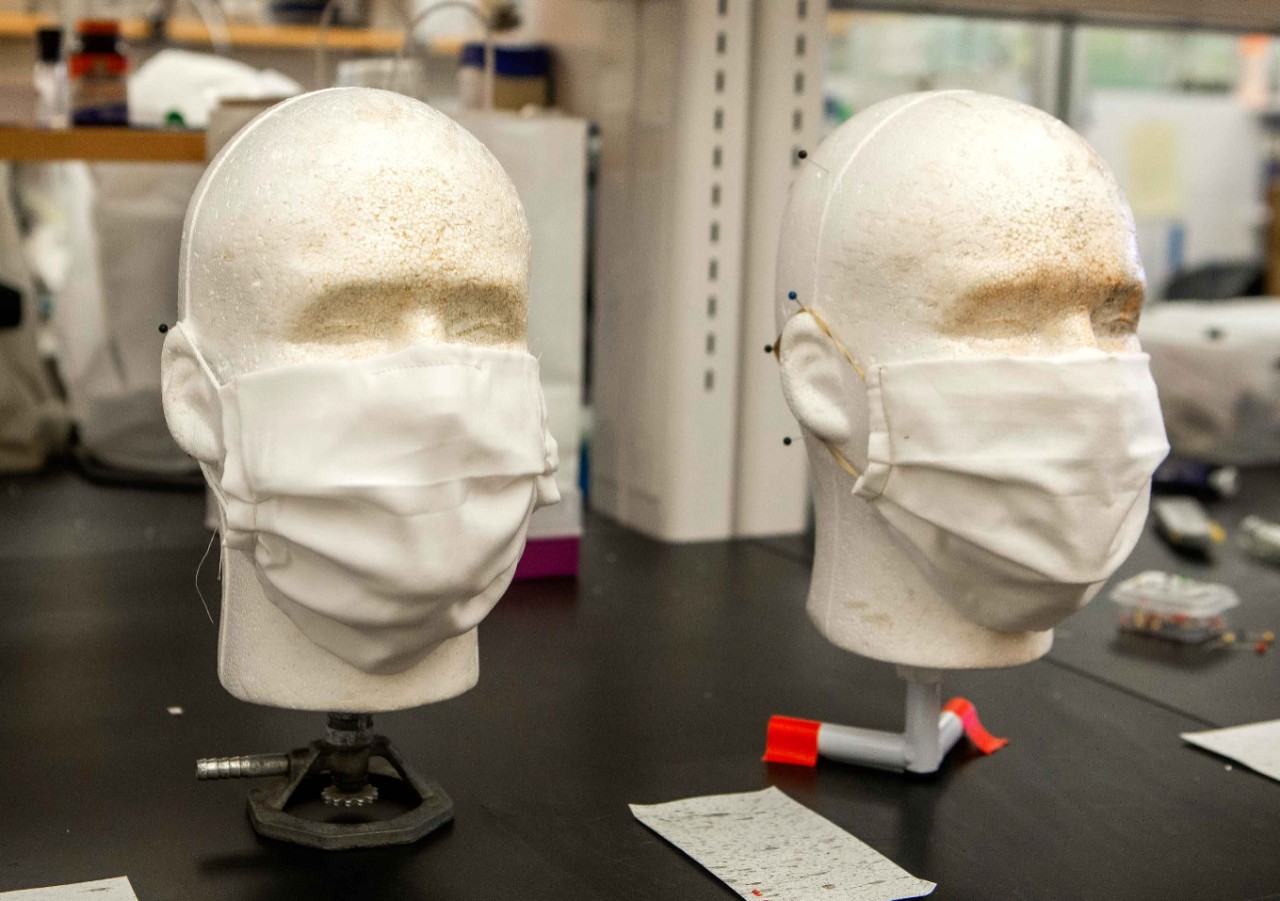
Featured image at top: UC tested face masks on styrofoam heads. Photo/Joseph Fuqua II/UC Creative + Brand

UC assistant professor of biology Patrick Guerra's work with moths and butterflies inspired his research into silk masks during the COVID-19 pandemic. Photo/Lisa Ventre/UC Creative + Brand
Related Stories
UC-built detector at CERN looks for enticing evidence to explain dark matter
August 4, 2026
A physicist from the University of Cincinnati and his research partners from around the world conducted an experiment at CERN’s Large Hadron Collider in Switzerland to look for evidence that might help explain one of science’s most baffling questions: dark matter.
The subtle changes in hearing you should never ignore
August 4, 2026

It’s easy to dismiss changes in hearing as minor. But as The Washington Post recently reported, these symptoms could also signal a medical emergency that many people don’t recognize — known as sudden sensorineural hearing loss, a rapid decline in hearing that occurs suddenly or over a few days.
What makes us happy?
August 3, 2026

Suzie White, an assistant professor in the UC School of Education, was interviewed by the publication Upworthy for a story about the communal nature of happiness. White teaches the class, Happiness in Action, which applies the science of happiness to everyday life.