Daily Mail: Hormones in wastewater hinder fish reproduction
UC biologist Latonya Jackson is studying the impact of wastewater treatment plants on local streams

The Daily Mail highlighted work by University of Cincinnati biologist Latonya Jackson, who is studying the effects of hormones that get into public drinking water.
In a study published in the journal Aquatic Toxicology, Jackson found that fish exposed to as little as 5 nanograms per liter of estrogen produced fewer male offspring and fewer offspring overall than a control group.

A least killifish in a UC biology lab. Photo/Andrew Higley/UC Creative + Brand
Studies have found similar hormones at more than 10 times that concentration in streams near sewage treatment plants.
Jackson's research suggests that even trace exposure to estrogen could have significant consequences for wild fish populations.
"Anything you flush down the toilet or put in the sink will get in the water supply," Jackson said.
Jackson uses least killifish, among the smallest fish on the planet, as her study model.
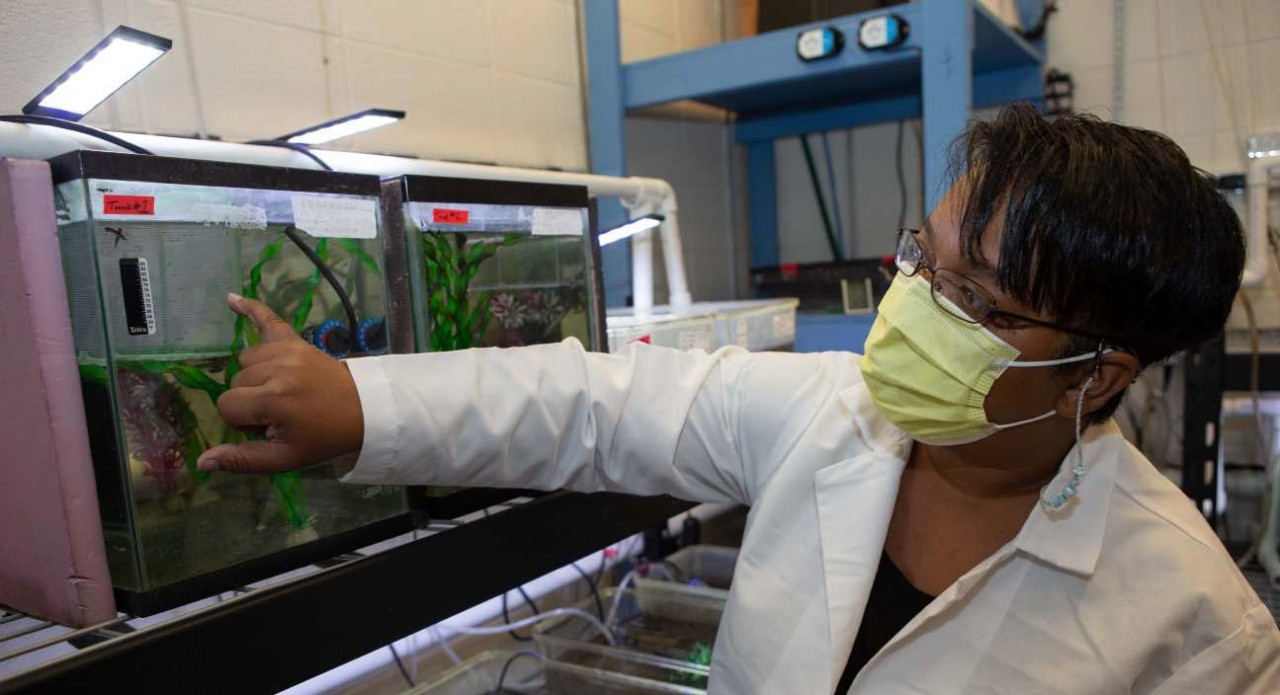
Featured image at top: UC assistant professor Latonya Jackson points to least killifish in her biology lab. Photo/Andrew Higley/UC Creative + Brand

UC assistant professor Latonya Jackson studies aquatic toxicology, ecotoxicology and endocrine disrupting chemicals in her biology lab. Photo/Andrew Higley/UC Creative + Brand
Related Stories
These teeny spiders are social media stars
August 28, 2026

The New York Times turned to a University of Cincinnati professor to explain the appeal of jumping spiders on social media.
An internal divide among unions on AI impacts the Wisconsin gubernatorial race
August 28, 2026

Anne Lofaso, a professor in the Donald P. Klekamp College of Law at UC, spoke with Wisconsin Public Radio, about the schism among unions over AI and whether it is a plus, a negative, or somewhere in between when looking at job creation.
UC, NKU renew longstanding partnership supporting Army ROTC cadets
August 26, 2026
The University of Cincinnati Army ROTC and Northern Kentucky University (NKU) have renewed a longstanding partnership that supports students preparing to become Army officers and leaders in their communities. The universities formalized the renewed agreement during a signing event Aug. 11 at NKU.