WLW: Russia and the Ukraine
Political scientist Brendan Green speaks to rising tensions at the Russia/Ukraine boarder

Tensions in Eastern Europe, between Russia and the Ukraine, have all the markings of an possible Russian invasion, which has U.S. officials acting as mediator. The Ukraine is not a member of NATO, which the U.S. would be bound to defend if it were. NATO stands for North Atlantic Treaty Organization. It was formed in 1949 to provide collective security against the threat posed by the Soviet Union.
In the interview Green, an associate professor in UC's Department of Political Science, explains the political and economic ramifications should Russia's leader, Vladimir Putin, decide to invade.
“There’s a rocky road ahead and if Putin decides to launch a war then U.S./Russian relations are going to go in the toilet for a fair period of time,” UC political scientist Brendan Green told WLW in a segment devoted to the current crisis.
While neither the Ukraine, nor Russia, are members of NATO, President Biden is trying to negotiate with Putin to avoid conflict. The Ukrainian military, Green says, is outnumbered, outgunned and inferior in every way to the Russian army and could not withstand a military attack.
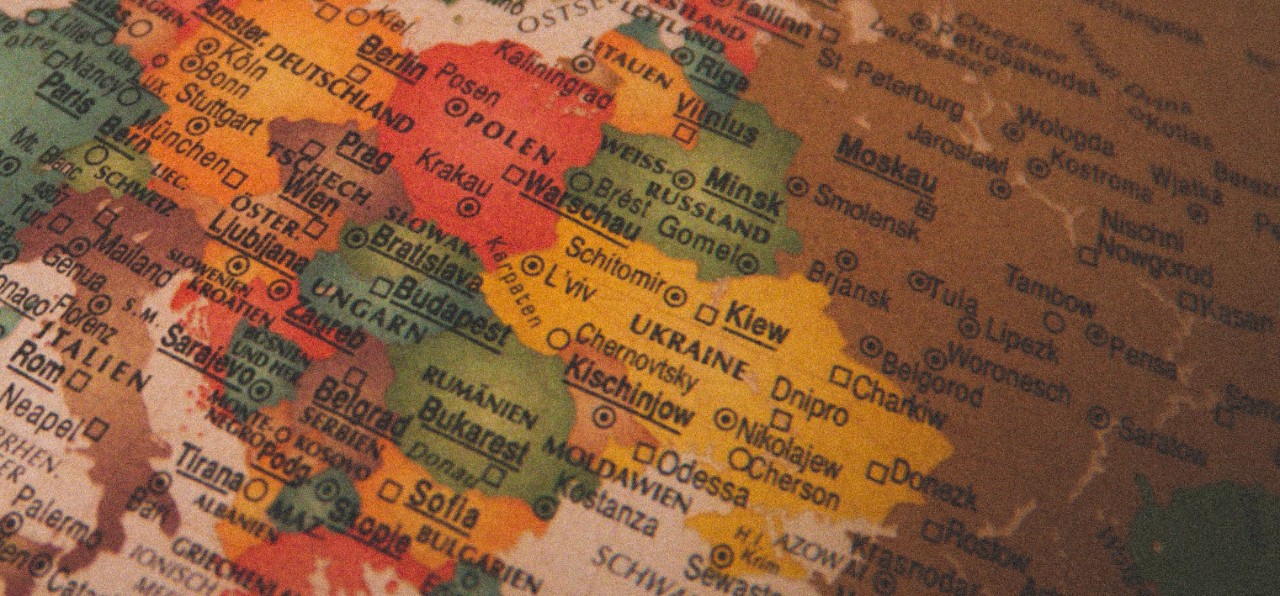
Featured image of map at top courtesy of Unsplash.
Impact Lives Here
The University of Cincinnati is leading public urban universities into a new era of innovation and impact. Our faculty, staff and students are saving lives, changing outcomes and bending the future in our city's direction. Next Lives Here.
Related Stories
Heavy social media use linked to depression
August 31, 2026

U.S. News and World Report, Yahoo! News, MSN, USA Today and other national media highlight a new study by the University of Cincinnati and Northwestern University that found a correlation between heavy social media use and depression in adults.
These teeny spiders are social media stars
August 28, 2026

The New York Times turned to a University of Cincinnati professor to explain the appeal of jumping spiders on social media.
An internal divide among unions on AI impacts the Wisconsin gubernatorial race
August 28, 2026

Anne Lofaso, a professor in the Donald P. Klekamp College of Law at UC, spoke with Wisconsin Public Radio, about the schism among unions over AI and whether it is a plus, a negative, or somewhere in between when looking at job creation.