
UC-led research first to show benefits of police de-escalation training
Researchers at top-ranked criminal justice program focus on making police interactions safer

A first of its kind study by University of Cincinnati criminal justice researchers shows that de-escalation training in police departments can make police encounters with the public safer for everyone.
“Despite widespread promotion and proliferation of de-escalation trainings, until now, no research had empirically demonstrated that these trainings reduce use of force in the field,” says the study’s lead author Robin Engel, a professor in UC’s School of Criminal Justice who has been researching policing strategies for over two decades.
The study, which appears in the American Society of Criminology’s flagship journal Criminology & Public Policy, took place in collaboration with the Louisville, Kentucky, Metro Police Department.

Professor Robin Engel, in UC's School of Criminal Justice, has been researching policing strategies for over two decades. Photo/provided by Engel.
Researchers looked at the post-training impact of the 2019 implementation of Integrating Communications, Assessment and Tactics (ICAT) de-escalation training developed by the Police Executive Research Forum (PERF).
Using a randomized, controlled trial design, the study results demonstrated statistically significant reductions in use of force incidents, citizen injuries and officer injuries in the post-training period.
“The results were impressive, to say the least,” says PERF executive director Chuck Wexler. The research, Wexler says, “found that training officers in ICAT was associated with 28% fewer use-of-force incidents, 26% fewer injuries to community members and 36% fewer injuries to police officers.”
According to the research, these significant reductions were larger than any changes in the Louisville police department arrest patterns during the same period.
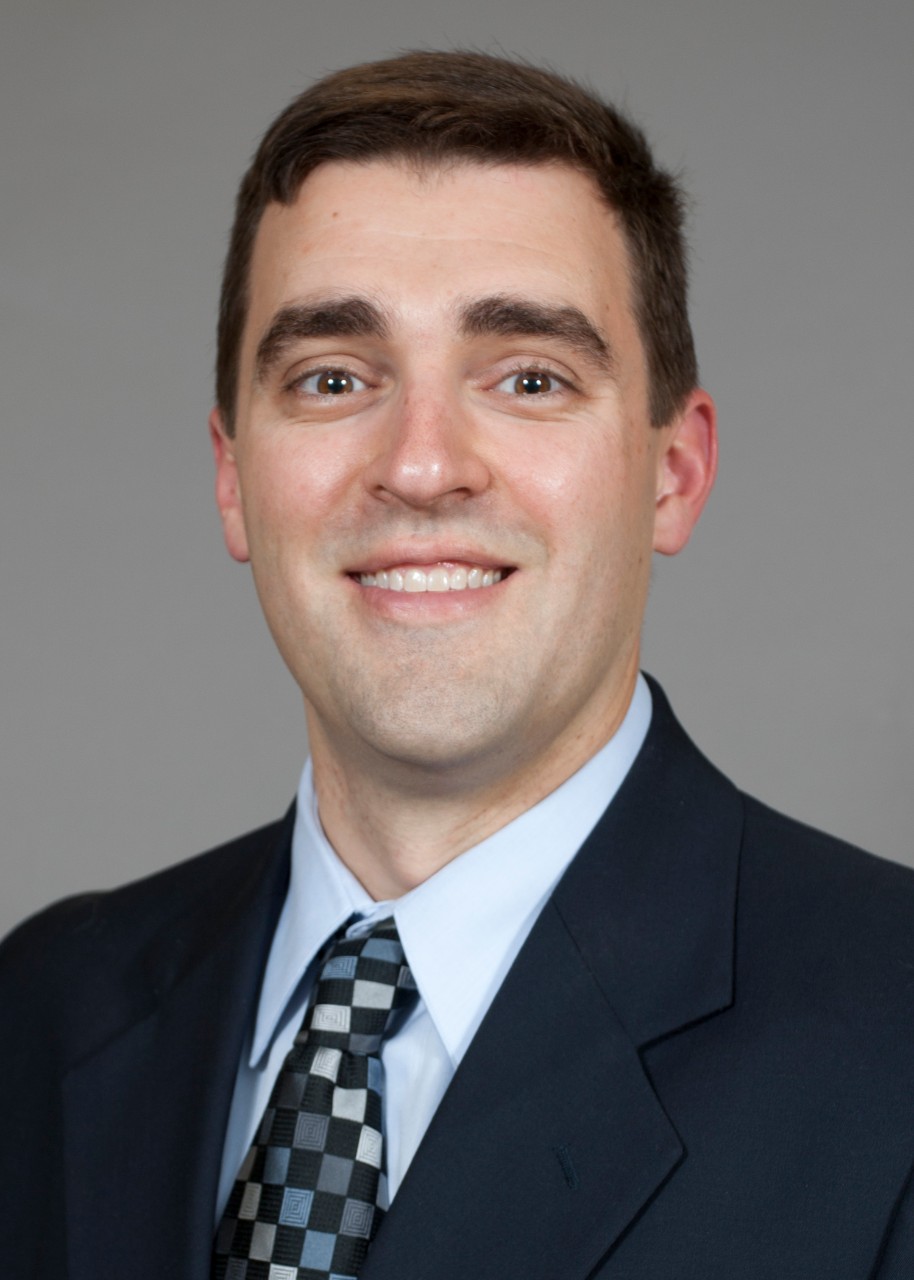
Nicholas Corsaro is an associate professor of criminal justice and researcher in the College of Education, Criminal Justice and Human Resources. Photo/UC Creative + Brand.
“We add several statistical analyses to determine if the reductions in use of force were due to factors other than the training. After considering these alternative possibilities, the evidence led to the conclusion that it was indeed the training that had such a powerful impact” said co-author Nicholas Corsaro, an associate professor and criminal justice researcher also in UC’s School of Criminal Justice.
The findings, both say, suggest that agencies should continue to implement and evaluate de-escalation trainings and adopt other resiliency-based approaches to police training.
To facilitate long-term changes in police behavior, Engel says, a holistic approach is recommended that supports training tenets with complementary policies, supervisory oversight, managerial support and community involvement in reform efforts.
The university recently announced a partnership with Jigsaw, a unit within Google, to test the company’s virtual reality police training platform. The training is aimed at diffusing tense situations officers may encounter on patrol, Engel says.
“Our research efforts and strategic partnerships are specifically focused on making police interactions with the public safer and improving the conditions and quality of life in our neighborhoods,” she says.
Featured image at top of police car provided by Unsplash/NeONBRAND.
Impact Lives Here
The University of Cincinnati is leading public urban universities into a new era of innovation and impact. Our faculty, staff and students are saving lives, changing outcomes and bending the future in our city's direction. Next Lives Here.
Related Stories
Simple ways to find a deeper sense of happiness and well being
October 8, 2026

UC assistant professor Suzie White, featured in an AARP story on practical ways to live a happier, healthier life, shared research-backed strategies for increasing well-being through gratitude and service to others. White teaches Happiness in Action, a course that helps students apply the science of happiness in everyday life.
Rooted in Tahlequah: UC Nursing alumnae expand women's health care in rural Oklahoma
October 6, 2026
Tahlequah, Oklahoma, is more than a place where University of Cincinnati College of Nursing alumnae practice. For Brandy Ponder, APRN, WHNP-BC, and Leonda Reese, MSN, APRN, WHNP-BC, it is home. Both are Cherokee Nation citizens. Both built their healthcare careers in northeastern Oklahoma. And both chose UC College of Nursing Women's Health Nurse Practitioner program to expand what they could offer the women and families in their communities. Their paths to advanced practice clinicians were different, but they eventually intersected in a way that illustrates the ripple effect of nursing education: Ponder became a mentor and preceptor to Reese, who recently graduated from UC and is now taking her expertise into an even broader network of rural communities.
Should we appreciate bats?
October 6, 2026
UC associate professor Joe Johnson explains why bats matter during Bat Appreciation Month and invites the public to Ohio Bat Fest, where families can learn about bat conservation, ecology and wildlife research.