
Parade: What are Joro spiders?
UC biologist talks about enormous invasive spider that has been seen in southern states

Parade magazine talked to University of Cincinnati biologist Nathan Morehouse about an enormous invasive spider that is spreading across the American Southeast.
The Joro spider grows nearly as big as your palm. Normally found in Japan, the spiders were introduced to the United States in 2013. They expand their range as baby spiders when they release little parachutes that help them sail on the wind to new territories.
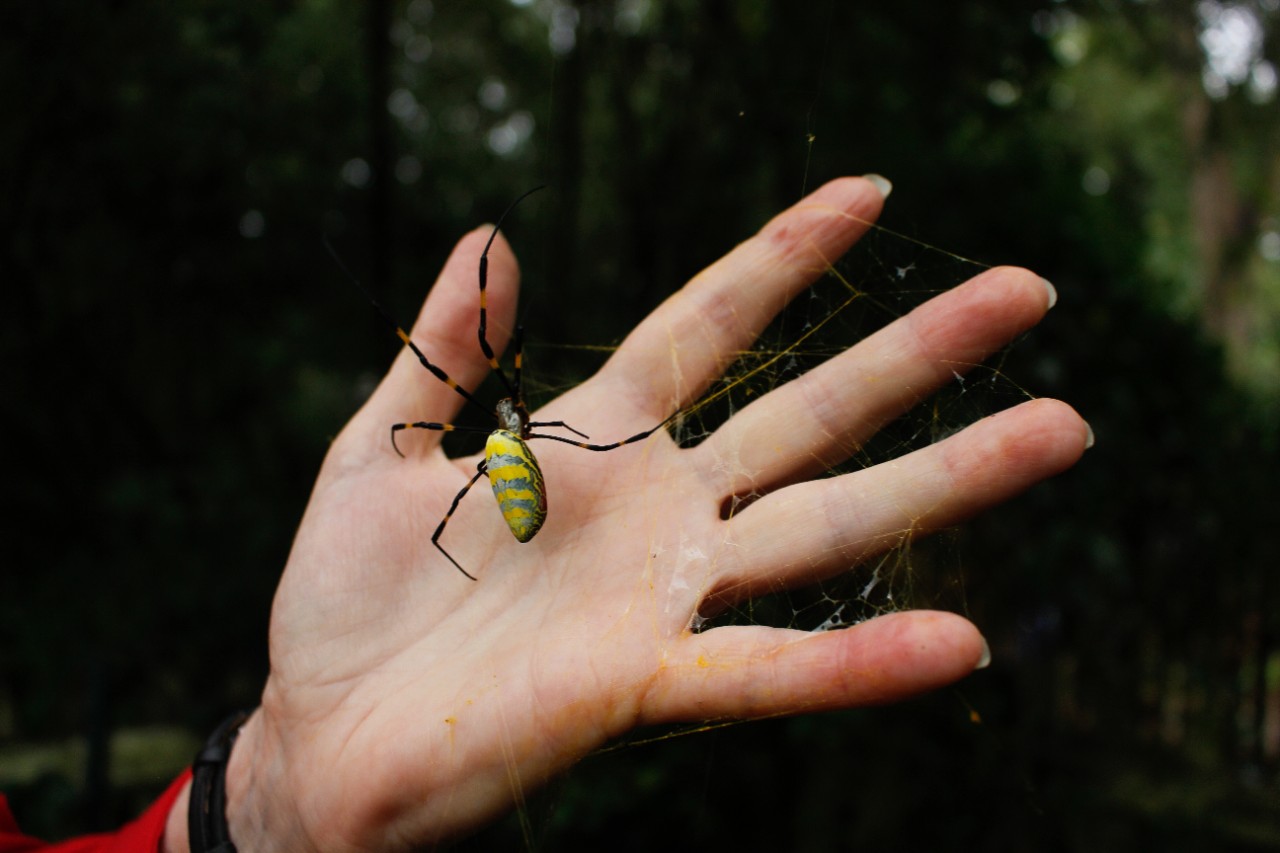
Invasive Joro spiders are spreading across the American Southeast. Photo/Carly Mirabile/Courtesy the University of Georgia College of Agricultural and Environmental Sciences
Morehouse, an associate professor of biology in UC's College of Arts and Sciences, told Parade magazine that the spiders got their name from Jorōgumo, a mythical creature from Japanese folklore.
"Jorōgumo are shapeshifting spiders that can turn into beautiful women to ensnare and eat young men," Morehouse told Parade. "The name in modern kanji translates literally to 'entangling bride.'"
Morehouse has studied the vision of spiders around the world and serves as director of UC's Institute for Research in Sensing.
Scientists say Joro spiders are more tolerant of cold temperatures than other spiders, which could help them spread farther north than native orb-weaving spiders found in the South.
The good news is Joro spiders are docile and have little interest in making a home in people's homes, he said.
And their enormous webs can trap plenty of biting flies or mosquitoes if people are willing to tolerate their colorful garden guests, Morehouse said.
"My best advice is to adopt a stance of curiosity toward these newcomers, which live fascinating and surprisingly beautiful lives, all while eating lots of insects every day and night," Morehouse said.
Featured image at top: Invasive Joro spiders have been seen in some southeastern states. Photo/Anthony Barkdoll/Courtesy the University of Georgia College of Agricultural and Environmental Sciences

UC associate professor Nathan Morehouse talked to Parade magazine about enormous Joro spiders that have been found in the Southeast. Photo/Jay Yocis/UC Creative + Brand
More UC biology news
UC chemistry student Melissa Kelley works in a biology lab. Photo/Andrew Higley/UC Creative + Brand
Related Stories
From hobbyist photographer to professional educator
October 9, 2026

DAAP alum and photographer HATSUE studied communication design after a pivot in high school from a track toward veterinary school. Today, they teach photography at 1001 Colors white working as an artist and curator in Cincinnati.
UC researcher to launch national study with $2.5 million NIH grant
October 9, 2026

A University of Cincinnati researcher has received a $2.5 million National Institutes of Health grant to conduct research during the next five years. Natalie Kreitzer, MD, a University of Cincinnati College of Medicine physician-researcher, received an R01 independent research grant from the NIH's Eunice Kennedy Shriver National Institute of Child Health and Human Development. The funding will support a test program for caregivers of patients with traumatic brain injury, as reported by the Cincinnati Business Courier.
Simple ways to find a deeper sense of happiness and well being
October 8, 2026

UC assistant professor Suzie White, featured in an AARP story on practical ways to live a happier, healthier life, shared research-backed strategies for increasing well-being through gratitude and service to others. White teaches Happiness in Action, a course that helps students apply the science of happiness in everyday life.